Backpacking water · 4 MIN READ
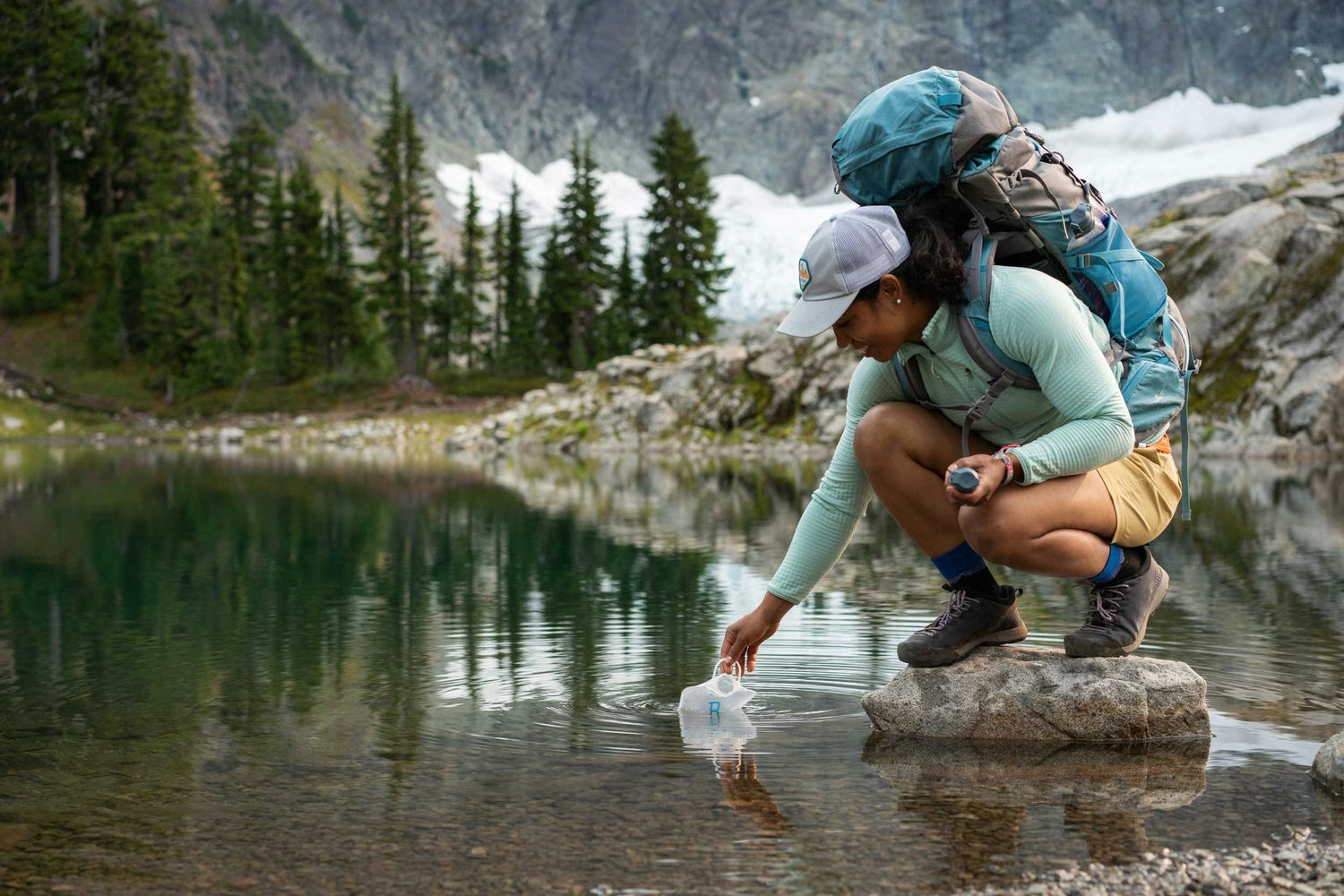
A quick refill on trail.
Enough water for camp.
A squeeze pouch can handle a solo refill. A second container earns its place when the last creek is well before dinner.
Make a planStart with the longest stretch between reliable water sources. That tells you how much to carry. Then decide how you’ll collect the water, treat it and get it into a bottle you can drink from.
- Last reliable refill
- Water for dinner
- Next morning’s carry
01 / Water stops
Find your last reliable refill.
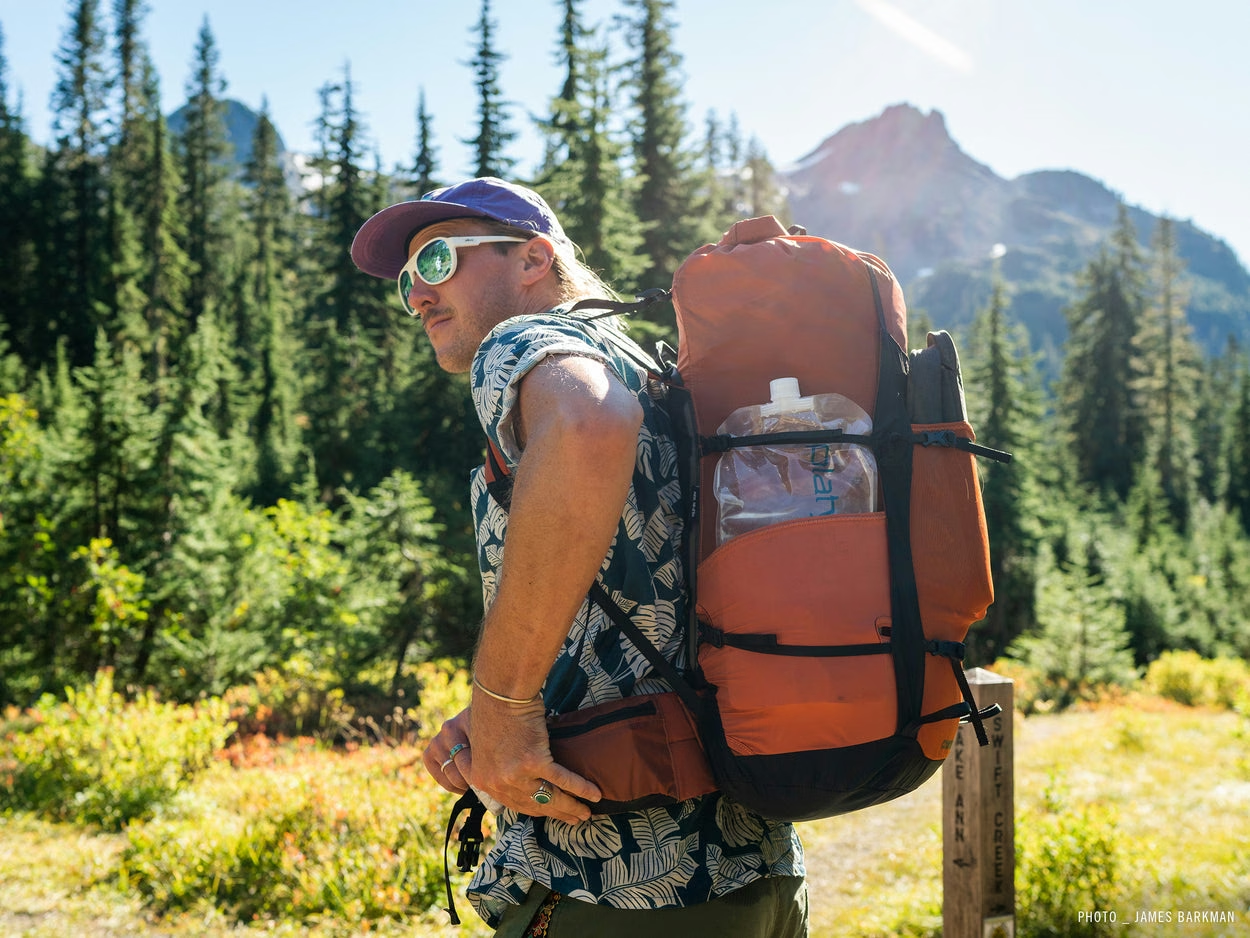
A creek beside camp means you can refill at dinner. A dry campsite means carrying your evening water and enough for the walk to the next source.
Check current water availability and advisories with the park or land manager. Bring water from elsewhere if a source has a harmful algal bloom or chemical contamination.
Setup notes & sources
Mark the longest gap on your route, including any stretch past a source to camp. Work through who will need water for drinking, cooking and the next morning. A spare soft bottle can ride empty until that last refill.
Clear water can still carry germs. The Sawyer Squeeze and QuickDraw target bacteria and protozoa. Neither removes viruses. The CDC recommends boiling water to kill germs, or filtering and then disinfecting when boiling is impractical. Follow route-specific advice and the instructions for your chosen method.
Sources: National Park Service water planning · CDC backcountry water treatment · Sawyer Squeeze system · Platypus QuickDraw 1L system
- Collect in the pouch
- Attach at the inlet
- Drink or fill a bottle
02 / Solo refills
Start with the pouch in the kit.
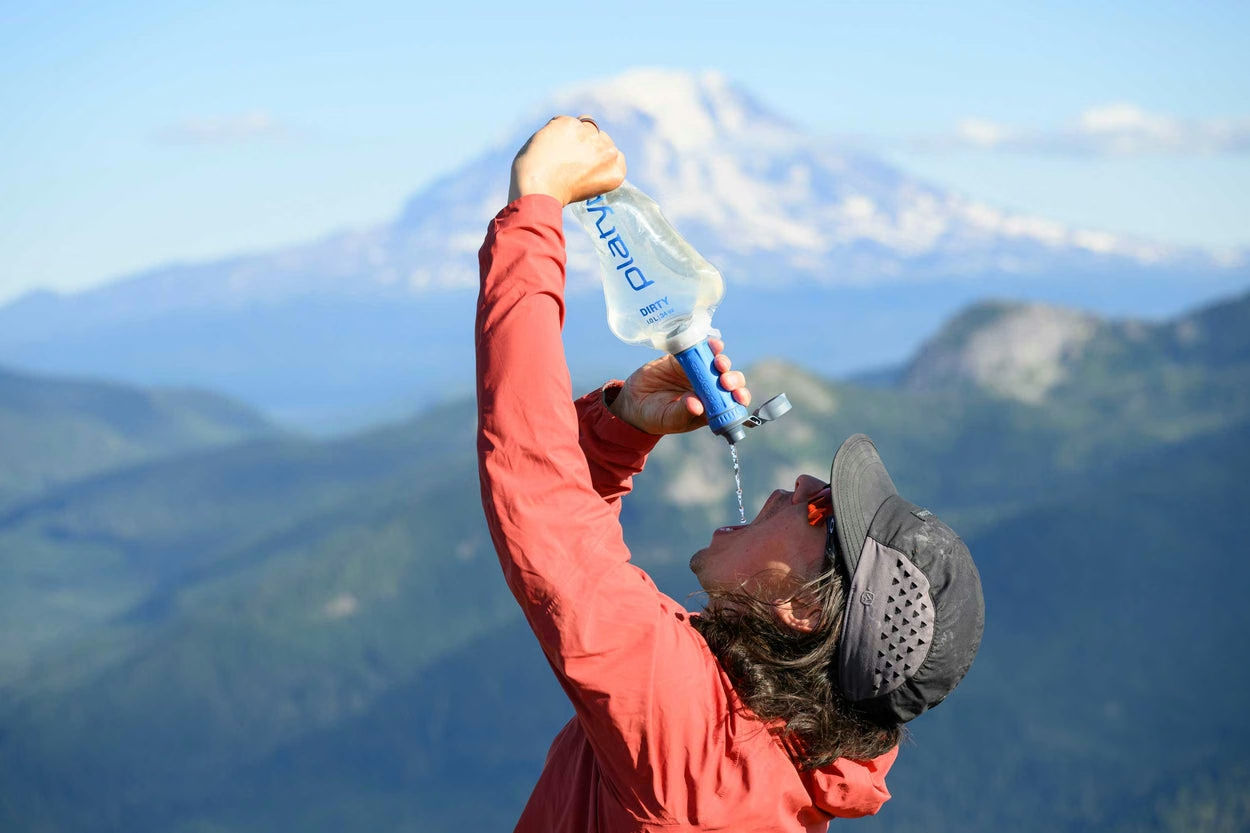
Both kits include a pouch for solo refills. These filters remove bacteria and protozoa. Where viruses are a concern, boil the water or filter it and then disinfect it.
Choose one filter system. With either kit, keep the outlet and drinking-bottle rim clear of splashes from untreated water.
Setup notes & sources
With the Sawyer Squeeze SP129, collect water in one of the included pouches, screw the filter inlet onto it and gently squeeze into your bottle. The outlet can pour into an open bottle, so the receiving bottle does not need matching threads.
The QuickDraw kit includes a one-liter dirty reservoir. Its DrinkCap lets you drink or pour. Swap to the ConnectCap when you want the outlet to screw directly onto a compatible clean bottle.
Sources: Sawyer Squeeze system · Platypus QuickDraw 1L system · QuickDraw 1L instruction manual (PDF)
A squeeze filter with two pouches
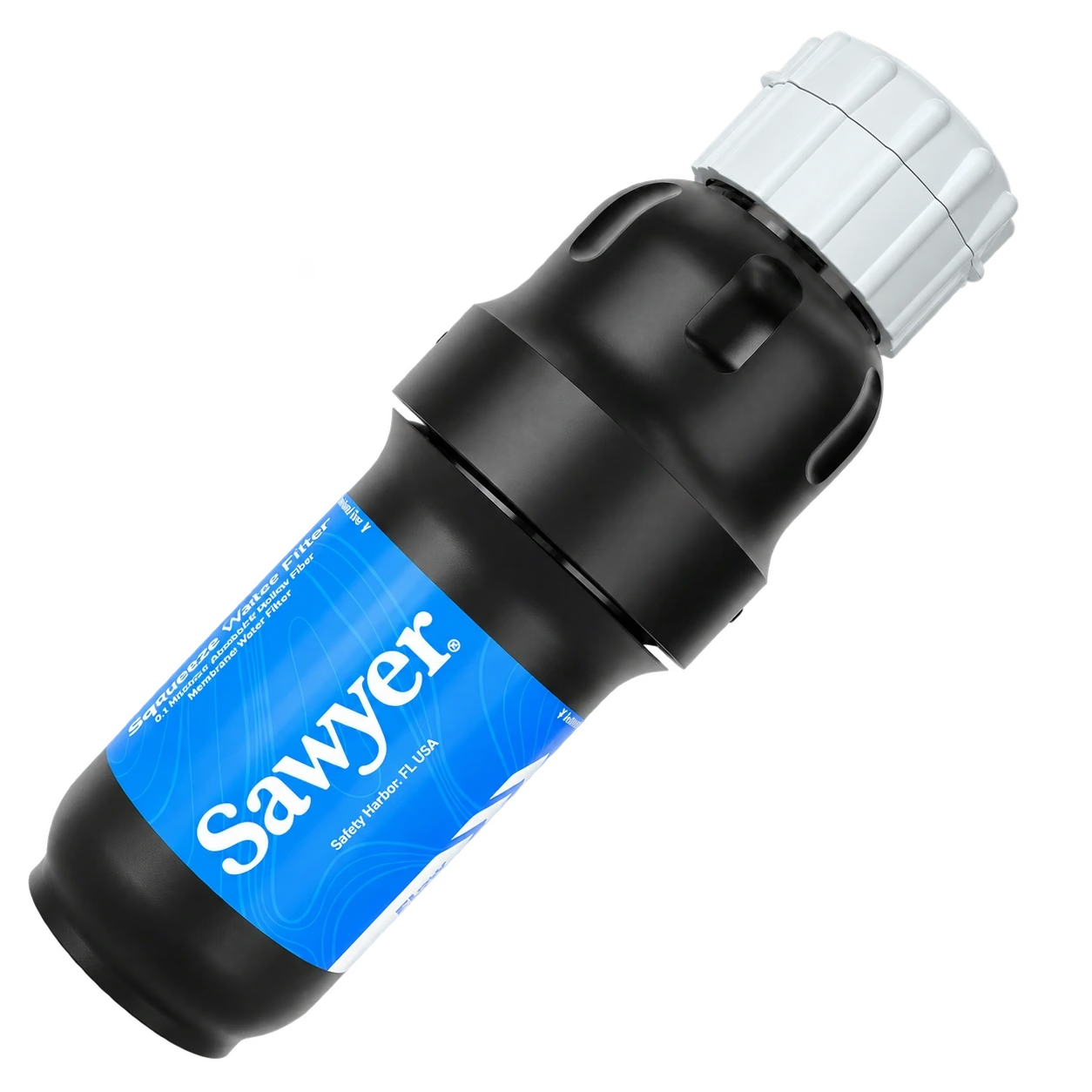
Sawyer Squeeze SP129
The SP129 comes with two 32 fl oz pouches. One can stay packed as a spare.
Fit & limits
The pouch screws to the inlet. Aim the clean outlet into your drinking bottle.
A filter with two ways to dispense
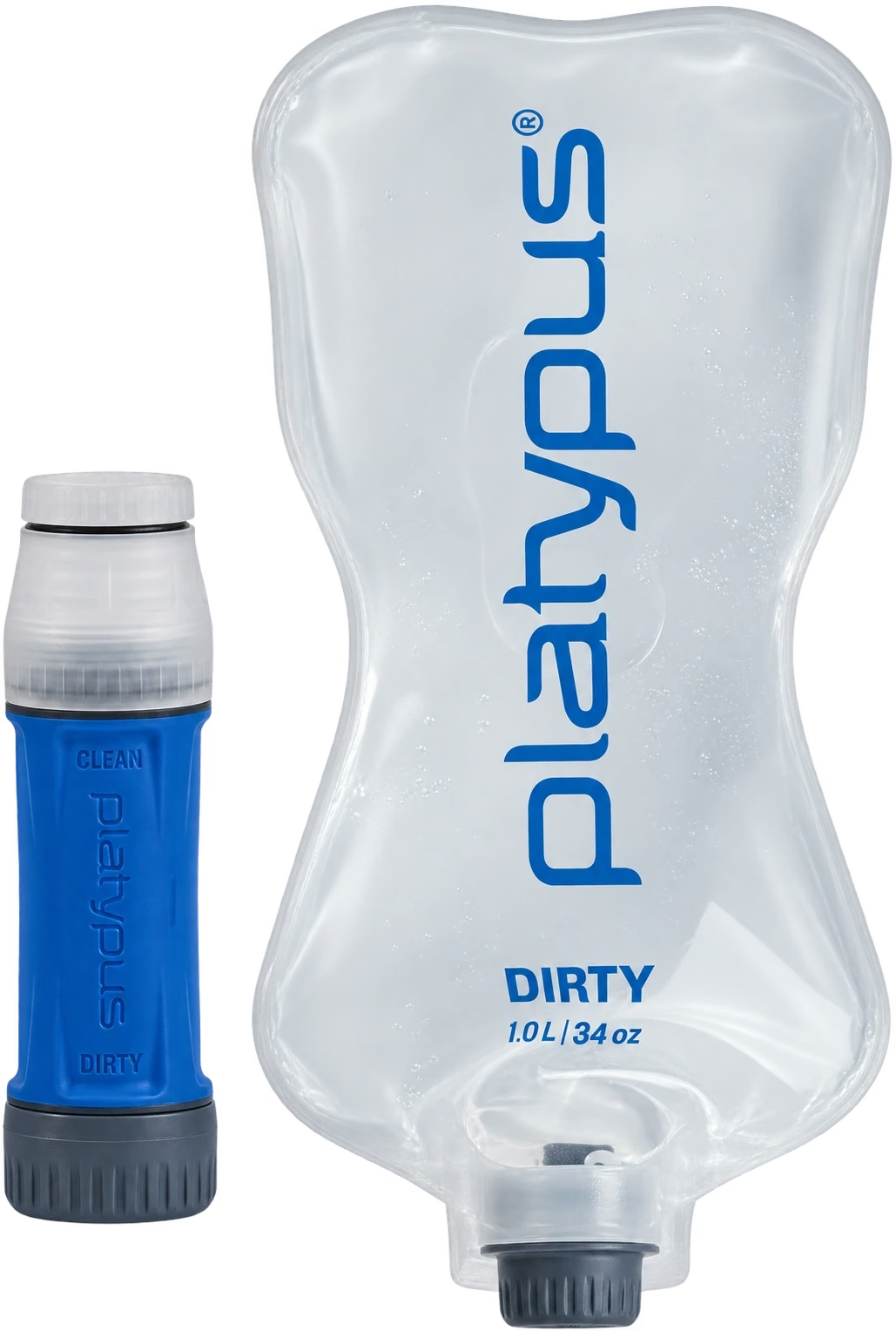
Platypus QuickDraw 1L
The QuickDraw 1L kit includes both outlet caps, so you can switch between pouring and a threaded bottle connection.
Fit & limits
Start with the supplied dirty reservoir. Use the ConnectCap for a compatible narrow-mouth clean bottle.
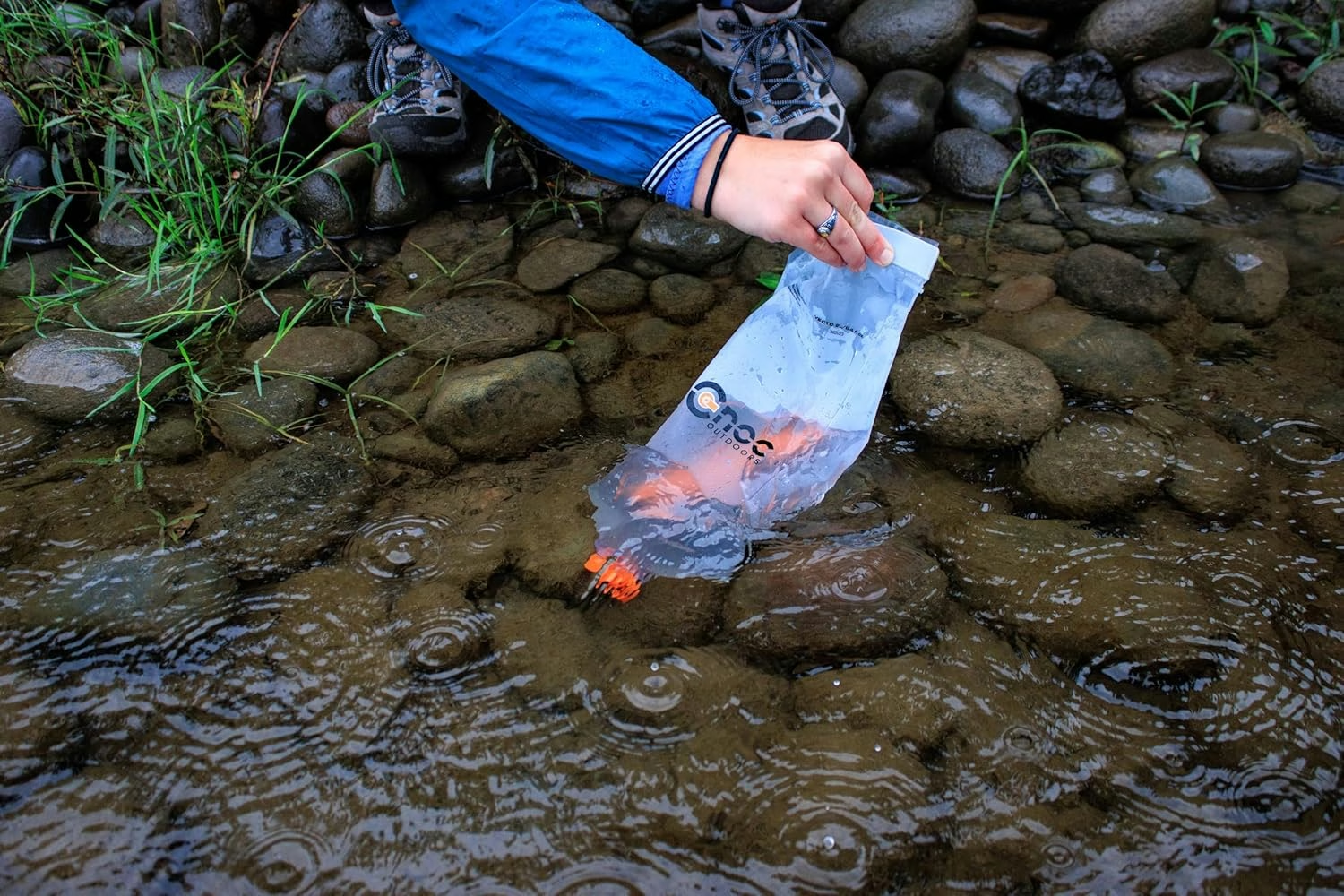
- Open the slider
- Scoop through the wide end
- Seal before filtering
03 / Collection bag
A wide opening helps at shallow creeks.
When a narrow pouch is awkward to fill, open the wide end of a CNOC Vecto to scoop. Its threaded end stays capped until you are ready to attach the filter.
Choose the 28 mm Vecto for a Sawyer Squeeze or QuickDraw inlet. CNOC’s 42 mm Vecto is a different connection.
Setup notes & sources
Use this Vecto as your untreated-water bag throughout the trip. Remove its slider, scoop from just below the surface, fold the opening over and slide the closure fully into place. The narrow neck at the other end feeds the filter.
On a QuickDraw, the original dirty reservoir uses the inlet’s outer threads. The 28 mm Vecto uses its inner bottle threads. CNOC names this pairing specifically. With a Sawyer Squeeze, finger-tighten the Vecto to the inlet just until the gasket seats.
Sources: CNOC Outdoors’ Vecto demonstration · Platypus compatibility and care · Sawyer filtration support · National Park Service water planning
A wider scoop for untreated water · Optional
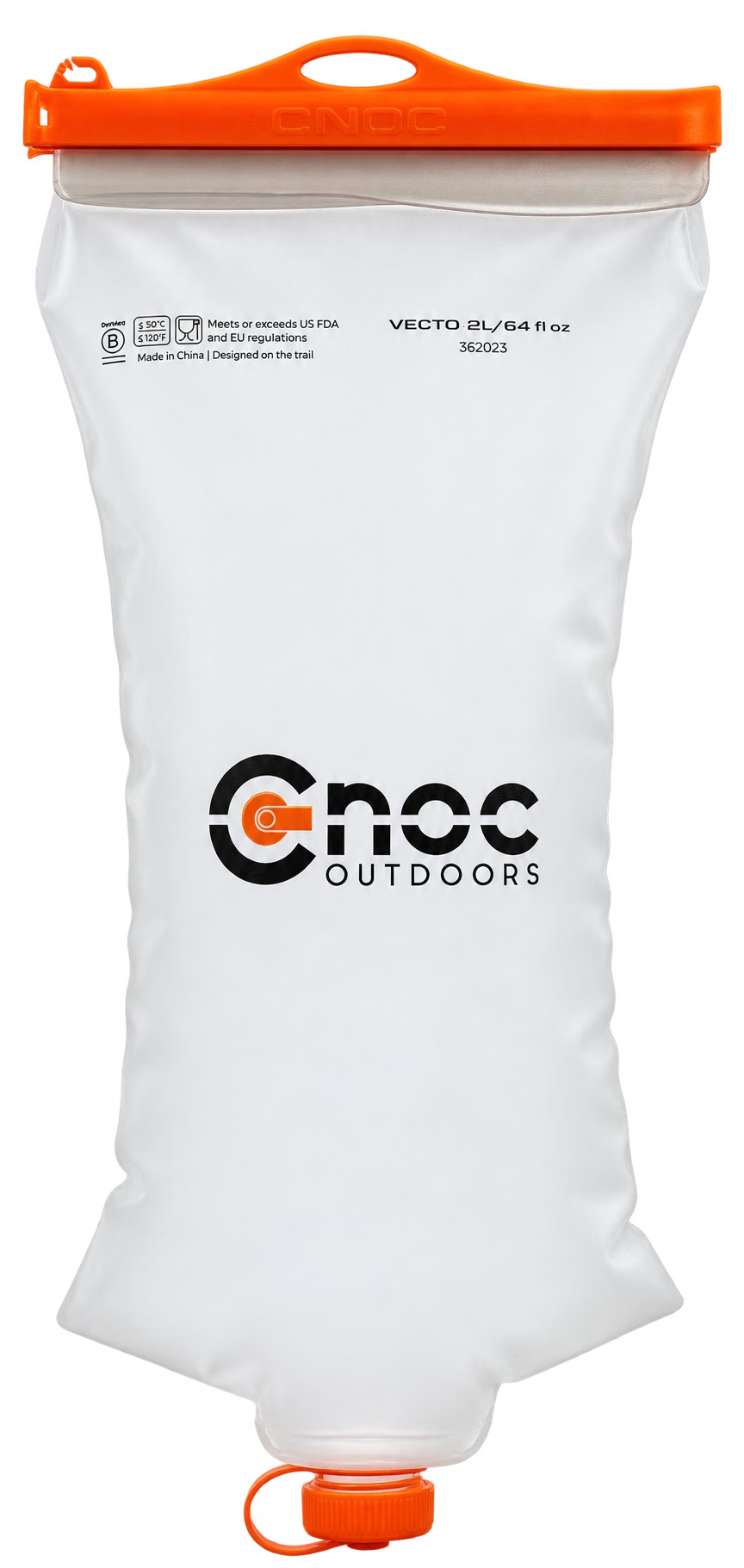
CNOC Vecto 2L
The 2 L Vecto opens across one end and can carry a larger batch back to camp.
Fit & limits
The orange 28 mm version in this review pairs with the Sawyer Squeeze or QuickDraw dirty inlet.
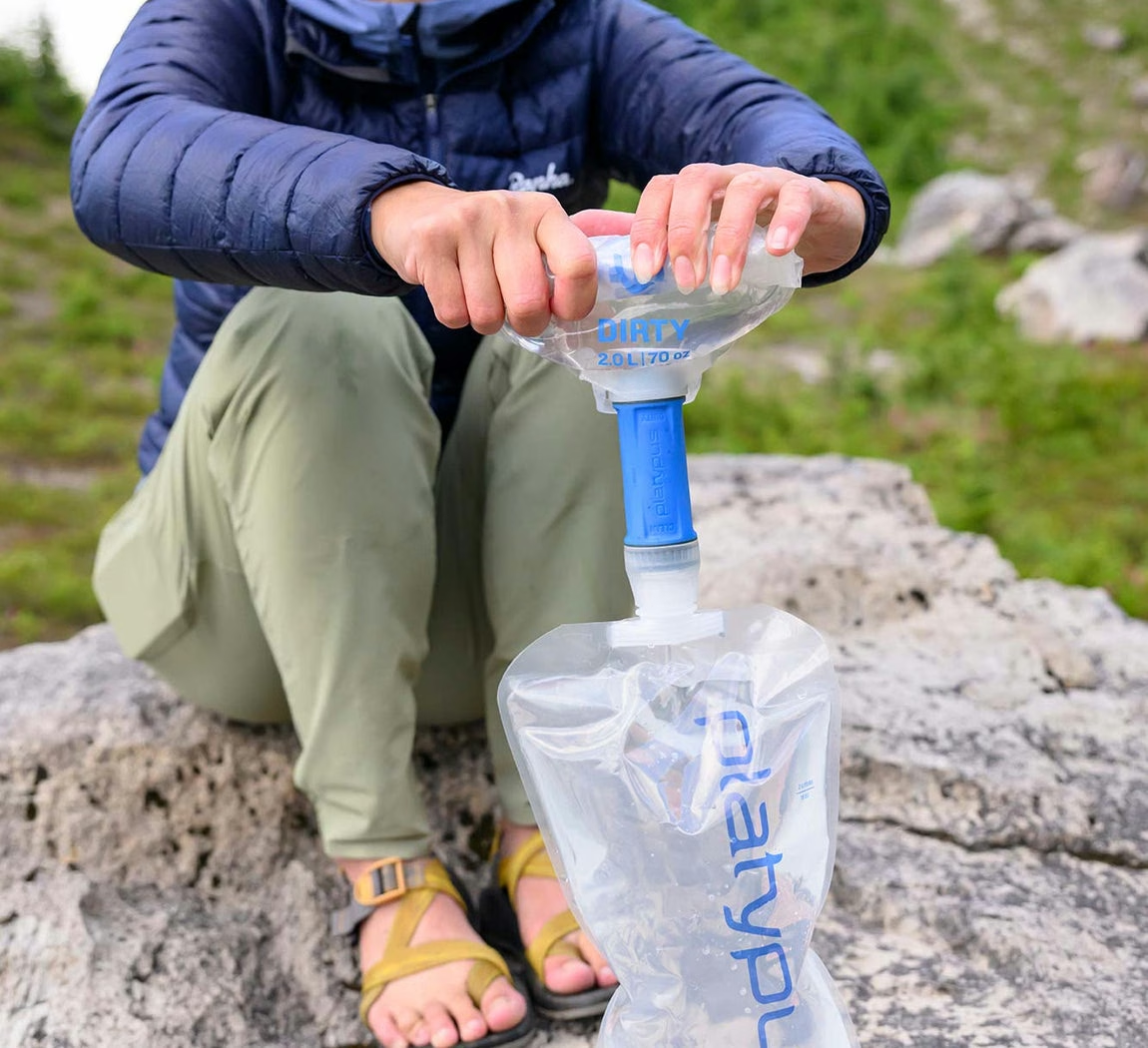
- Dirty reservoir above
- Filter between containers
- Clean bottle below
04 / Camp water
Filter into tomorrow’s supply.
For a shared meal or a dry camp, fill a dedicated clean container in batches. One person can bring water from the creek while another fills the cooking pot from the clean bottle.
For a screw-together setup, Platypus confirms the Platy 2L bottle fits the QuickDraw ConnectCap on the clean side.
Setup notes & sources
Mark your receiving bottle as clean before the trip. Keep its mouth and cap away from the creek and the wet outside of the collection bag. For a direct connection, take the cover off the QuickDraw ConnectCap and thread on the empty Platy bottle. Squeeze the dirty reservoir above it, disconnect the filled bottle and cap it.
If you already own a suitable cooking pot or clean bottle with a wide opening, dispense through the DrinkCap without touching the rim. When several hikers will refill together every evening, a purpose-built gravity kit can free someone’s hands. Check the dirty bag, hose and outlet supplied with that kit.
Sources: QuickDraw 1L instruction manual (PDF) · Platypus compatibility and care · Platypus Platy 2L bottle
A clean reservoir for camp · Optional
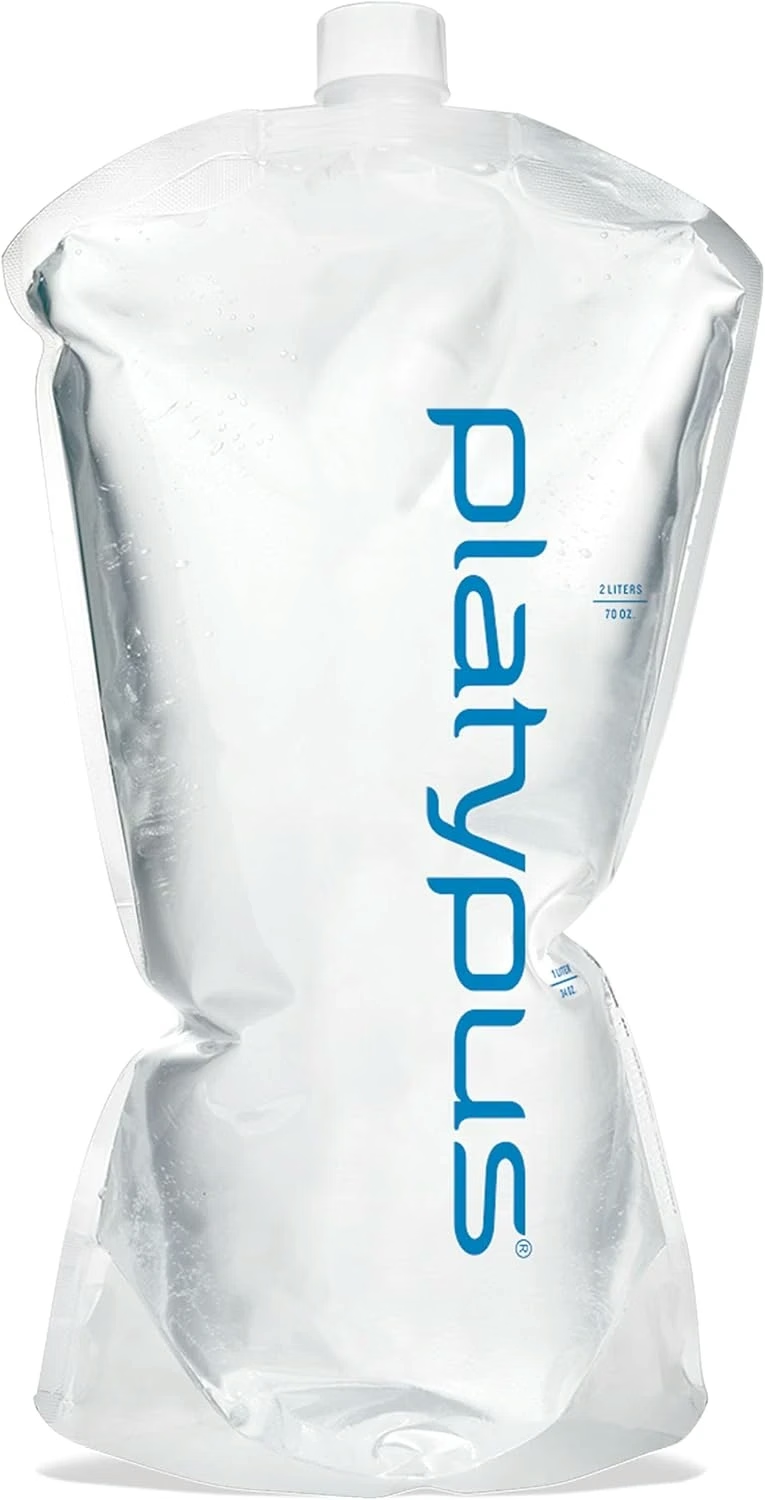
Platypus Platy Bottle
The Platy 2L adds room for filtered water at camp and rolls up after breakfast.
Fit & limits
It screws onto the QuickDraw ConnectCap. Give it a dedicated clean-side role.
- Reserve clean water
- Backflush from the outlet
- Protect a wet filter from freezing
05 / Flow & care
When the flow slows, clean the filter.
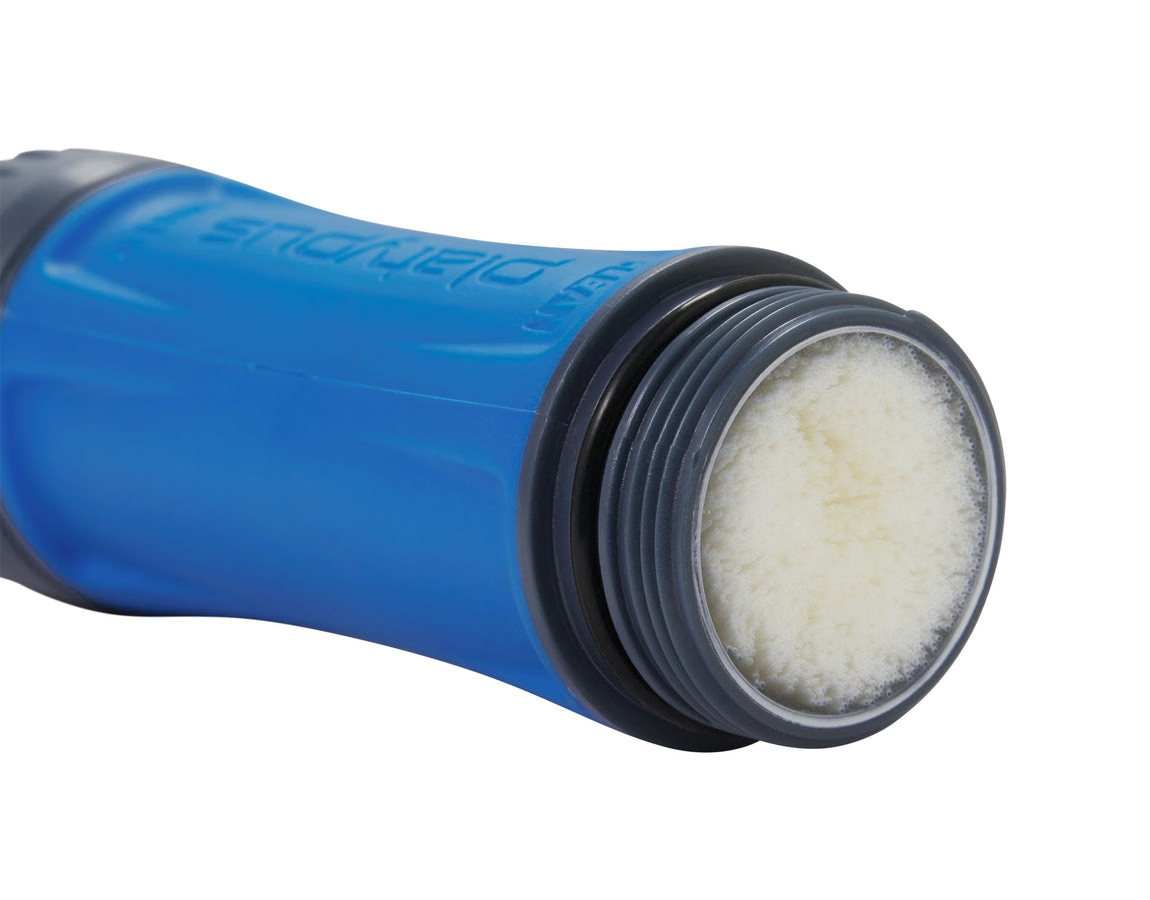
Sediment can slow a hollow-fiber filter to a trickle. Use the cleaning method for your cartridge before putting more pressure on the pouch.
Save clean water for backflushing. Once a filter has been wetted, protect it from freezing overnight.
Setup notes & sources
Backflushing sends clean water from the outlet toward the dirty inlet to carry debris out. Sawyer provides backwashing instructions for the Squeeze. Platypus describes a quick shake-clean for the QuickDraw as well as a deeper backflush.
If a wet Sawyer may have frozen, Sawyer recommends replacing it. For a dropped or possibly frozen QuickDraw, use Platypus’s model-specific integrity check and follow its result before relying on that cartridge again.
Sources: Sawyer filtration support · QuickDraw 1L instruction manual (PDF) · Platypus compatibility and care
YOUR STARTING CHECKLIST
Build the basics.
Add the rest when it helps.
Start with these.
- A water plan for the longest gap
Check current source conditions, include cooking water and choose treatment suited to the route.
- A dedicated dirty container
Start with the reservoir supplied with your filter. Practice attaching it before leaving home.
- A clean way to carry water
Pack a capped drinking bottle or reservoir. Keep its rim and cap away from untreated water.
Add for a reason.
- A wide-mouth collection bag
Worth packing if shallow water makes your current pouch difficult to fill.
- A larger clean reservoir
Useful when the group will cook away from the source or needs extra water for the morning.
- A gravity kit
Consider one when a group regularly needs several bottles filled at the same stop.
Sources & further reading
Use local water advisories for your route. The setup and care details below come from the manufacturers of these specific filters and containers. Layout illustrations show concepts; product photographs link to the exact reviews. Product prices retain the observation dates shown beside them.
- National Park Service water planning ↗
Checking current water sources and alerts, collecting water and choosing a treatment method.
Source checked - CDC backcountry water treatment ↗
Treatment options for germs and guidance for water contaminated with harmful chemicals or toxins.
Source checked - Sawyer Squeeze system ↗
Attaching a squeeze pouch and dispensing through the outlet.
Source checked - Sawyer filtration support ↗
Inlet gaskets, pouch connections, backwashing and suspected freeze damage.
Source checked - CNOC Outdoors’ Vecto demonstration ↗
The manufacturer identifies Sawyer Squeeze and Platypus QuickDraw as dirty-side pairings for the 28 mm model and distinguishes the 42 mm version.
Source checked - Platypus QuickDraw 1L system ↗
Blue 13903 kit contents, filter limits, inlet threads and outlet-cap options.
Source checked - QuickDraw 1L instruction manual (PDF) ↗
Clean and dirty sides, ConnectCap assembly, field care and the cartridge integrity check.
Source checked - Platypus compatibility and care ↗
Separate vessel lists for the QuickDraw inlet and ConnectCap outlet, plus field cleaning.
Source checked - Platypus Platy 2L bottle ↗
Soft bottle capacity, compact empty storage and field photo of a filter-to-bottle transfer.
Source checked