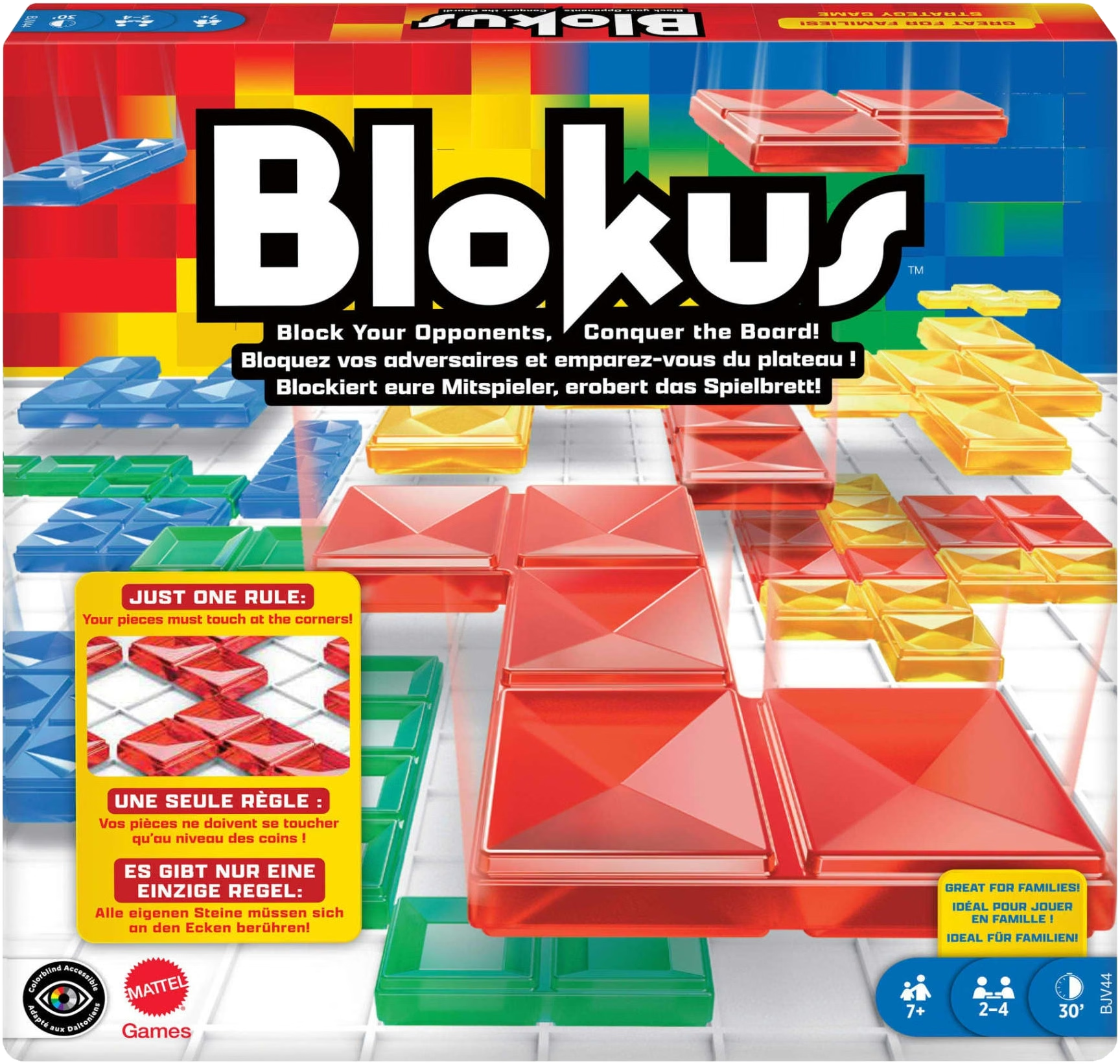
 BJV44 · classic white game board
Math gamesBoard games
Can your next shape reach a corner?
Mattel Blokus Classic
BJV44 · patterned pieces
Buyer feedback ↓A single open square can be a bridge for your next piece. On the classic Blokus board, four colors compete for space as the gaps grow tighter.
- 2–4PlayersAges 7 and up
- 20 × 20Grid squares400 spaces on the classic board
- 84 piecesFour colors21 shapes per color
Amazon US · BJV44 · patterned pieces · Affiliate link
THE QUICK TAKE
Is it right for you?
Pick Classic for players who like turning a shape to see exactly where it will fit. Each color has the same 21 pieces. Middle- and high-school players can look for rotations, count the area a move saves and explain which corner an opponent could close next. The matching patterns offer another way to identify the four colors.
Four players each manage one color. With two players, each person manages two colors and scores both. With three, take turns playing the fourth color and leave it out of the final scores. For a group that finds the loose shapes small, the XL comparison below shows how much more table space its larger board uses.
01 / BUYING NOTES
Before you buy.
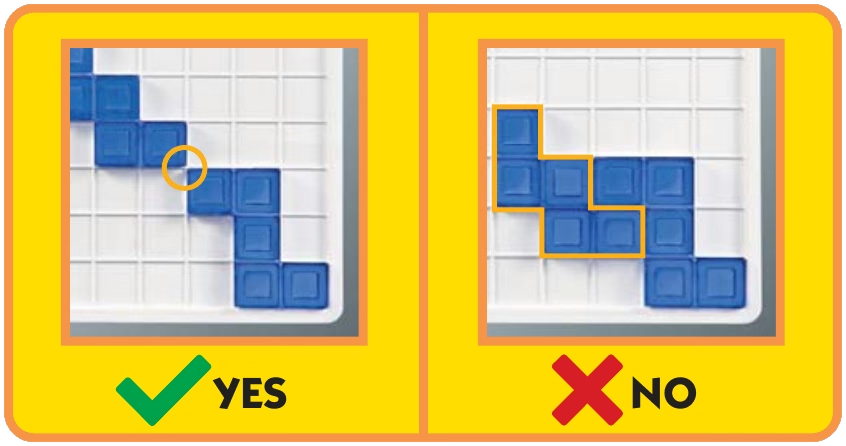
Which blue move is legal?
Start your first piece on a corner square of the board. After that, a new blue piece must touch a blue corner without sharing a blue edge. In Mattel’s left example the corners meet. On the right the pieces touch along a side, so the move fails even if other corners line up.
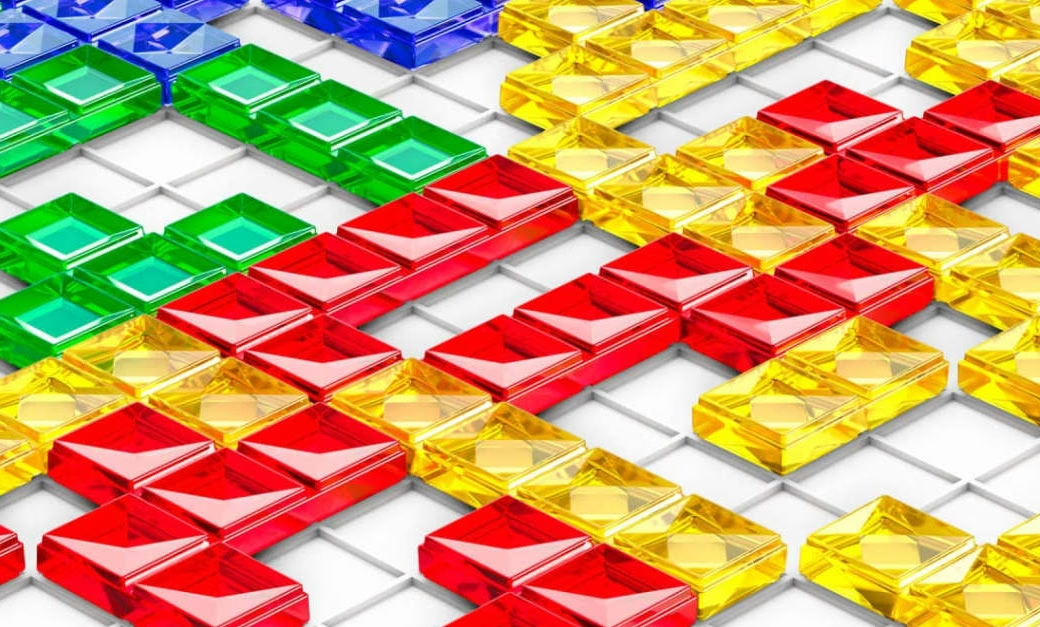
Opponents can meet edge to edge.
Look near the lower right of the photo. Red pieces lie directly against yellow. The corner-only rule governs your own color. A rival can take the squares beside your pieces and cut off a route you meant to use. Turn a piece in your hand and check your next open corner before putting it down.
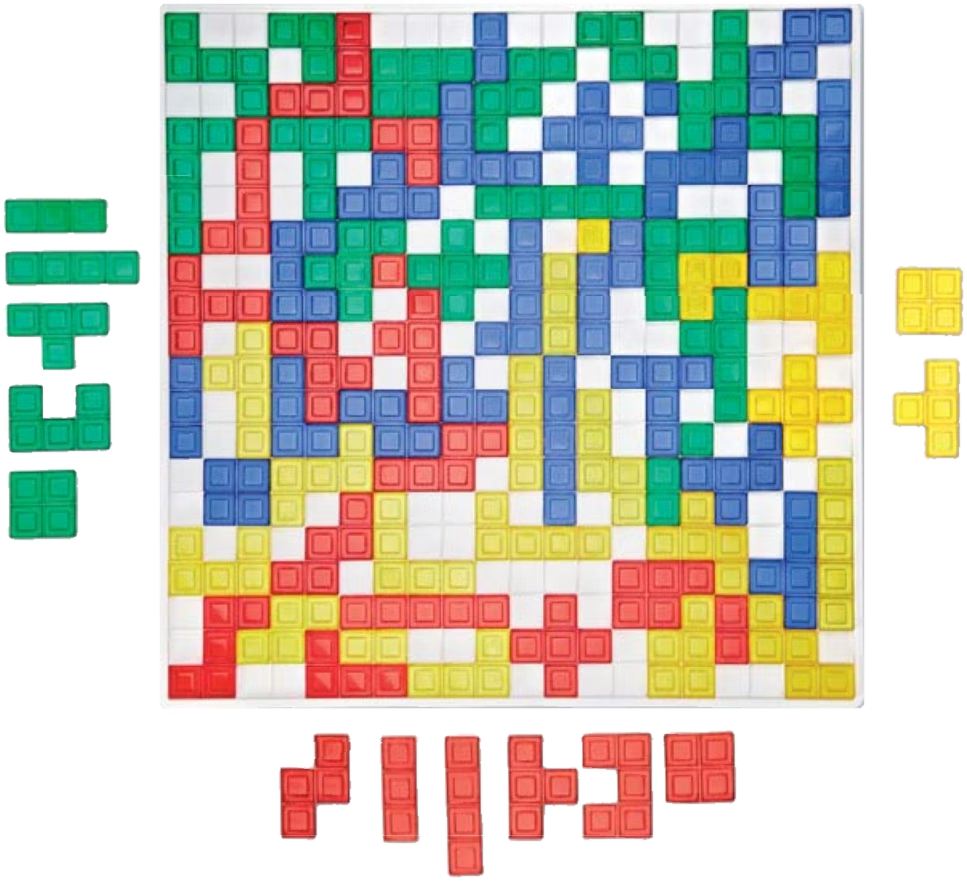
Two yellow pieces cost eight squares.
Look to the right of the finished board. The yellow square covers four cells and the yellow T covers four more. In basic scoring, count the eight squares left off the board. The lowest total wins. This is why it can pay to find room for your larger shapes early.
Mattel classic set ↗ · BJV44 instructions ↗ · Identify the board size ↗ · Amazon US listing ↗
02 / AMAZON REVIEWS
The buyers’ view.
Pros
What buyers like
- Game quality897
- Fun781
- Family-friendly450
- Ease of use320
- Strategy159
- Educational116
- Player count106
- Game duration71
The small numbers are review mentions. Topics and sentiment are from Amazon’s customer-review overview.
Amazon US · Checked . Ratings may include other colors and sizes.
View source ↗03 / REVIEWS & VIDEO
See it in use.
See how it works, then read the findings behind the buying advice.
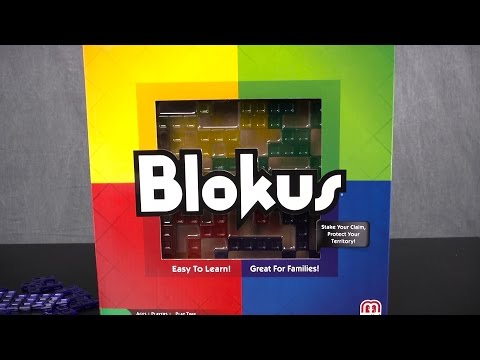
Blokus from Mattel
See the corner-touch rule in play on a physical Blokus board. The review was filmed with earlier packaging.
Watch on YouTube ↗TTPM demonstrates the shared rule with an earlier package. The accompanying accounts describe family play and a sixth-grade classroom activity.
Read 2 written sources Product scope is labeled · key findings in bold
The family preferred four players. They sometimes boxed in one opponent while another quietly expanded, leaving large gaps nobody could use and large pieces still in hand. They also rotated players at bigger gatherings.
Michael and Paula Maida describe preservice teachers devising questions about Blokus, some of which two sixth-grade classes explored. The activity asked students to justify placements, compare shapes and discuss possible moves.
04 / COMPARE
Different priorities.
Choose the tradeoff that fits how you will use it.
Swipe to see every alternative →
THIS GUIDEMattel Blokus ClassicBJV44 · patterned pieces | 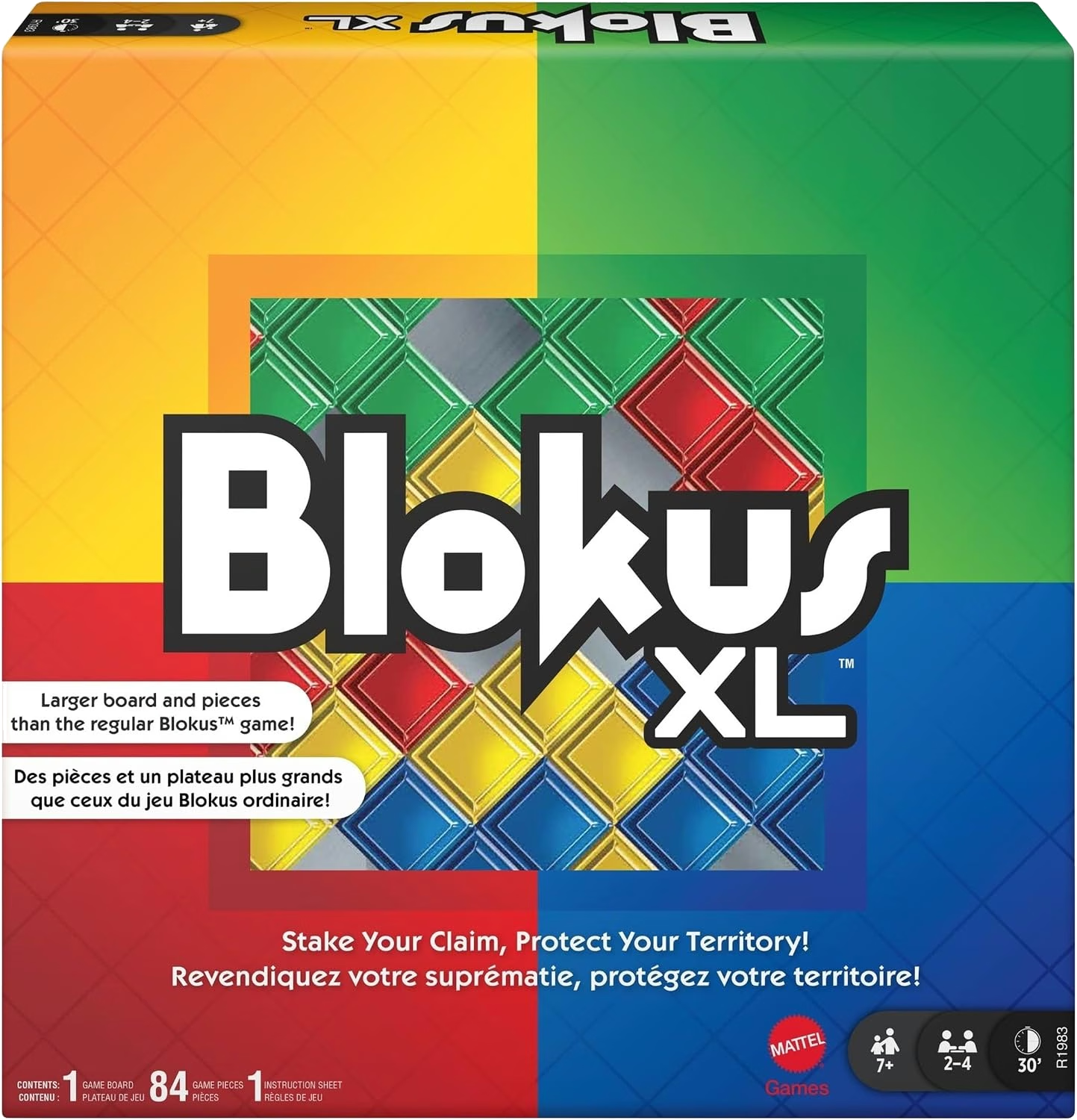 ALTERNATIVE Mattel Blokus XLR1983 · oversized board and pieces | |
|---|---|---|
| Amazon price | $16.19 | $19.99 |
| Board face | About 10 × 10 in L × W≈ 3 bank-card lengths per side | 12 × 12 in L × W≈ 3.6 bank-card lengths per side |
| What stays the same | 84 pieces, 21 per color | 84 pieces, 21 per color |
| Why choose it | Compact white board with patterned pieces | Larger pieces and a wider playing surface |
| Explore | Read buying guide →Source ↗ | View on Amazon ↗Source ↗ |
About these everyday comparisons
Approximate comparisons to familiar objects: a bank card’s 3.37-inch long edge, a Letter sheet’s 11-inch long edge, or a US nickel’s 21.21 mm diameter / 5 g weight. Water comparisons exclude the container’s weight. Capacity comparisons describe volume, not exterior size or how food fits. Reference pictures identify the object; use the labeled ratio for the comparison.