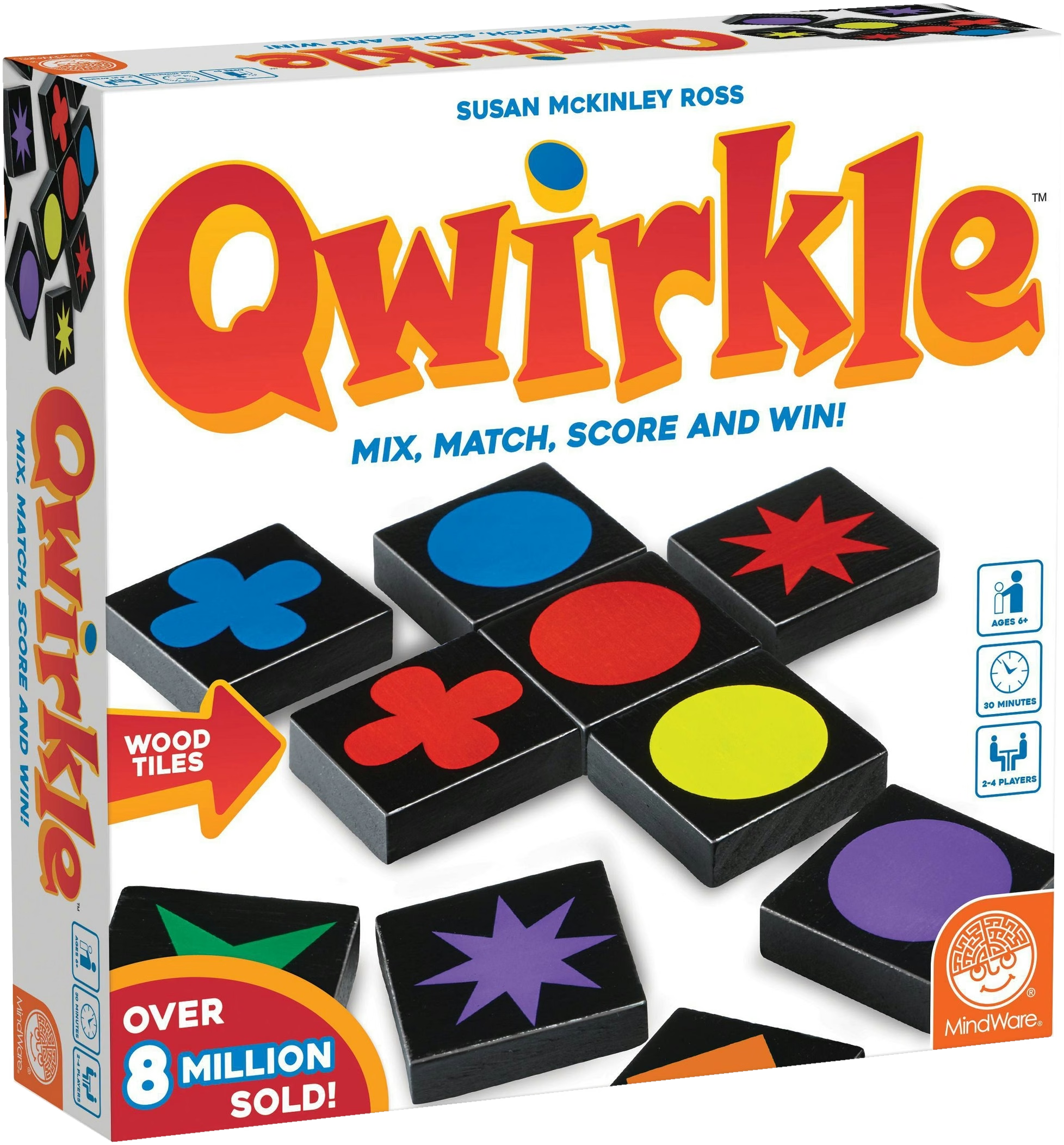
 MindWare · classic 108-tile game
Math gamesBoard games
One tile, two scoring lines.
MindWare Qwirkle
Classic · full-size wooden tiles
Buyer feedback ↓An orange circle can finish a row of circles and a column of orange shapes. In Qwirkle, the most valuable spot on the table is often where two patterns meet.
- 2–4PlayersAges 6 and up
- 1.25 × 1.25 inL × WOne wooden tile.≈ 1.5 nickel diameters per side
- 30–60 minPlaying timeMindWare rulebook estimate
Amazon US · Classic · full-size wooden tiles · Affiliate link
THE QUICK TAKE
Is it right for you?
Choose the classic set for older kids and adults who like spotting patterns together. A new player can look for one legal match. A middle- or high-school player can compare intersecting scores and decide whether a five-tile line gives an opponent too tempting an opening.
The large tiles are easy to share across a table, and the grid can grow in any direction. Being able to tell all six colors apart matters. One long-time buyer had trouble distinguishing some colors. MindWare’s smaller Travel edition uses the same rules and packs into a zippered pouch.
01 / BUYING NOTES
Before you buy.
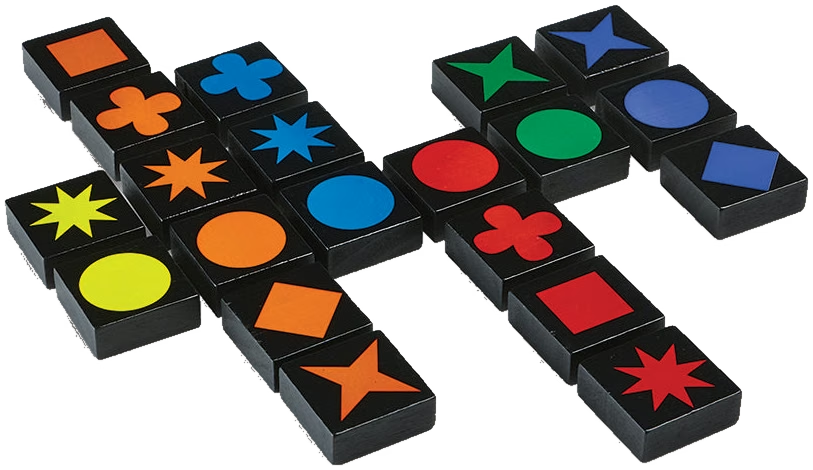
Find the tile that works both ways.
Follow the circles through six colors. Then follow the orange line through six shapes. The orange circle belongs to both. A line may repeat its color or its shape, but an identical tile cannot appear twice in that line.
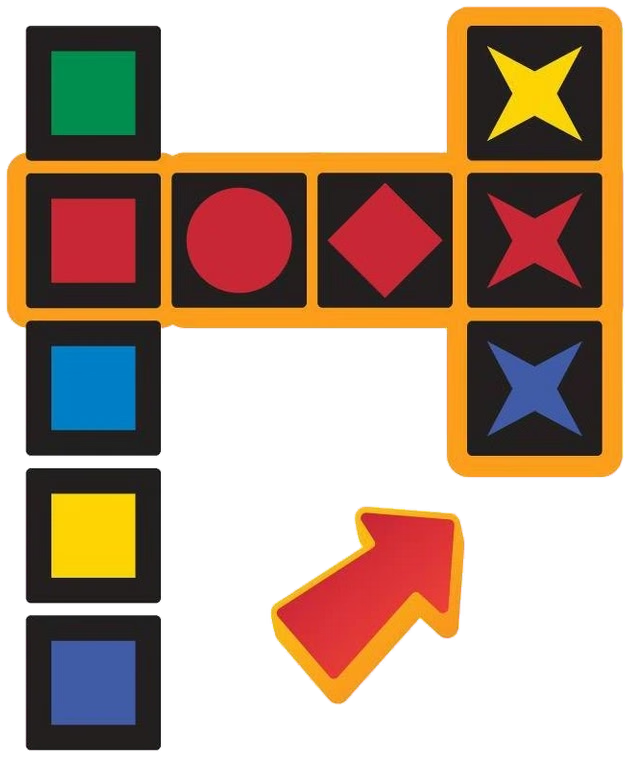
Why is this play worth seven?
Find the red four-point star. It belongs to a row of four red tiles and a column of three matching stars. The illustrated play earns 4 + 3 = 7 points. A completed line of six earns six points for the tiles and six more as a bonus.
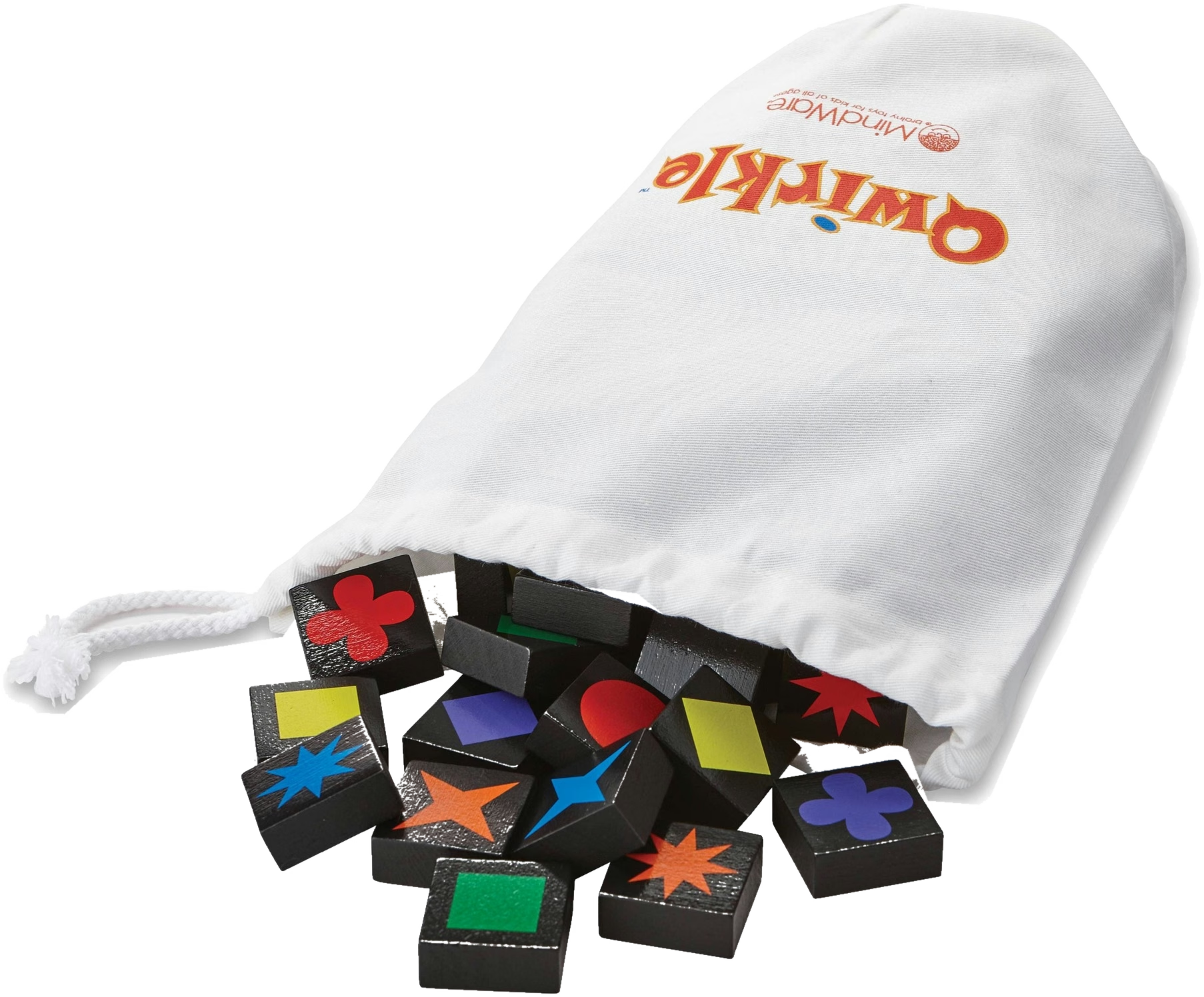
Keep one eye on the draw bag.
There are three copies of each color-and-shape pair. Draw a hand of six and refill it after playing while tiles remain. If all three copies of a tile are already on the table, that tile cannot come out of the bag again. Leave room around the grid for new rows.
MindWare rules ↗ · MindWare tile sizes ↗ · Classic US edition ↗
02 / AMAZON REVIEWS
The buyers’ view.
Pros
What buyers like
- Gameplay3,561
- Quality1,456
- Family-friendly854
- Ease of use839
- Easy to play406
- Strategy392
- Age-appropriate343
- Engaging273
The small numbers are review mentions. Topics and sentiment are from Amazon’s customer-review overview.
Amazon US · Checked . Ratings may include other colors and sizes.
View source ↗03 / REVIEWS & VIDEO
See it in use.
See how it works, then read the findings behind the buying advice.

Official How to Play Qwirkle
Follow the publisher’s demonstration from the first tiles to a scoring line.
Watch on YouTube ↗MindWare demonstrates the tile rules. The two independent accounts below explain where there is room for strategy once everyone knows how to match.
Read 2 written sources Product scope is labeled · key findings in bold
Guest reviewer Natalie found that a child could follow the matching rule while an experienced player watched for bonus opportunities. She describes saving the fifth tile in a line when playing it would let someone else finish the six.
The jury highlights the value of scoring across several lines with one placement. It also notes that drawing unseen tiles can undo a plan, which keeps the tactical challenge accessible to players with different levels of experience.
04 / COMPARE
Different priorities.
Choose the tradeoff that fits how you will use it.
Swipe to see every alternative →
THIS GUIDEMindWare QwirkleClassic · full-size wooden tiles | 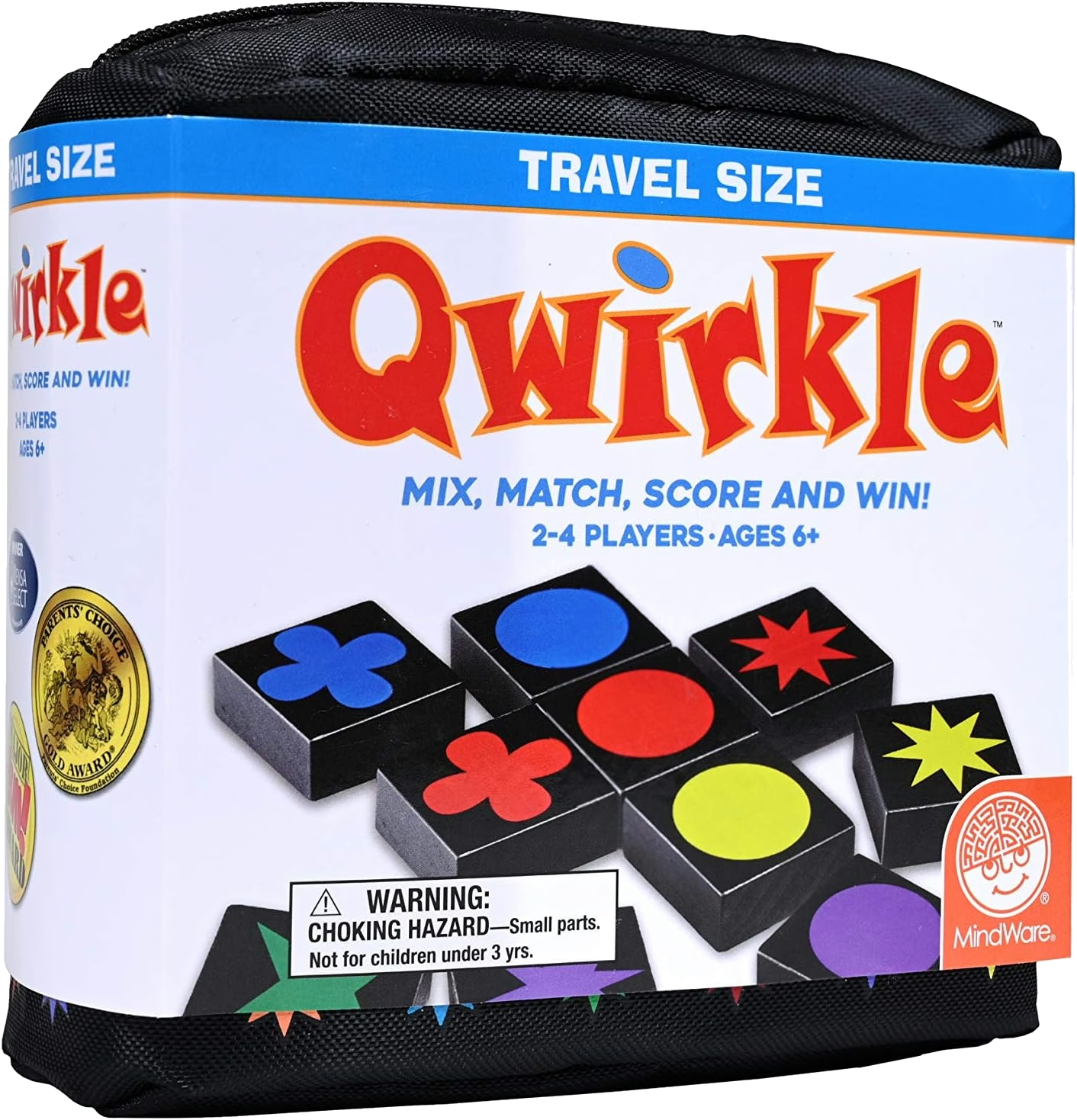 ALTERNATIVE MindWare Travel QwirkleTravel Size · smaller wooden tiles | |
|---|---|---|
| Amazon price | $19.99 | $19.99 |
| One tile face | 1.25 × 1.25 in L × W≈ 1.5 nickel diameters per side | 0.75 × 0.75 in L × W≈ 0.9 nickel diameters per side |
| How it packs | Drawstring bag in a box | Zippered travel pouch |
| What you play with | 108 wooden tiles, six shapes and six colors | 108 wooden tiles, six shapes and six colors |
| Explore | Read buying guide →Source ↗ | View on Amazon ↗Source ↗ |
About these everyday comparisons
Approximate comparisons to familiar objects: a bank card’s 3.37-inch long edge, a Letter sheet’s 11-inch long edge, or a US nickel’s 21.21 mm diameter / 5 g weight. Water comparisons exclude the container’s weight. Capacity comparisons describe volume, not exterior size or how food fits. Reference pictures identify the object; use the labeled ratio for the comparison.
05 / RELATED FINDS
A useful extra.
For the way you plan to use it.
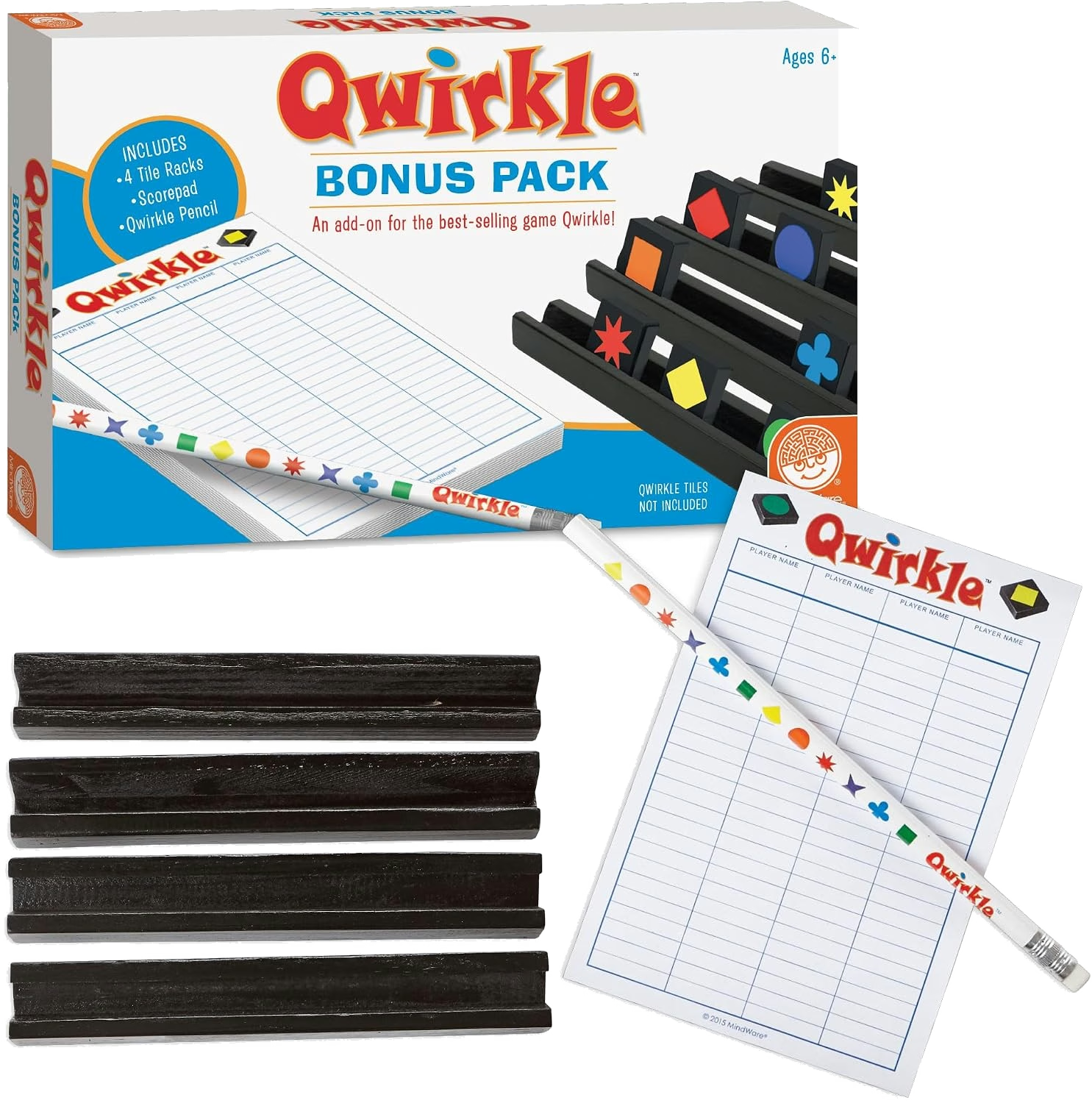
Keep a hand of tiles upright.
MindWare Qwirkle Bonus Pack
Useful if standing the individual tiles on edge is awkward. Each player gets a rack, and the score pad keeps running totals together.