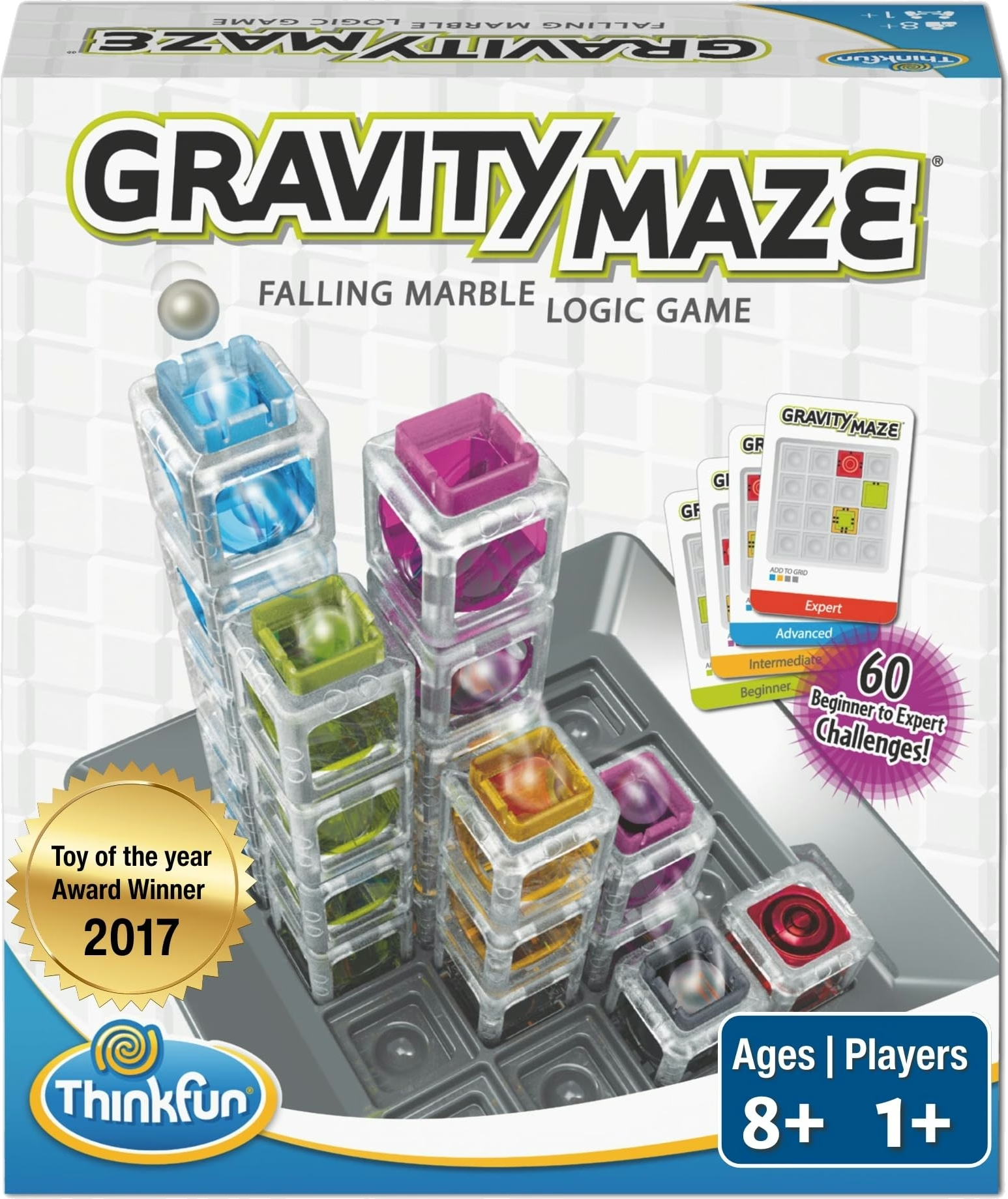
 ThinkFun · original #1006 · 60 falling-marble challenges
Math gamesBoard games
How can a falling marble visit the same tower twice?
ThinkFun Gravity Maze
Original 60-challenge falling-marble game · 44001006
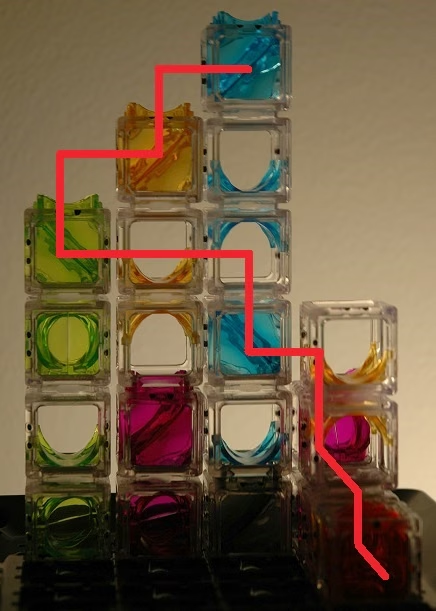
Buyer feedback ↓Follow the red line in a real Gravity Maze run. The marble returns to the blue tower through a lower opening. Try predicting where it will leave before tracing the rest of the route.
- 1PlayerAges 8+ · physical logic puzzle
- 60ChallengesBeginner through Expert · answers on the backs
- 9Building towersPlus a red target, a four-by-four grid and three marbles
- 10.47 × 9.38 × 2.83 inL × H × WListed dimensions of the complete US item.≈ 3.1 × 2.8 × 0.84 bank-card lengths
Amazon US · Original 60-challenge falling-marble game · 44001006 · Affiliate link
In context: 31 Games and Puzzles for People Who Love Math
THE QUICK TAKE
Is it right for you?
Buy this for a student who likes finding out why a build failed. A parent who showed a six-year-old the orientation dots still helped with the tougher cards. Older solvers can start by predicting the exit from each tower, then check the first place their prediction fails. In the photographed run, seeing the marble come back to the blue column is only half the answer. Its height tells you which opening it can use.
The original was $17.49, sold and shipped by Amazon.com, with all three marbles included. The 60 cards suit a household that likes a defined goal. An adult who played with children wanted more levels. In another household, the eight- and eleven-year-olds set it aside after the first day. If building your own runs sounds appealing, you can keep using the towers and swap homemade challenges after finishing the deck.
01 / BUYING NOTES
Before you buy.
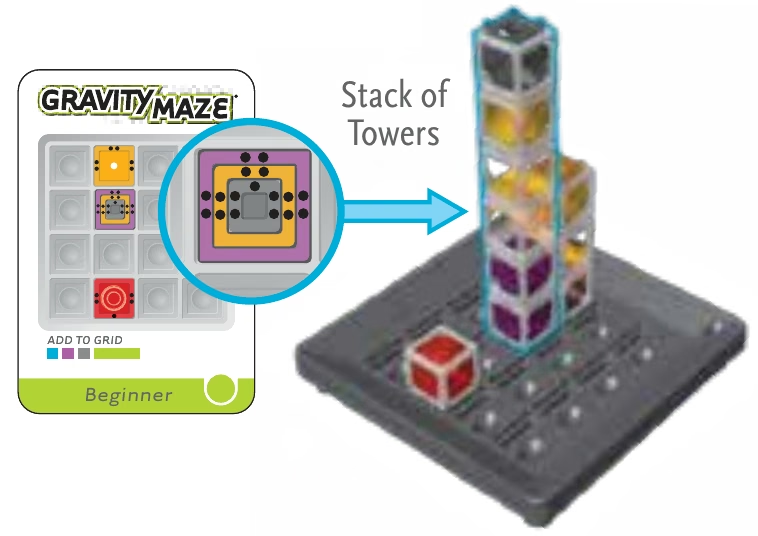
How do three colored squares become one stack?
Read the nested squares from the outside in. The purple outline means the purple tower touches the grid. Orange sits on purple, and gray goes on top. Count their heights in grid units. Purple contributes two, orange three and gray one, for a six-unit stack made of three towers. Match the little edge dots before you add another piece. The white start dot is on a different square.
How does the marble get back into the blue tower?
Start at the top right of this photographed run. The blue ramp sends the marble down toward the amber ramp and then the green one. Follow the red trace back across the open space underneath the amber ramp. The marble enters blue again, this time lower down. The reviewer follows it from there into purple, through amber and gray, and into the red target. Some of those lower passages are hidden behind the front towers.
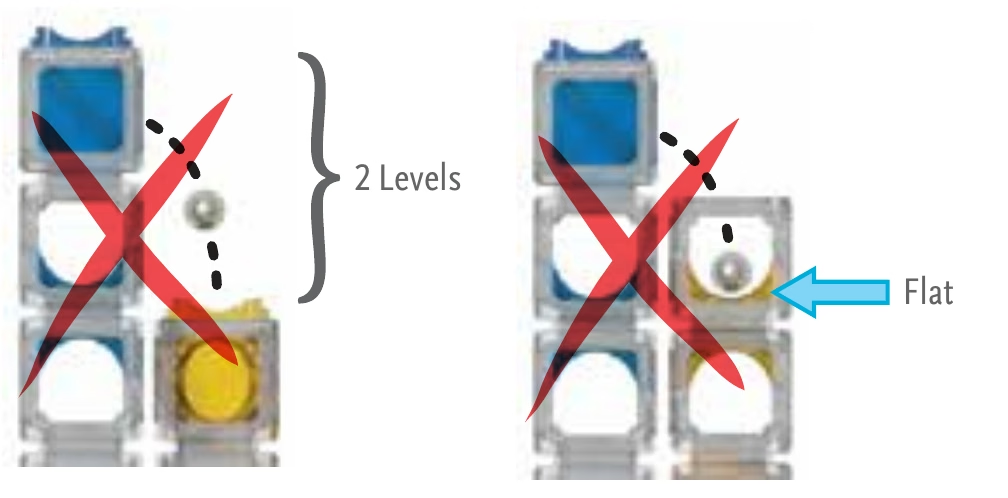
Which drops should you rule out before testing?
In the left drawing the marble falls two open levels. A legal free fall spans at most one. In the right drawing the marble lands directly on a flat surface, which the rules also forbid. For a harder challenge, point to the first illegal landing before releasing the marble. Then decide where a sloped surface would have to meet it.
ThinkFun original illustrated rules ↗ · Original #44001006 US model listing ↗ · US item dimensions and offer ↗ · Publisher support on additional levels ↗
02 / AMAZON REVIEWS
The buyers’ view.
Pros
- One buyer liked getting an immediate answer by dropping the marble. A parent and daughter finished the beginner cards and wanted to try the harder ones.
- Several families enjoyed experimenting with the pieces. One reviewer’s six-year-old liked trying different arrangements.
Cons
- One family found the orientation dots hard to see and the towers easy to shift. Showing the dots to their six-year-old helped with setup, and harder cards still needed some guidance.
- One household wanted more levels. In another, the eight- and eleven-year-olds stopped after a day, even though the parent found the pieces sturdy.
What buyers like
- Gameplay1,930
- Gift688
- Difficulty495
- Educational381
- Age-appropriate257
- Value for money179
- Engaging149
- Concept101
The small numbers are review mentions. Topics and sentiment are from Amazon’s customer-review overview.
Amazon US · Checked . Ratings may include other colors and sizes.
View source ↗03 / REVIEWS & VIDEO
See it in use.
See how it works, then read the findings behind the buying advice.
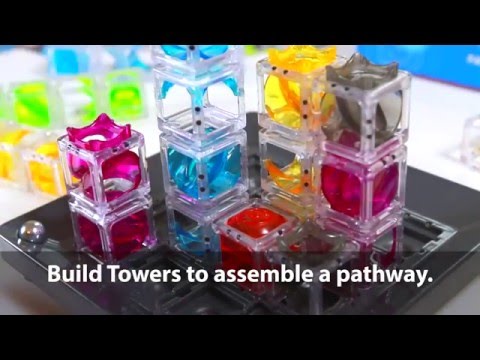
Fall For Gravity Maze, by ThinkFun!
Watch the marble descend through the transparent towers, then compare the physical layout with the challenge card.
Watch on YouTube ↗ThinkFun shows the pieces in motion. Two published playthroughs explain how the original towers carry and support a route.
Read 2 written sources Product scope is labeled · key findings in bold
The reviewer photographed one run from the side and traced its path. A marble can pass through a tower a second time by using a lower opening. A turn at the purple tower then sends it through the remaining pieces to the red target. The side view helps explain a route that is hard to read on a flat challenge card.
Liu’s daughter finished the deck with some help and started again. He described challenges that put towers on their sides and require the player to figure out how to support them. ThinkFun’s rules give a partner something specific to check on those builds. An elevated horizontal tower needs two supports.
04 / COMPARE
Different priorities.
Choose the tradeoff that fits how you will use it.
Swipe to see every alternative →
THIS GUIDEThinkFun Gravity MazeOriginal falling-marble game · 44001006 | 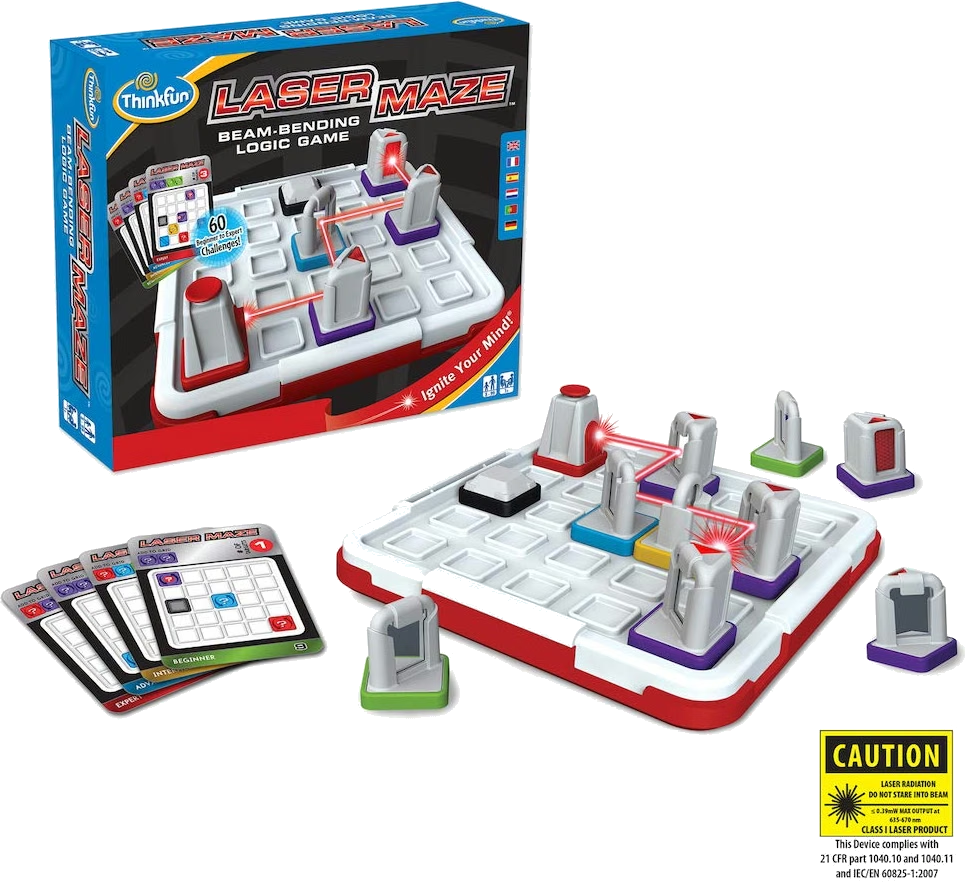 ALTERNATIVE ThinkFun Laser MazeOriginal mirror-routing game · 44001014 | 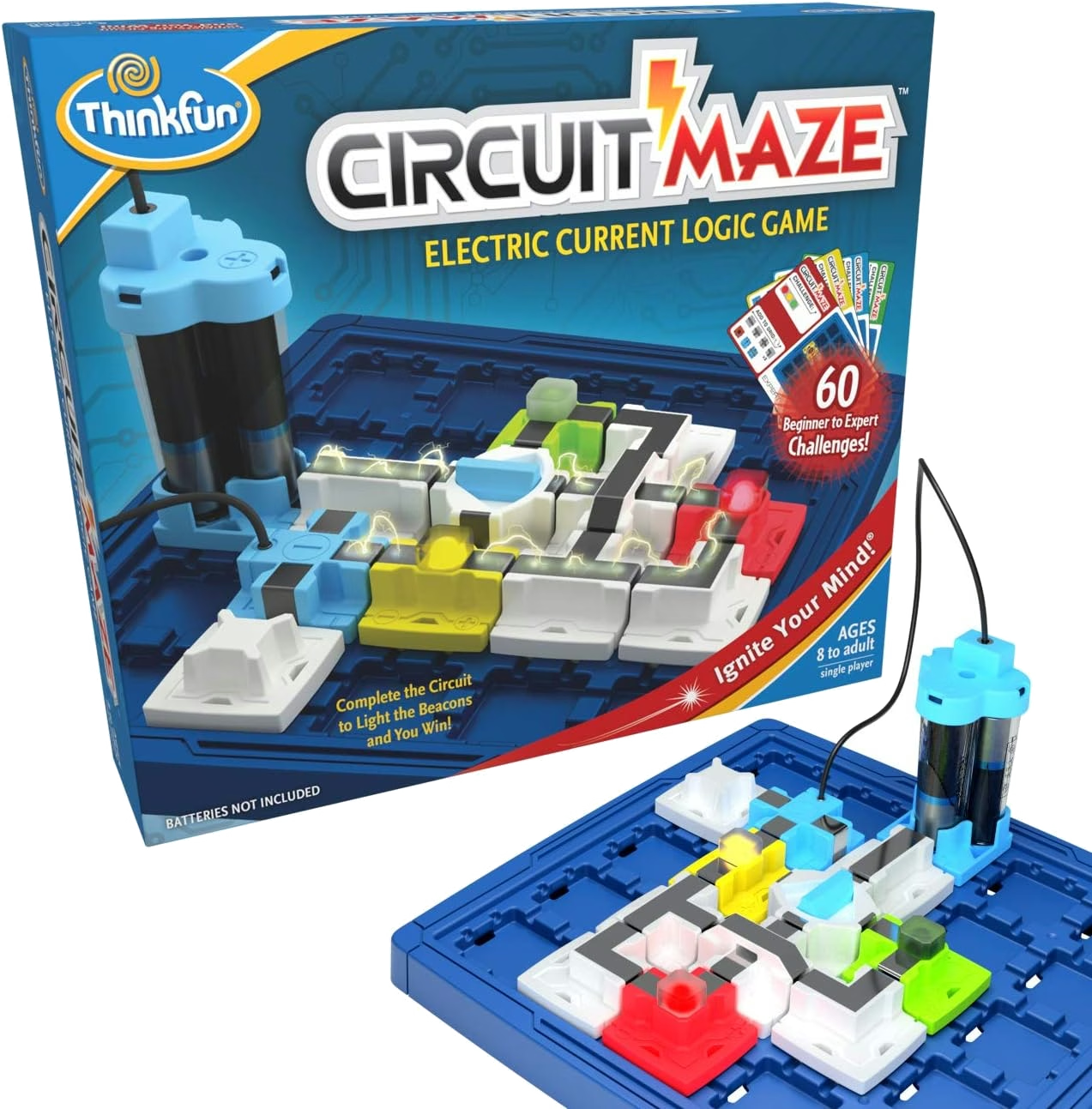 ALTERNATIVE ThinkFun Circuit MazeOriginal electric-current puzzle | |
|---|---|---|---|
| Amazon price | $17.49 | $27.99 | $27.99 |
| What are you routing? | Stack and orient ramps so a steel marble can descend to the red target. | Lay out mirrors on a flat grid and trace which targets receive light. | Complete a conducting route that lights the beacons shown on the card. |
| How do you test it? | Drop a marble into the marked starting tower. | Press the emitter and watch for the targets to light. | Check the beacons and any required switch settings. |
| What else do you need? | One marble in play, two spares included. | The new game includes two LR44 cells. | Requires three AAA batteries, purchased separately. |
| Explore | Read buying guide →Source ↗ | Read buying guide →Source ↗ | Read buying guide →Source ↗ |
About these everyday comparisons
Approximate comparisons to familiar objects: a bank card’s 3.37-inch long edge, a Letter sheet’s 11-inch long edge, or a US nickel’s 21.21 mm diameter / 5 g weight. Water comparisons exclude the container’s weight. Capacity comparisons describe volume, not exterior size or how food fits. Reference pictures identify the object; use the labeled ratio for the comparison.
05 / PRICE HISTORY
The price over time.
ThinkFun Gravity Maze · Original 60-challenge falling-marble game · 44001006 · Amazon US

The chart legend identifies Amazon and new-offer prices when available. New offers can include marketplace sellers. Coupons, shipping and size/color selections can change the final price. Blank periods are missing observations, not a zero price.
06 / RELATED FINDS
A few useful extras.
For the way you plan to use it.
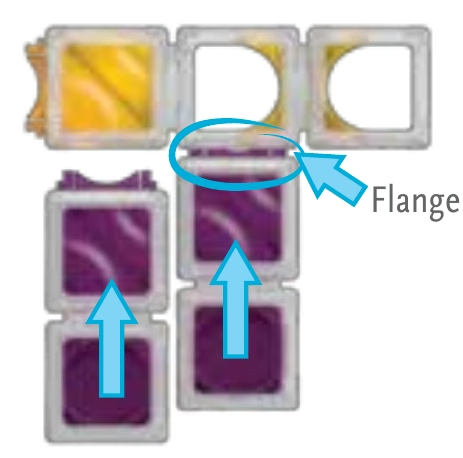
Check your own layout against the same rules as the deck.
ThinkFun’s tower-building guide
Panel 7 shows the protruding ends that join towers. Panels 8 and 9 explain legal supports and drops. Panel 10 invites players to design a challenge. Try a working layout, remove one tower and ask a partner where it goes.
Keep original challenges after you finish the deck.
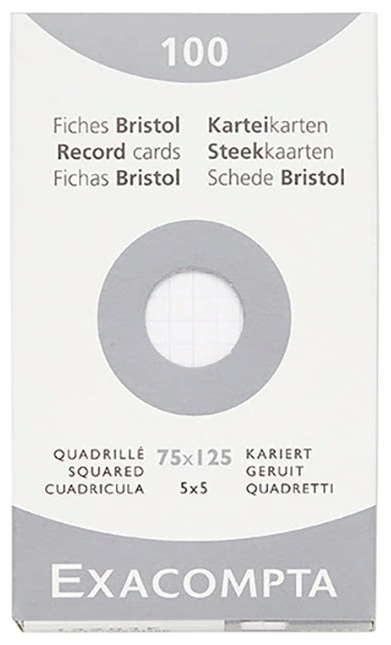
Exacompta graph index cards
Sketch the four-by-four grid and the fixed towers on one side, then list the pieces to add. On the back, draw the completed route after you have tested it with a marble. A partner can try your card the next time you play.