Math games & puzzles · 10 MIN READ
Games and puzzles
for math lovers
Would you rather find a second way to make 24 with the same four numbers, or race a friend to fit nine shapes around seven blockers?
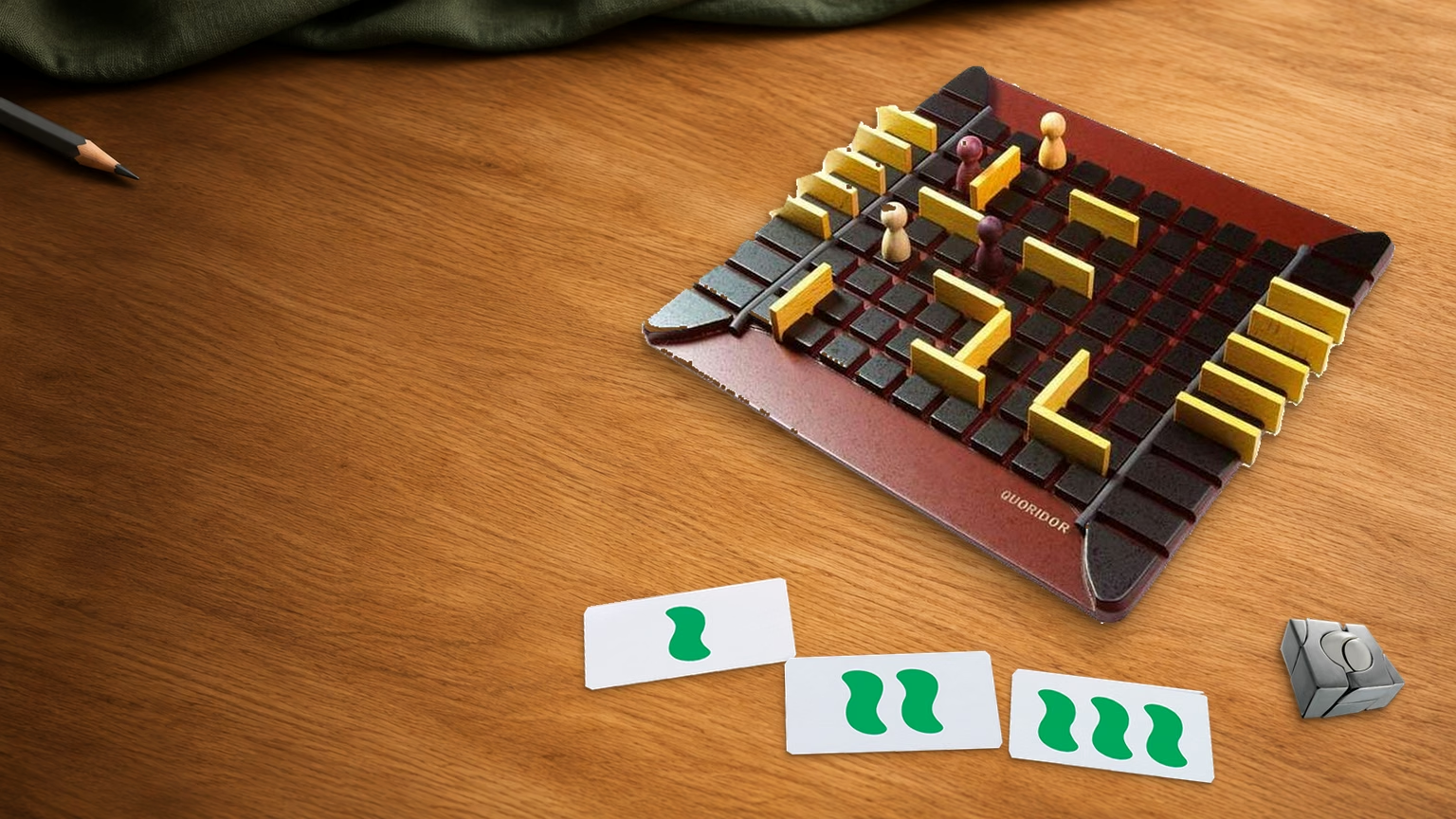
Choose a gameFor a group of ten, try Beat the Heat so everyone makes a choice on each turn. For two players who like to think ahead, Quoridor lets a single fence change the race. For a solo puzzle, work backward from the exit in Rush Hour to find the first vehicle that has to move.
Which games did families play again?
Buyers describe three games where a new opponent or move changes the next round, and one where the next unsolved case is the draw. We sampled eight Amazon US reviews per game on November 20–21, 2026.
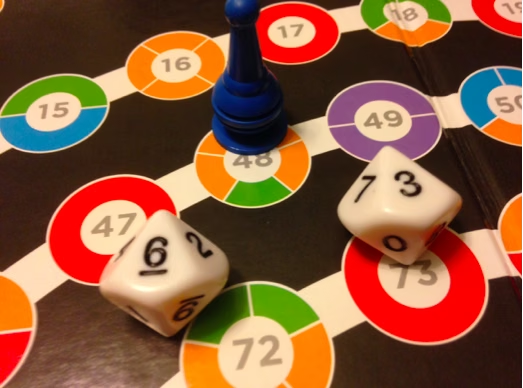
- Start on 48
- Use both dice
- Compare the landing spaces
01 / Numbers & equations
What can you make with this roll?
The blue pawn is on 48. In Prime Climb, divide by the 6 and add the 3 to reach 11 and draw a card. Spend the same dice in another order and 48 ÷ 3 × 6 lands on 96, close to the finish. Both calculations work. Which move would you take?
For a mixed group, decide whether everyone should calculate aloud, race to speak or choose a number quietly. Those are three very different game nights.
Setup notes & sources
How many spaces can you reach from 48 with a 6 and a 3? For this Prime Climb puzzle, use both dice on the same pawn and set the Prime cards aside. Compare your list with the worked example in the review.
A short arithmetic round can take a different shape. In Proof! the cards 2, 4, 7 and 1 support the equality 2 + 4 = 7 − 1. Six is the answer you call even though you never used a 6 card.
Sources: Math for Love’s Prime Climb puzzles · Evermade’s Proof! instructions
Choose between two good moves
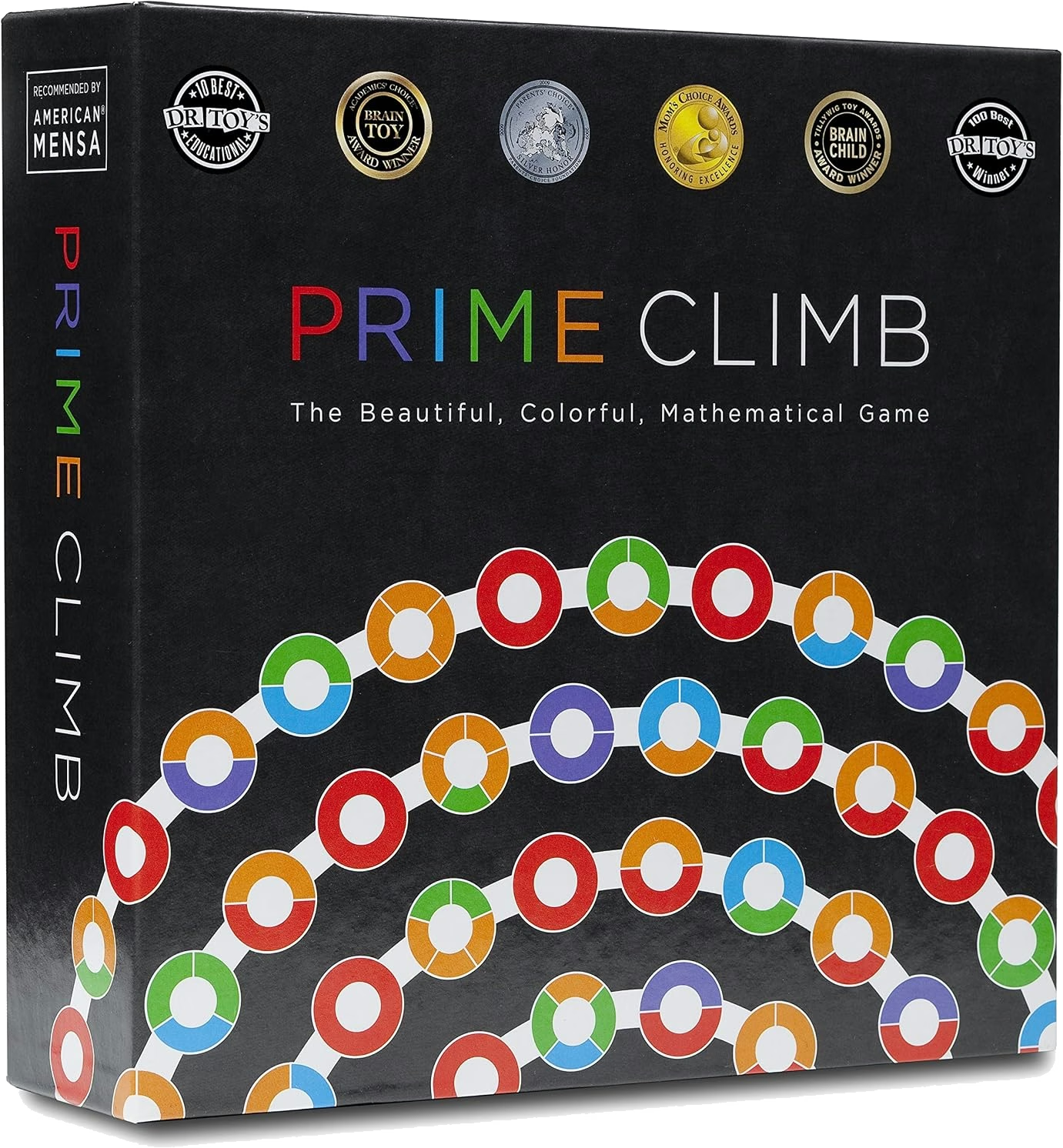
The spiral colors show prime factors. Two dice and two pawns give players several ways to spend the same roll.
Fit & limits
Two to four players. A pawn must reach 101 exactly, so a bigger number can be the poorer move.
Make 24 with four numbers
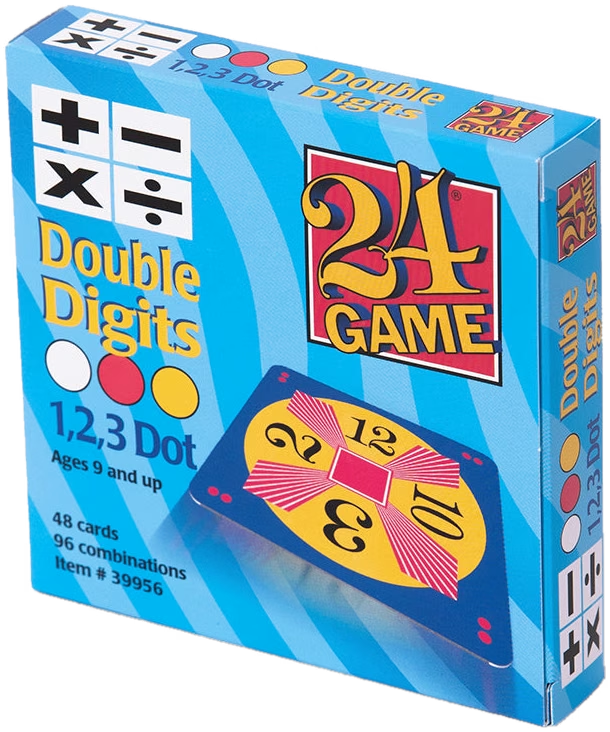
24 Game Double Digits
Use each of the four printed numbers once to reach 24. Double-sided cards give a pair a quick problem to solve and then explain.
Fit & limits
This is the Double Digits deck. Check the difficulty dots before handing a card to a new player.
Build both sides of an equation
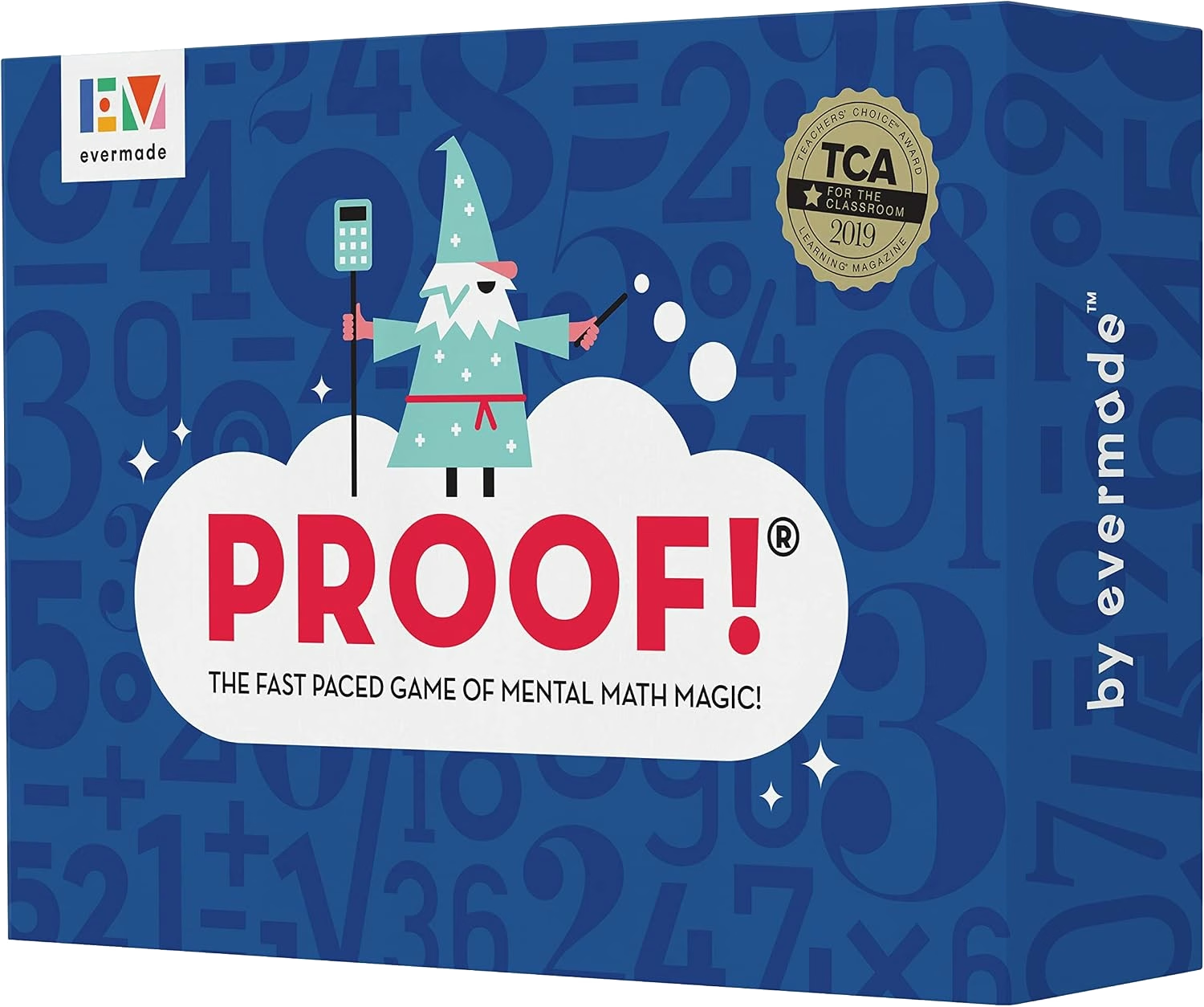
Scan nine cards for equal values, then collect the cards you used. For a trickier proof, try one that uses a square root.
Fit & limits
Calling an answer starts a short explanation window. The published solitaire game gives an individual a different pace.
Rearrange a shared number puzzle
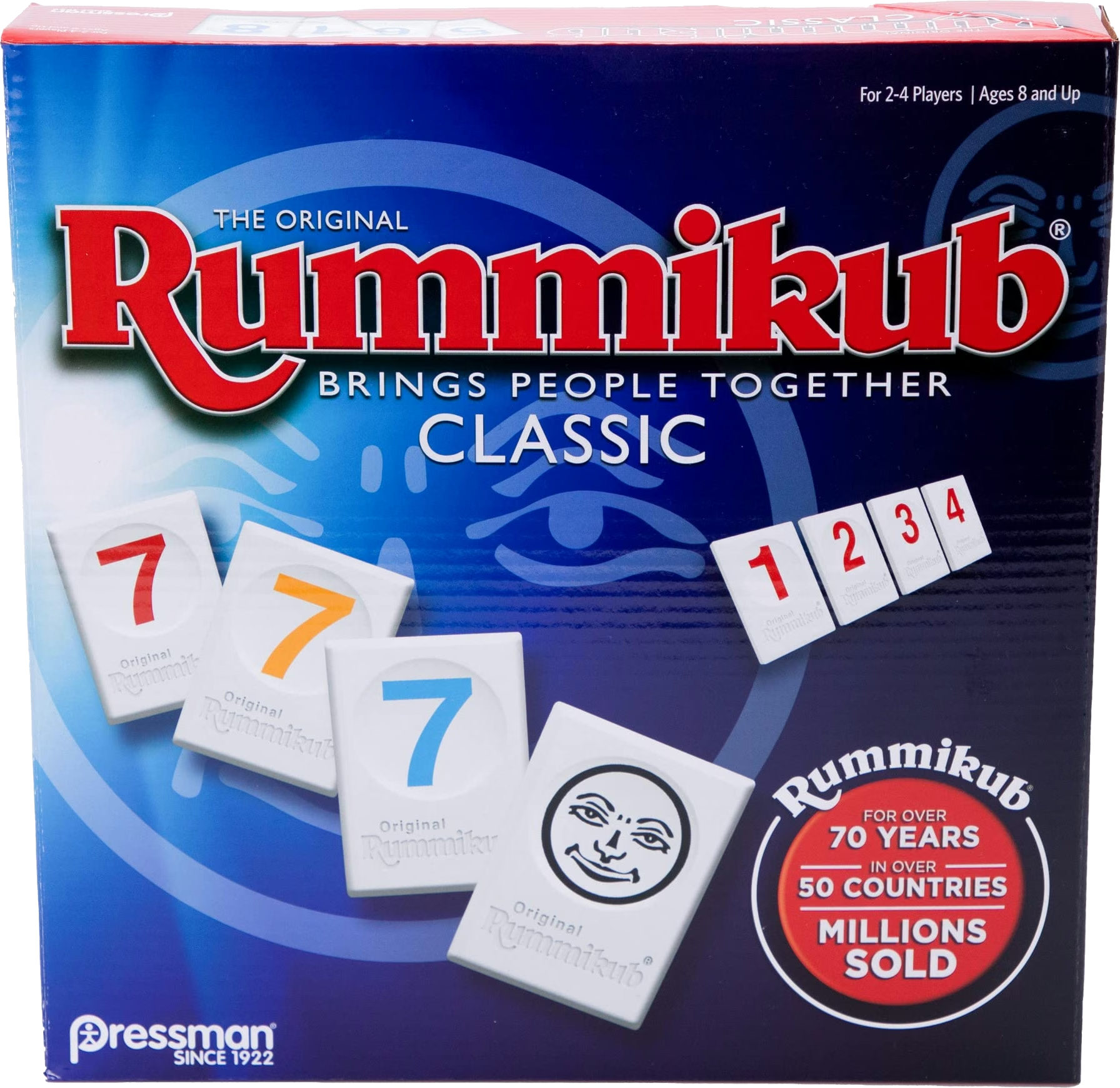
A spare red 6 can split a red 4-through-8 run into two legal runs. Each move changes what the next player can use.
Fit & limits
The first meld needs 30 points from your own rack. This Classic set seats up to four.
Seat a larger group

Hasbro Beat the Heat
Up to ten players choose cards together. Reading the gaps between numbers helps you predict which row will take your card.
Fit & limits
The sixth card picks up five penalty cards. Another player’s reveal can spoil a perfectly reasonable plan.
- Compare two cards
- Predict the missing card
- Check all four features
02 / Patterns & clues
Which detail rules it out?
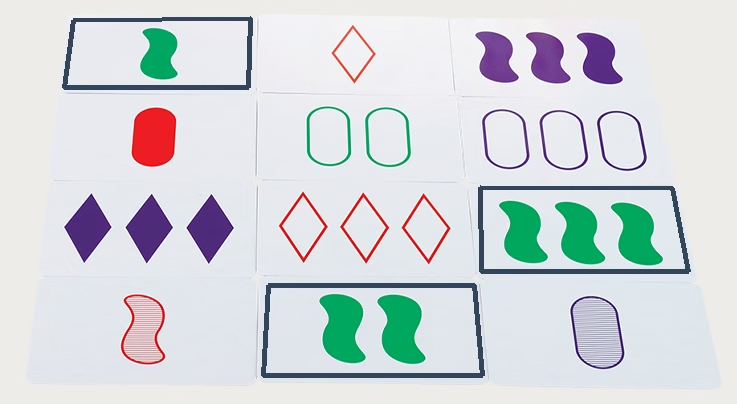
The three outlined SET cards carry one, two and three solid green squiggles. Only the number changes. Cover the three-count card and ask a partner to describe it from the other two before searching the table.
SET rewards the first person to see a trio. Mastermind and Cat Crimes leave room to explain exactly which clue eliminated a possibility.
Setup notes & sources
In SET, check count, color, shape and shading separately. For any one feature, all three cards must match or all three must differ. Two open symbols and one solid symbol spoil a trio even if the other features work.
Pick any two SET cards and describe the third card they need. Once you have an answer, can you explain why it is the only one that works?
Sources: PlayMonster SET rules · Goliath Mastermind scoring examples
A quick visual search
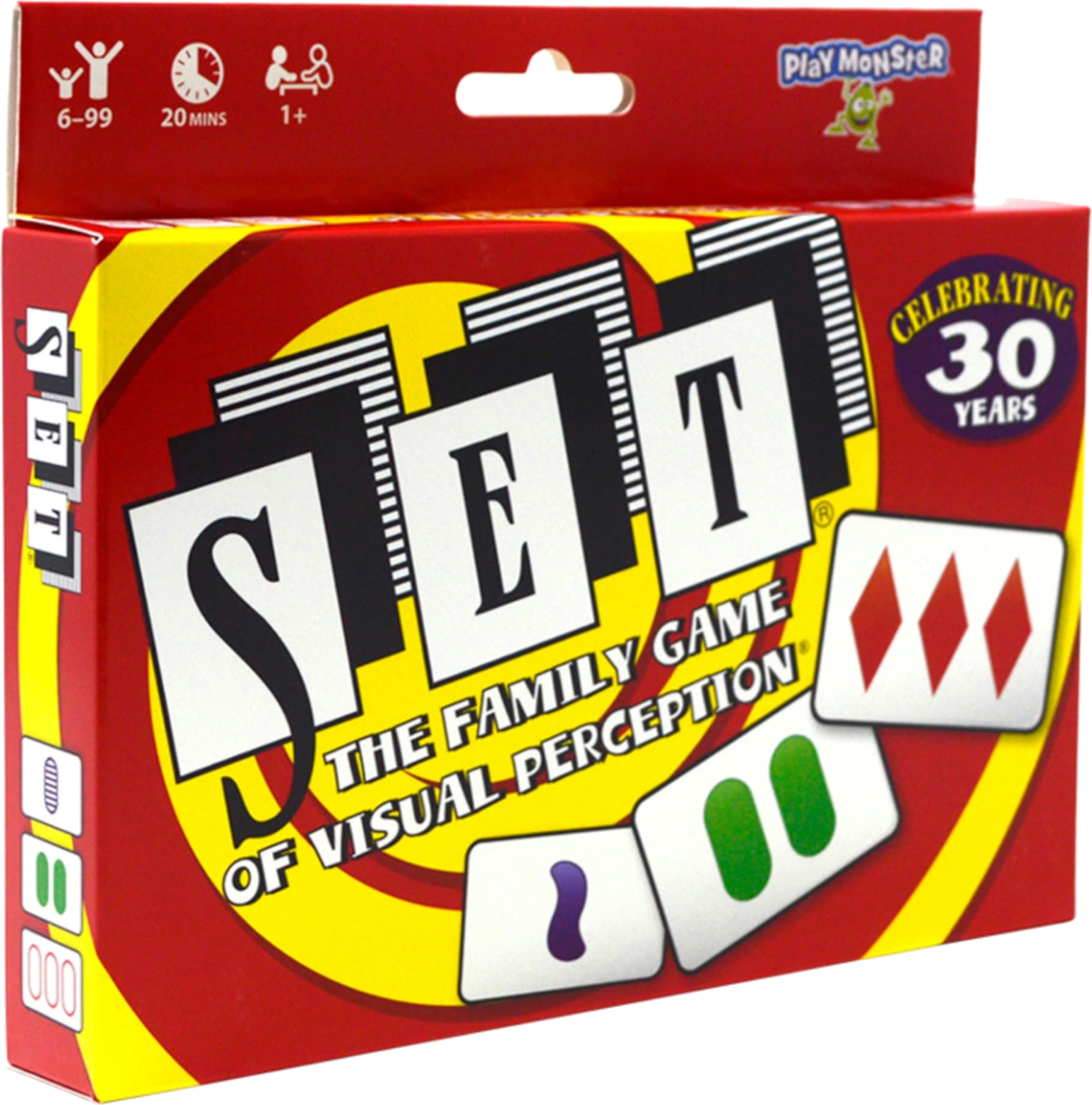
PlayMonster SET
All players scan the same twelve cards. A pair tells you exactly which third card to look for, even in a crowded deal.
Fit & limits
Give everyone a clear view. For a quieter introduction, take turns naming the missing card as a house rule.
Score the intersection
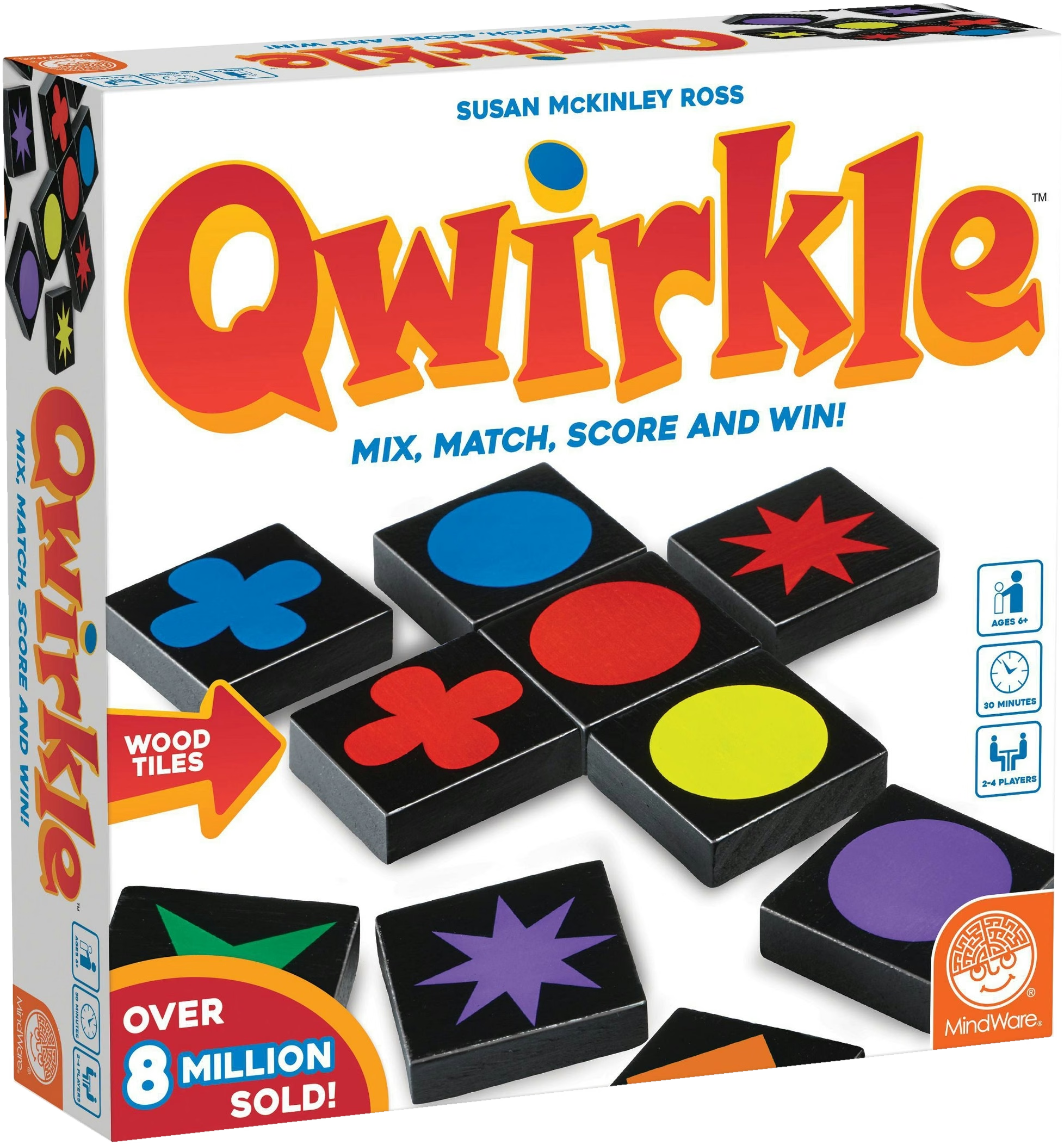
MindWare Qwirkle
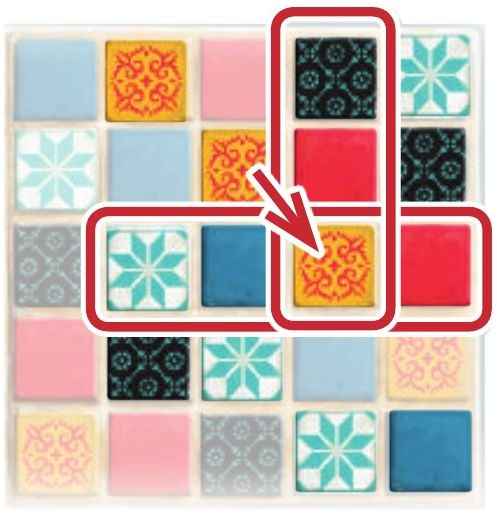
In Qwirkle, a red star can count in a red row and a column of stars. A player can score both lines on one turn.
Fit & limits
Leave table space for the wooden grid to spread. A five-tile line can hand the next player a six-tile bonus.
Choose your opponent’s piece
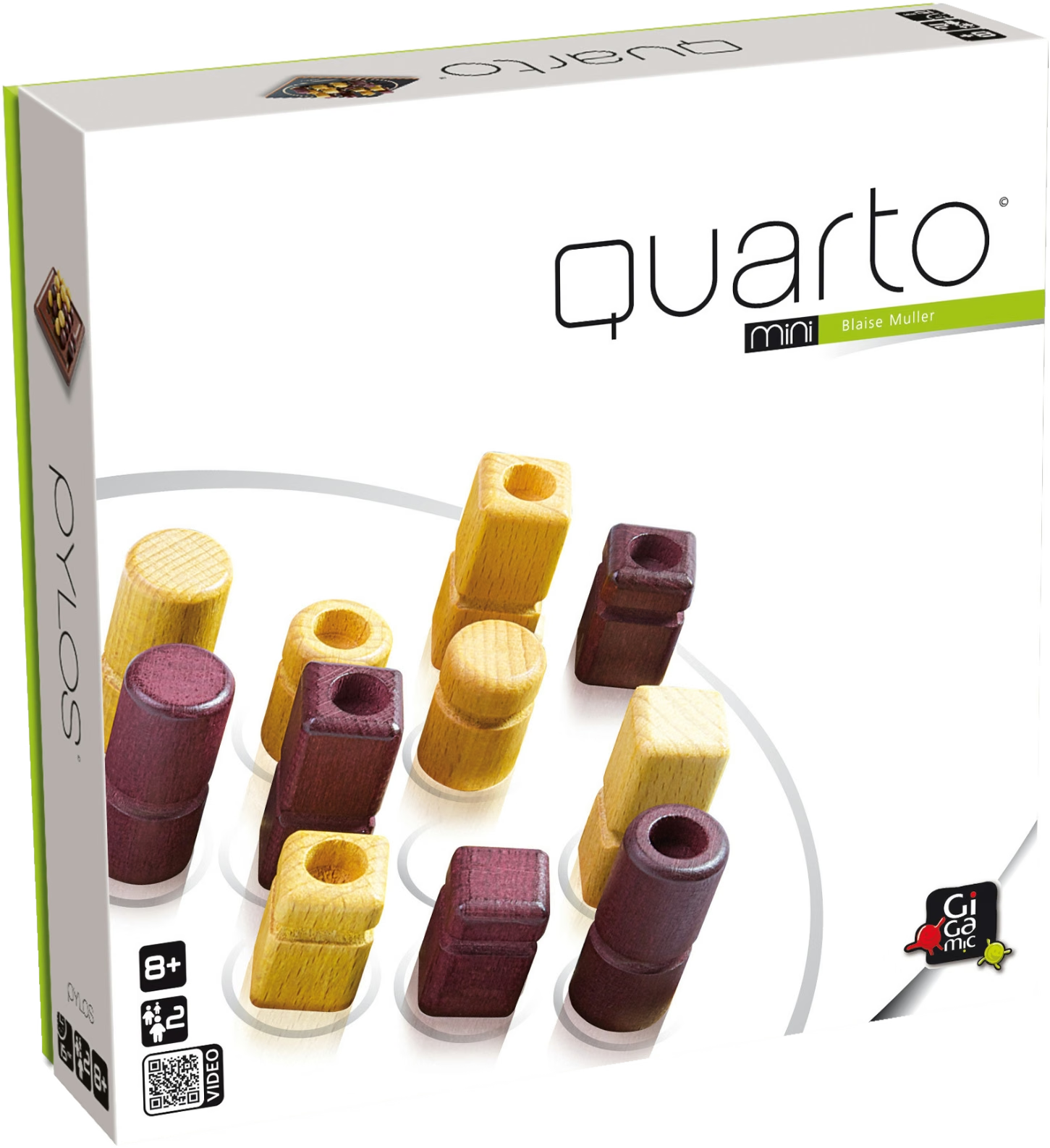
Gigamic Quarto Mini
In Quarto Mini, four pieces in a line win if they share even one trait. You decide which remaining piece your opponent must place.
Fit & limits
A two-player choice if you enjoy studying the board before you commit. The compact wooden pieces suit a small table.
Crack a hidden code
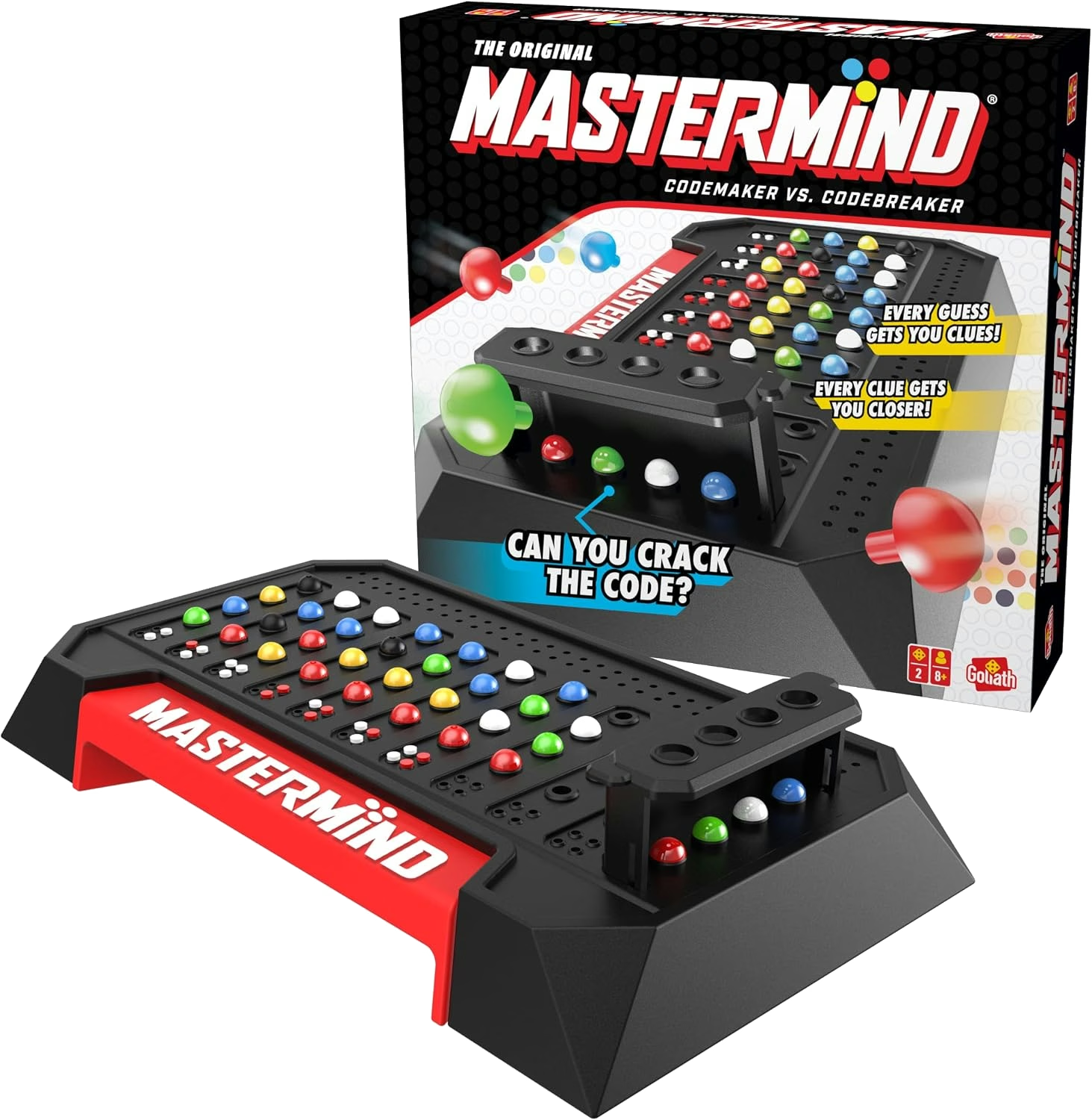
One player hides a four-peg code. The other tests a guess and uses red and white feedback to distinguish correct positions from misplaced colors.
Fit & limits
One secret peg can earn only one clue. The code maker needs to score repeated colors consistently.
Read clues together
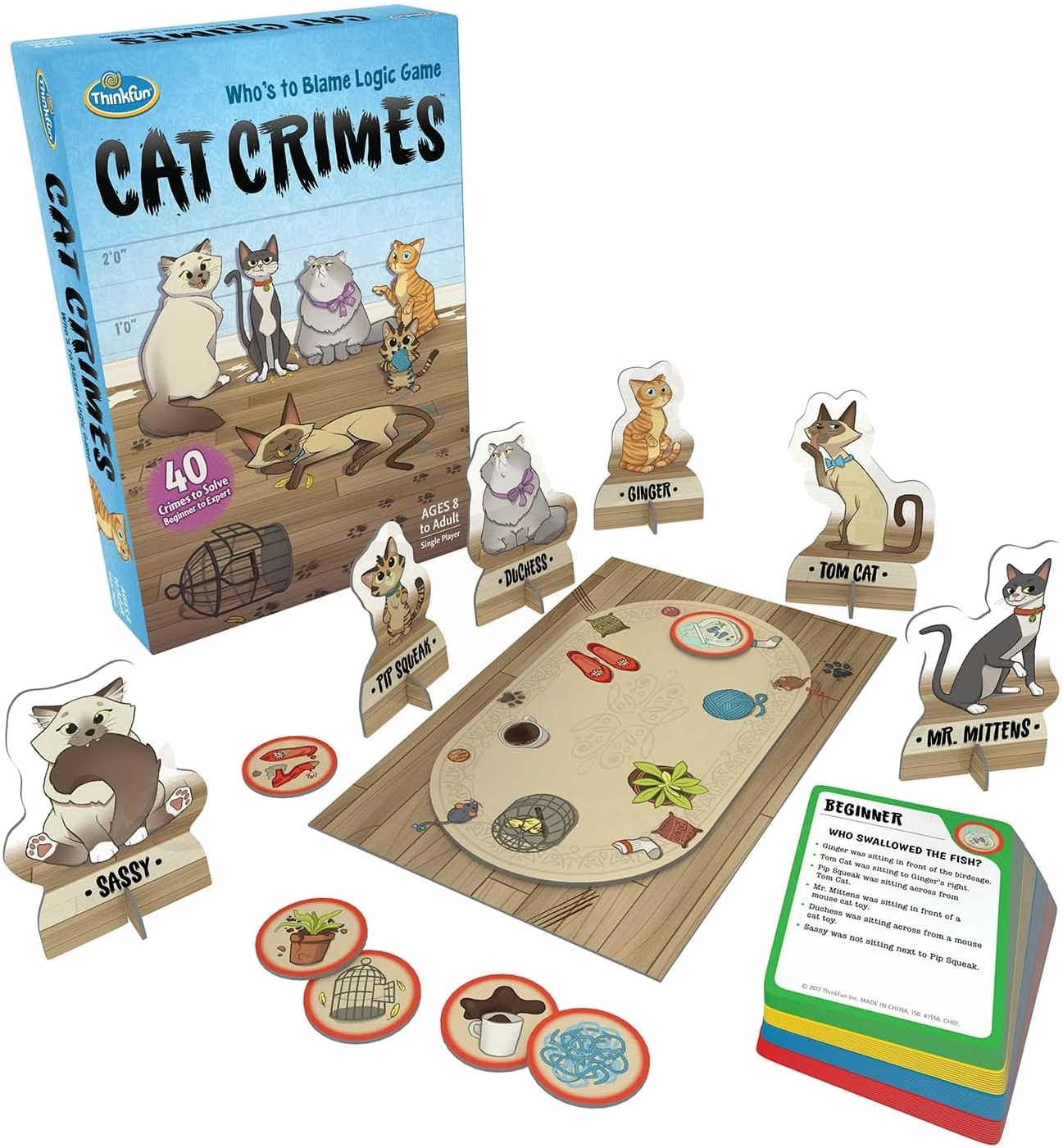
ThinkFun Cat Crimes
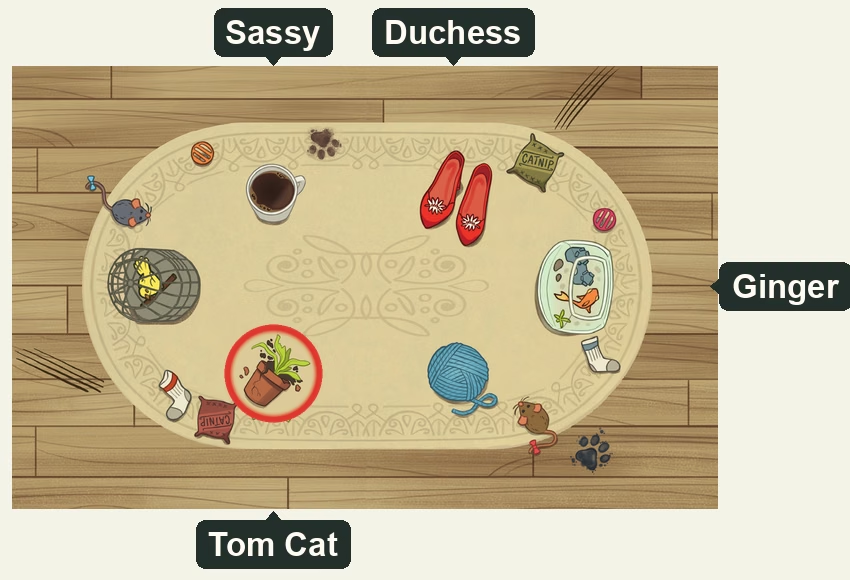
Use the cats’ traits and their seats around the rug to identify the culprit. A single word such as “not” can change where a cat belongs.
Fit & limits
One puzzle at a time works for a pair reading aloud. The box has 40 cases and later ones take more inference.
- Choose one color
- Take every match
- Check room for extras
03 / Tiles & tradeoffs
Would you take both yellow tiles?
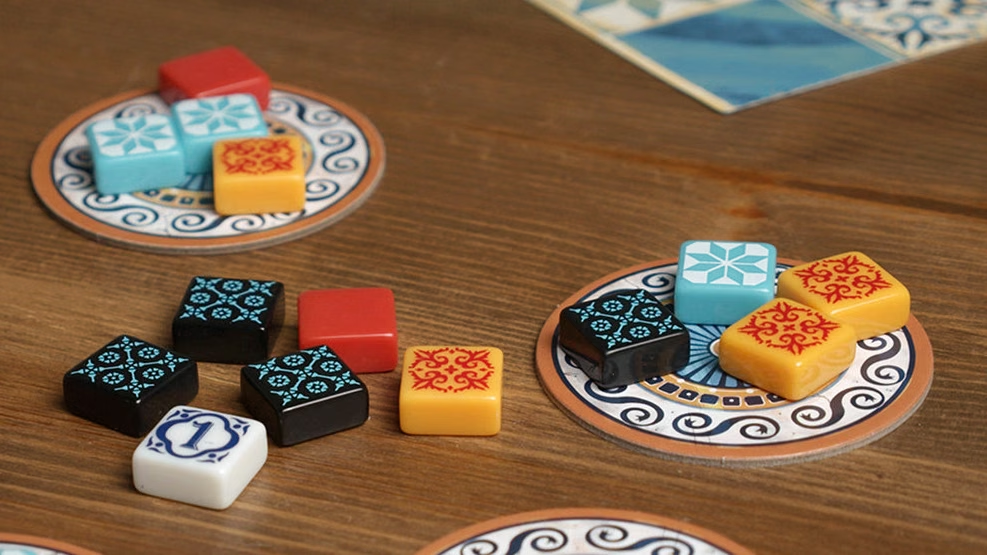
In Azul, taking yellow from the factory on the right commits you to both yellow tiles. The remaining colors go to the center. A short line might score this round and send the spare tile to the penalty row. A longer line can hold both for later.
For a strategic step up from fitting shapes, choose whether the player would rather draft from a shared supply, budget buttons and time, or protect corners from rivals.
Setup notes & sources
Before taking tiles in Azul, point to where each one will go on your board. Then look at what you leave behind. The color that completes your row might also give the next player the tiles they want.
In Patchwork, the patch you want must be one of the next three choices. A shape that fits neatly can still cost enough time to give your opponent another turn.
Sources: Next Move Azul rules · Mattel Blokus Classic rules
Choose when to complete a row
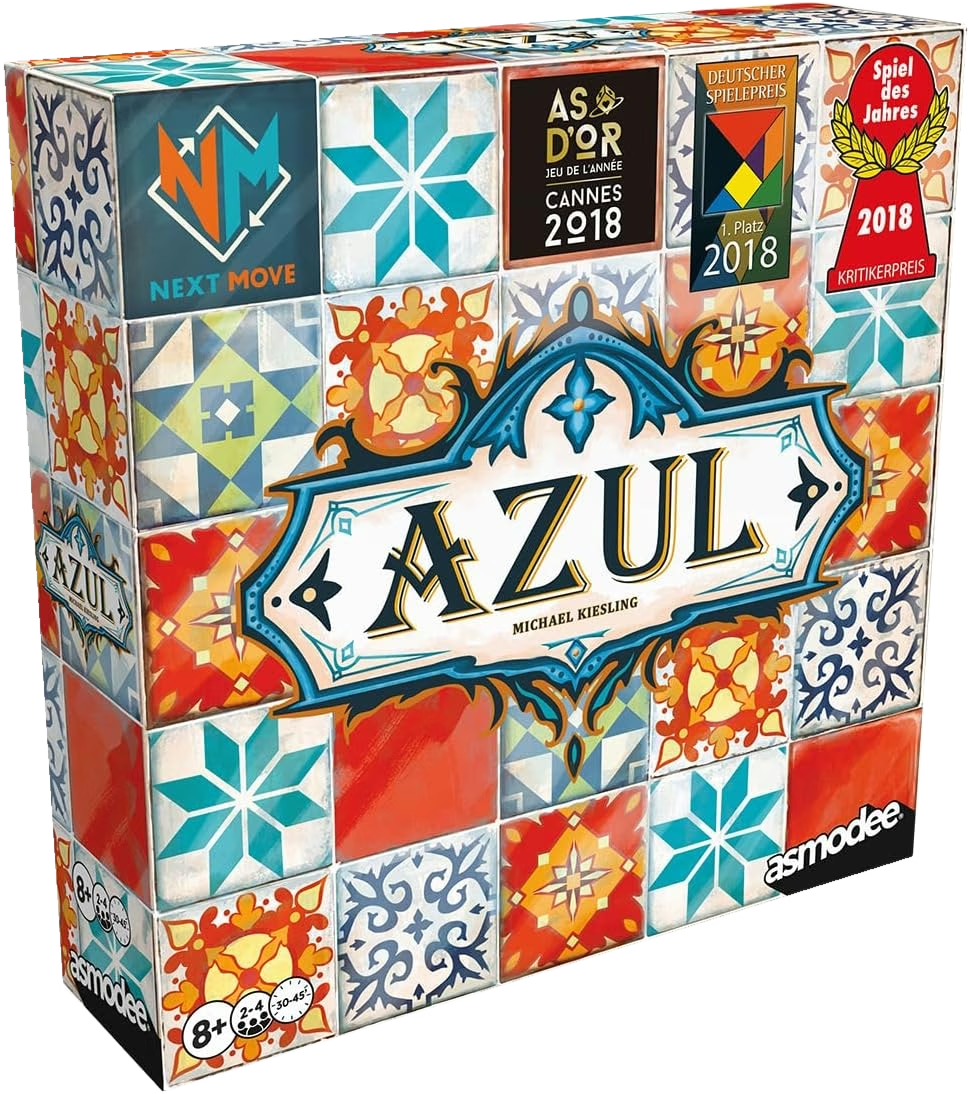
Azul
Draft one color at a time from a factory or the center. A completed line moves one tile onto the wall, where its neighbors determine the score.
Fit & limits
A full line cannot absorb another tile. Watch the leftover colors before committing to a draft.
Budget for a shape
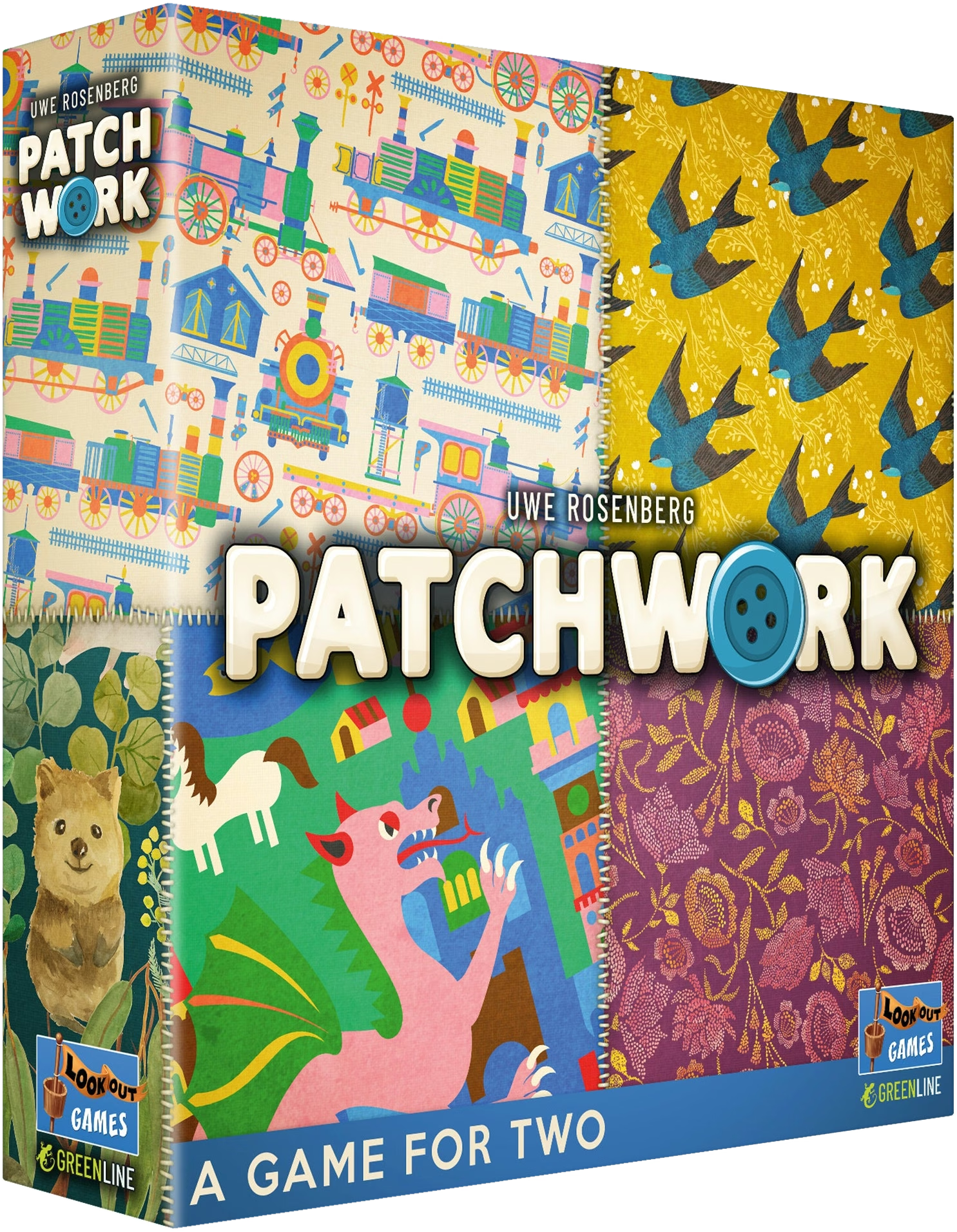
Patchwork asks two players to buy pieces with buttons and time. Some pieces earn future button income, making an awkward shape worth considering.
Fit & limits
Revised Edition is for two. Allow space around the boards for the ring of available patches.
Protect your next corner
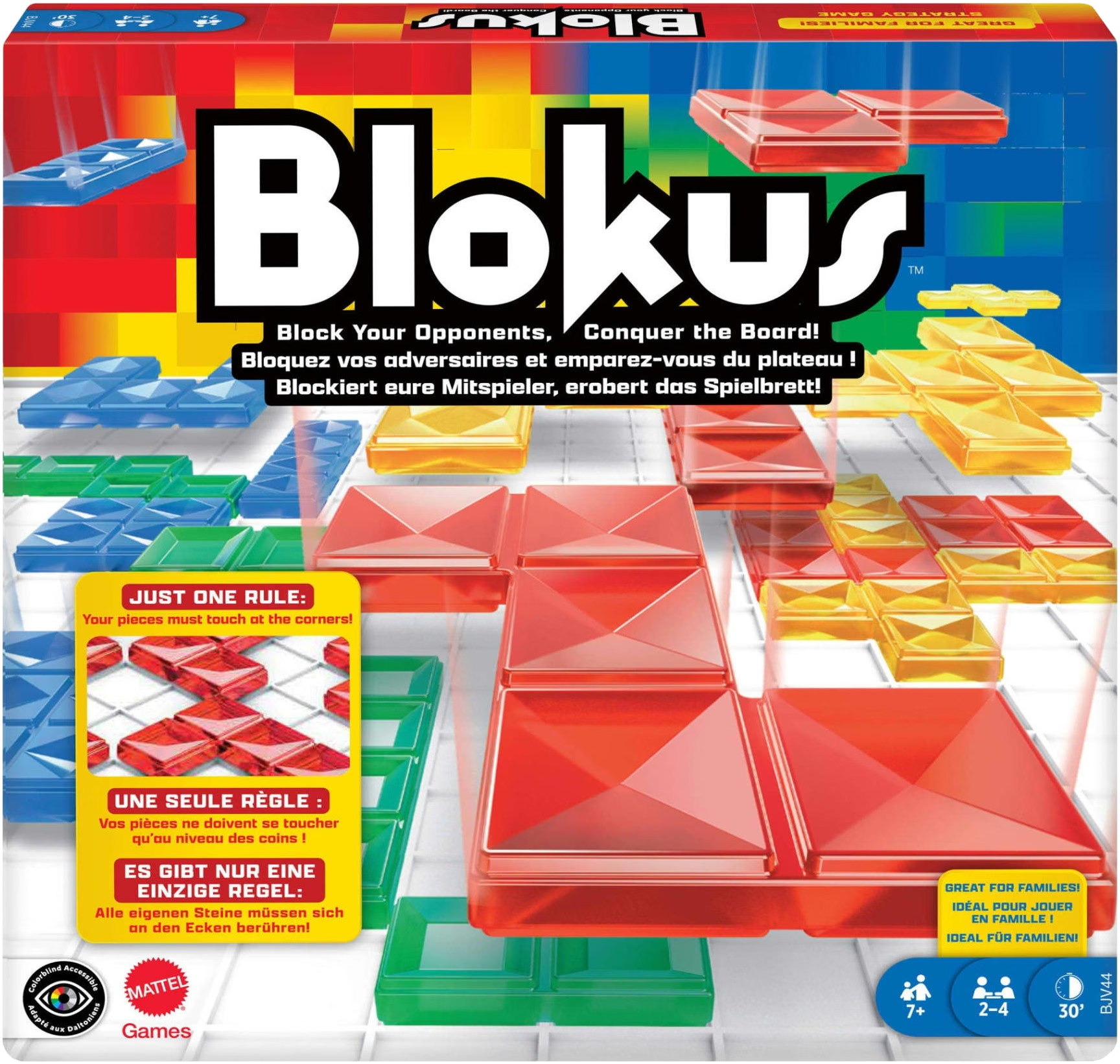
Mattel Blokus Classic
In Blokus, your own pieces connect at corners. Other colors can sit along your edges and cut off the space you hoped to claim.
Fit & limits
Four colors use the board even with two players. A crowded four-person game leaves less room to rescue a large piece.
Keep options open for a later die
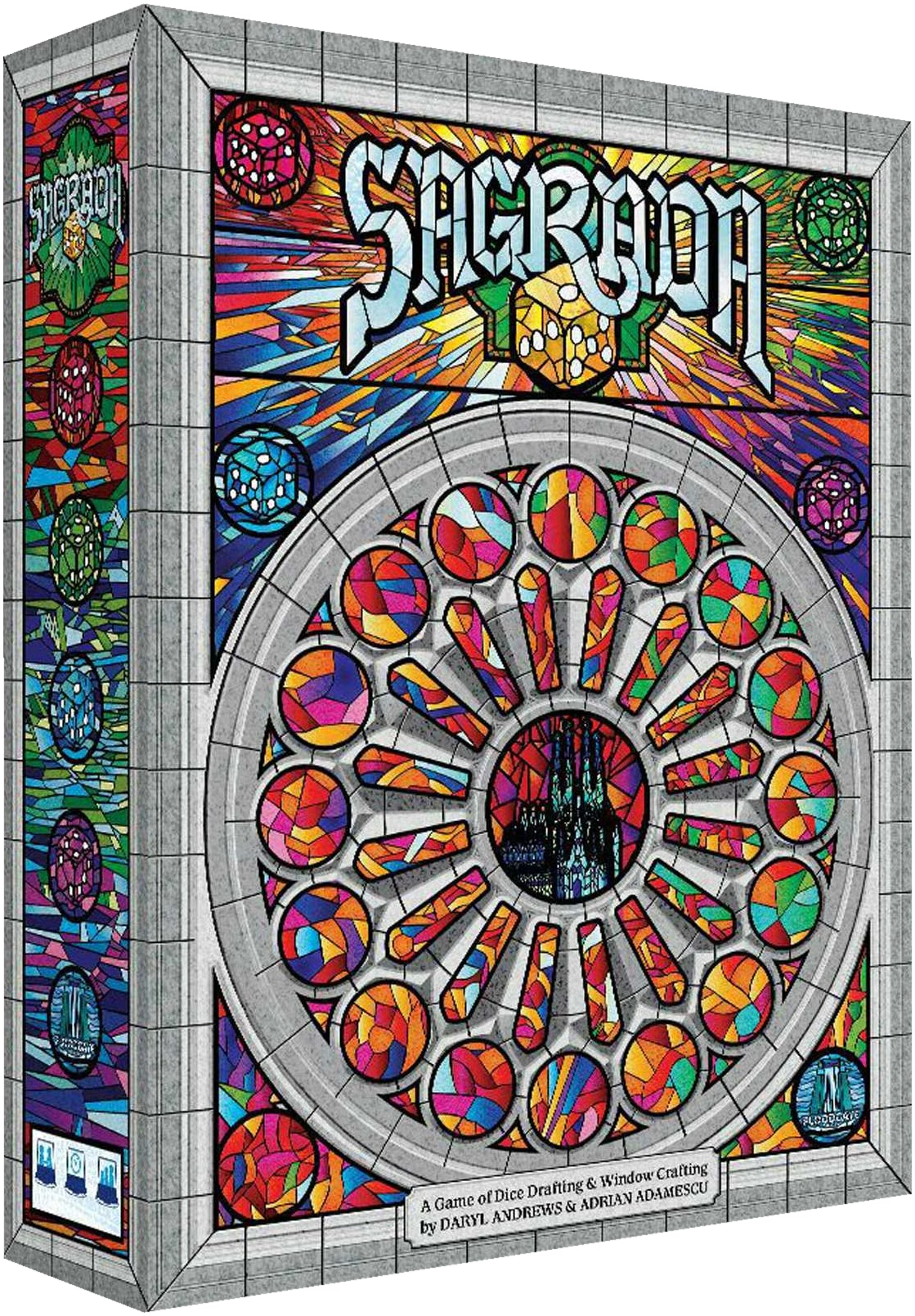
Sagrada Classic
In Sagrada Classic, a die must obey its window square and its neighbors. Two dice sharing a side must differ in both color and value.
Fit & limits
The dice are small. Check the edition before comparing offers because Classic and Remastered have separate rulebooks.
- Find the connecting tile
- Imagine lifting it
- Check the hive stays together
04 / Opponent strategy
What will your move give away?
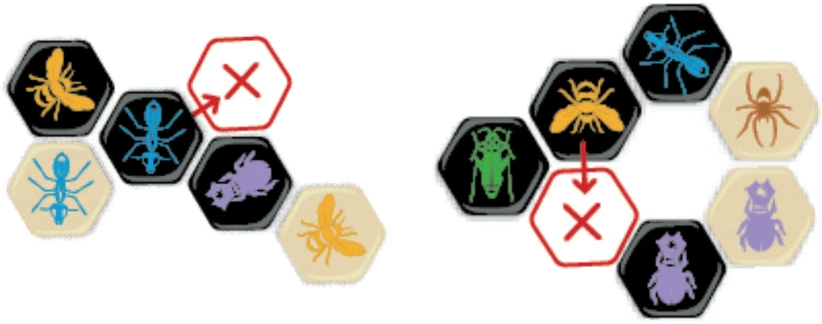
On the left Hive diagram, the black Ant with a blue marking is the only link between two pairs of insects. Moving it would split the hive. A move that looks available to the Ant is illegal for the whole position.
Choose Hive for a changing board, Quoridor for changing paths, or Onitama for a shared set of moves both opponents can see coming.
Setup notes & sources
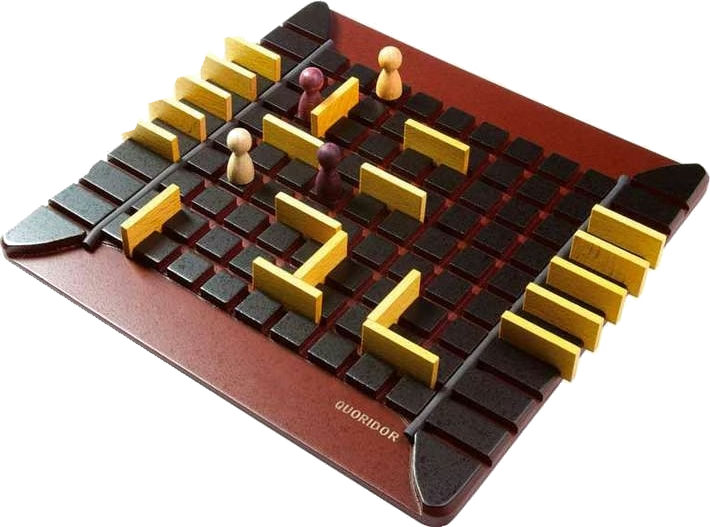
In Hive, which tiles hold the board together? In Quoridor, trace both routes before placing a fence. See if you can slow your opponent without adding a step to your own path.
Onitama asks a different question. Once a player uses a movement card, it passes through the side position into the opponent’s hand after their turn. Thinking ahead includes imagining the move from the opposite side of the board.
Sources: Gen42 Hive Pocket rules · Gigamic Quoridor rules
Redraw the shortest path
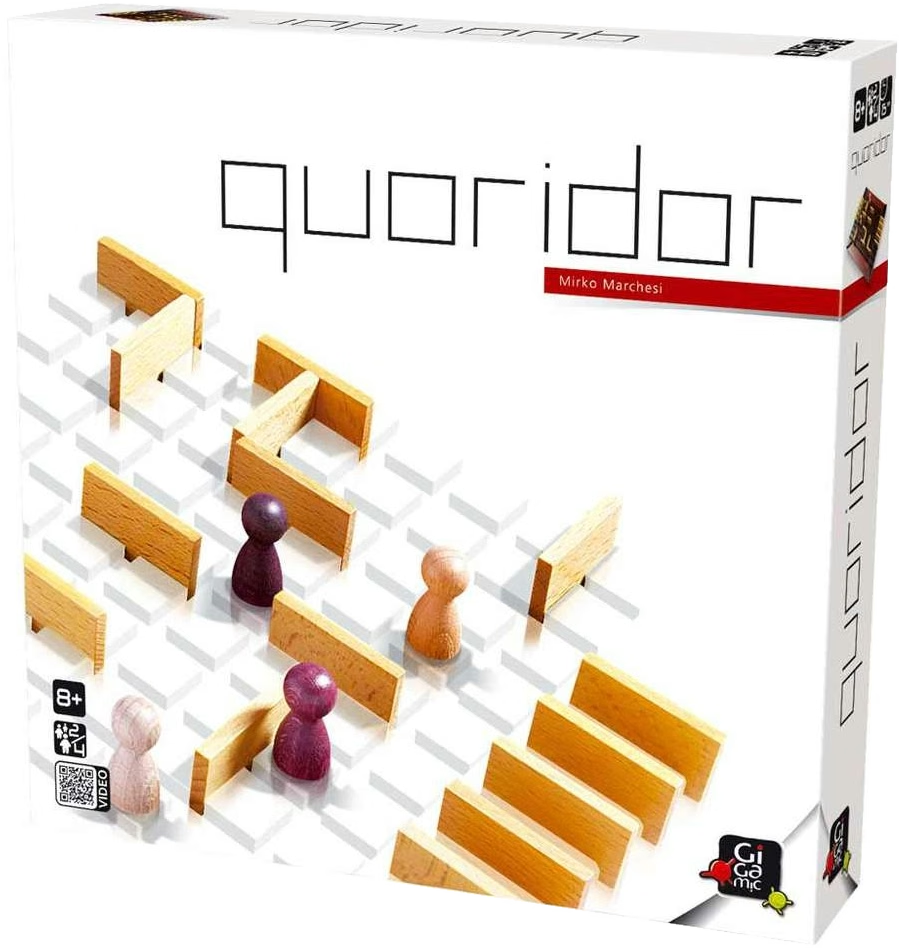
Gigamic Quoridor Classic
A turn buys either a pawn move or a fence. A well-placed fence makes both players reconsider which route reaches the far side soonest.
Fit & limits
A legal fence must leave each player a path. The published Classic setups are for two or four players.
Build the board as you play
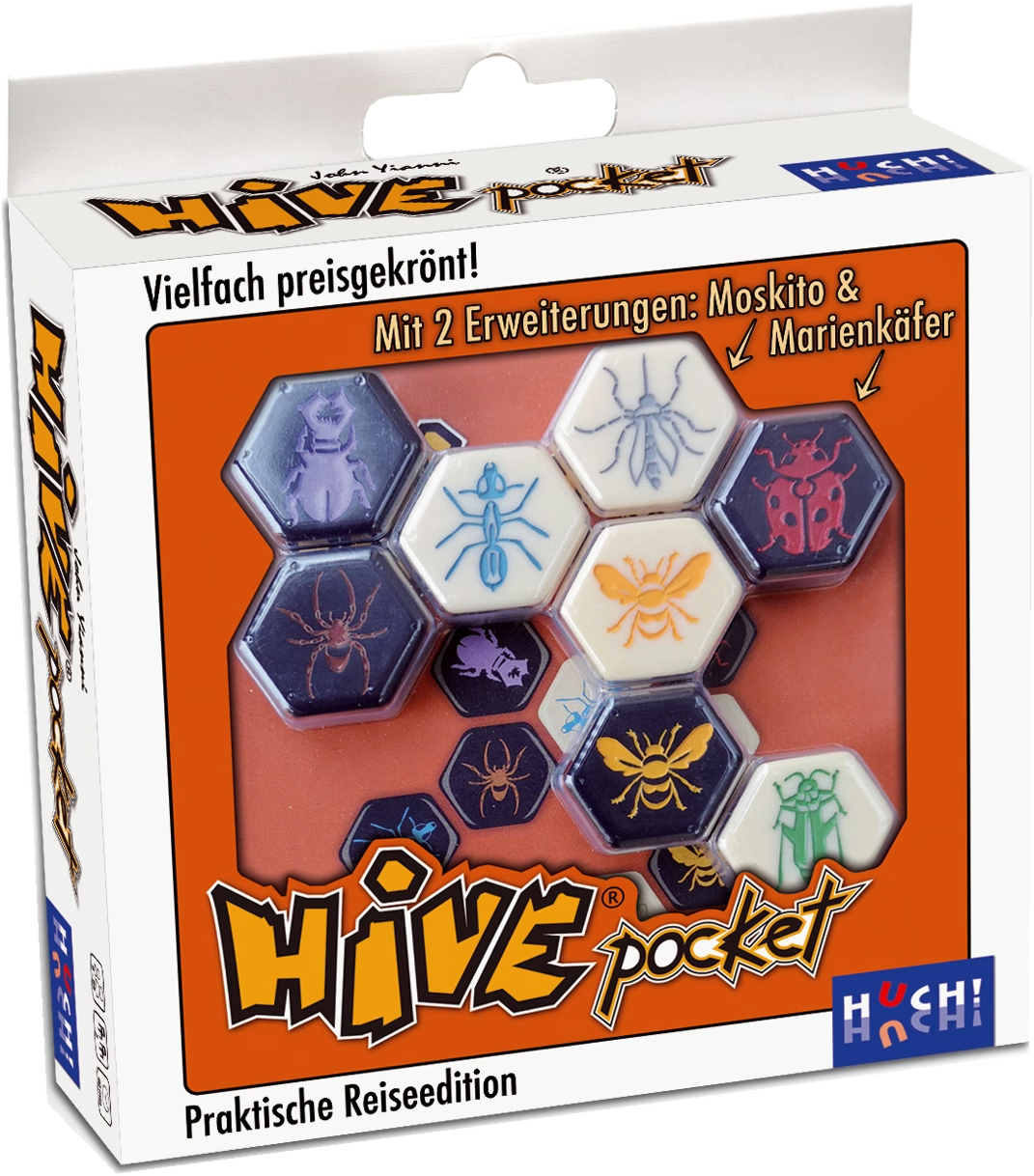
Gen42 Hive Pocket
Hive Pocket fits an insect battle into a small bag. Surround the opposing Queen while keeping every tile connected throughout each move.
Fit & limits
For a first game, set aside the included Ladybug and Mosquito. The small hexes move most easily on a steady surface.
Plan for the card you pass
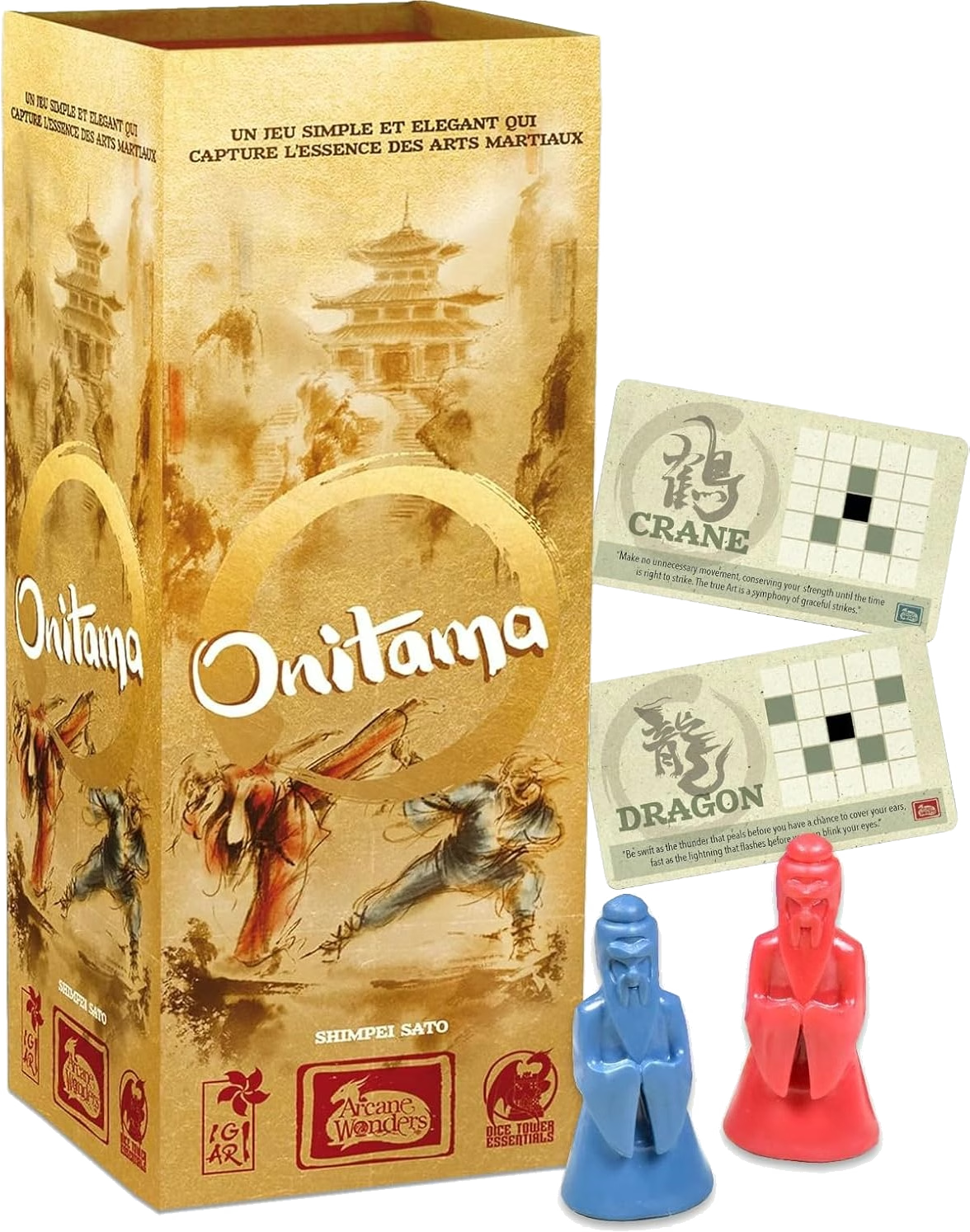
Arcane Wonders Onitama
Choose one of two visible movement cards. An attack can leave your opponent the very move they will need a turn later.
Fit & limits
A short two-player duel. The five cards in play determine which moves are possible during that game.
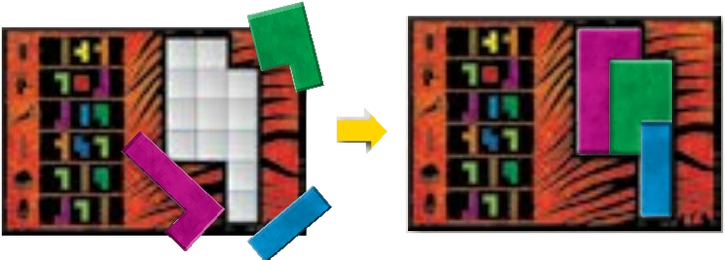
- Count 13 squares
- Find the narrow tail
- Test a rotation
05 / Shape fitting
Where can the straight piece go?
The three Ubongo pieces cover 13 squares altogether. That checks the area but leaves the arrangement open. The straight blue bar reaches into the narrow tail on the right. Try placing it first, then see how the two five-square pieces meet.
For a side-by-side race choose the Genius games or Ubongo. A player who likes leaving a difficult puzzle unfinished can work through the numbered IQ or Kanoodle challenges at their own pace.
Setup notes & sources
Try the same outline with a friend and compare where you rotated a piece. In The Genius Square, two finished boards can look different even when you start with the same seven blockers.
Compare the two IQ pyramids. Puzzler Pro uses square layers of 25, 16, 9, 4 and 1. Six Pro uses triangular layers of 21, 15, 10, 6, 3 and 1. Can you trace one connected piece through several layers?
Sources: Thames & Kosmos Ubongo rules · SmartGames IQ Six Pro booklet
Race on separate boards
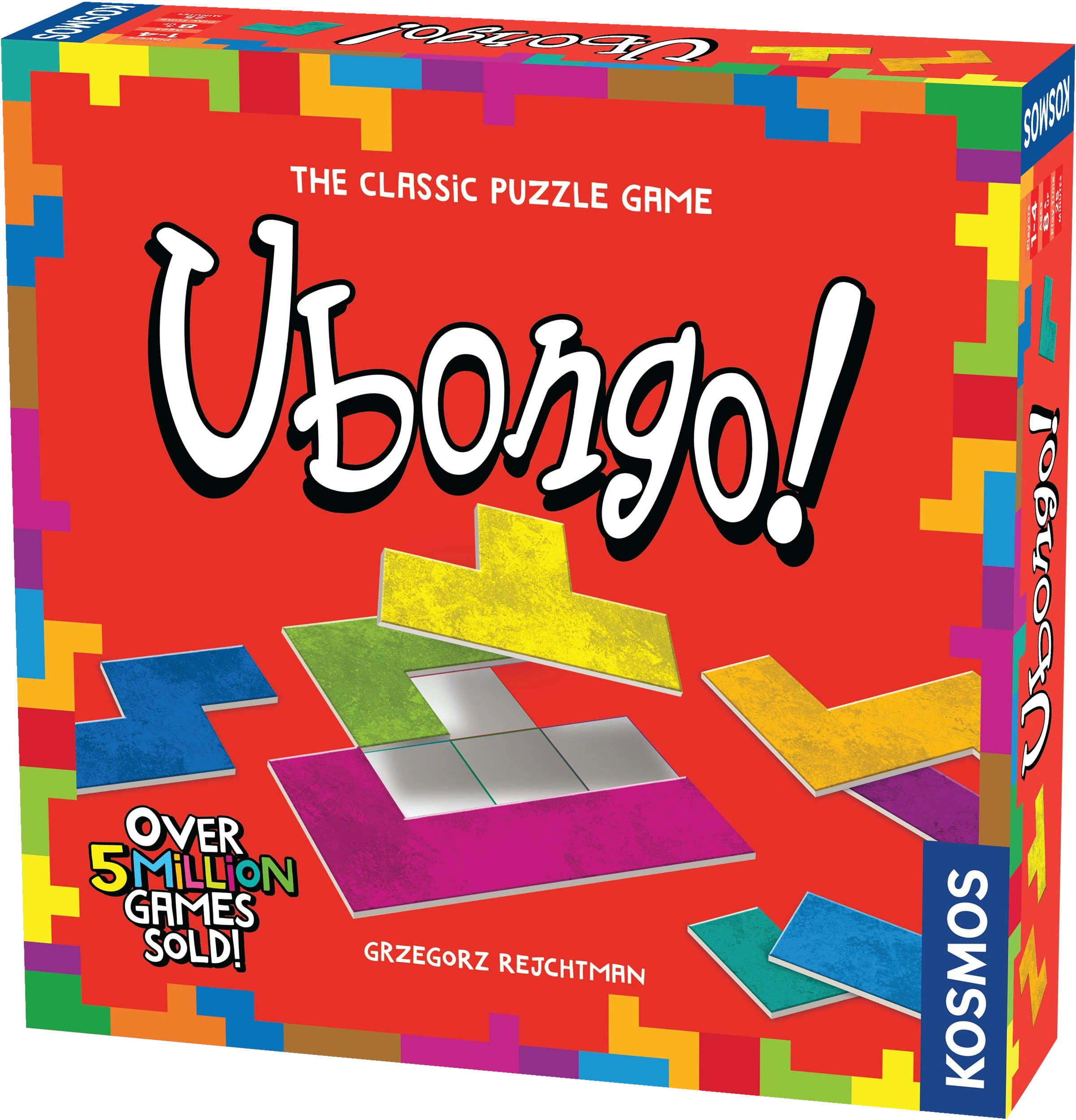
Ubongo
A die selects a row of pieces on each puzzle board. Everyone tries to fill their own outline before the sand runs out.
Fit & limits
The original has three- and four-piece sides, useful for mixed experience. Check the seller and delivery charge on this edition.
Race on identical grids
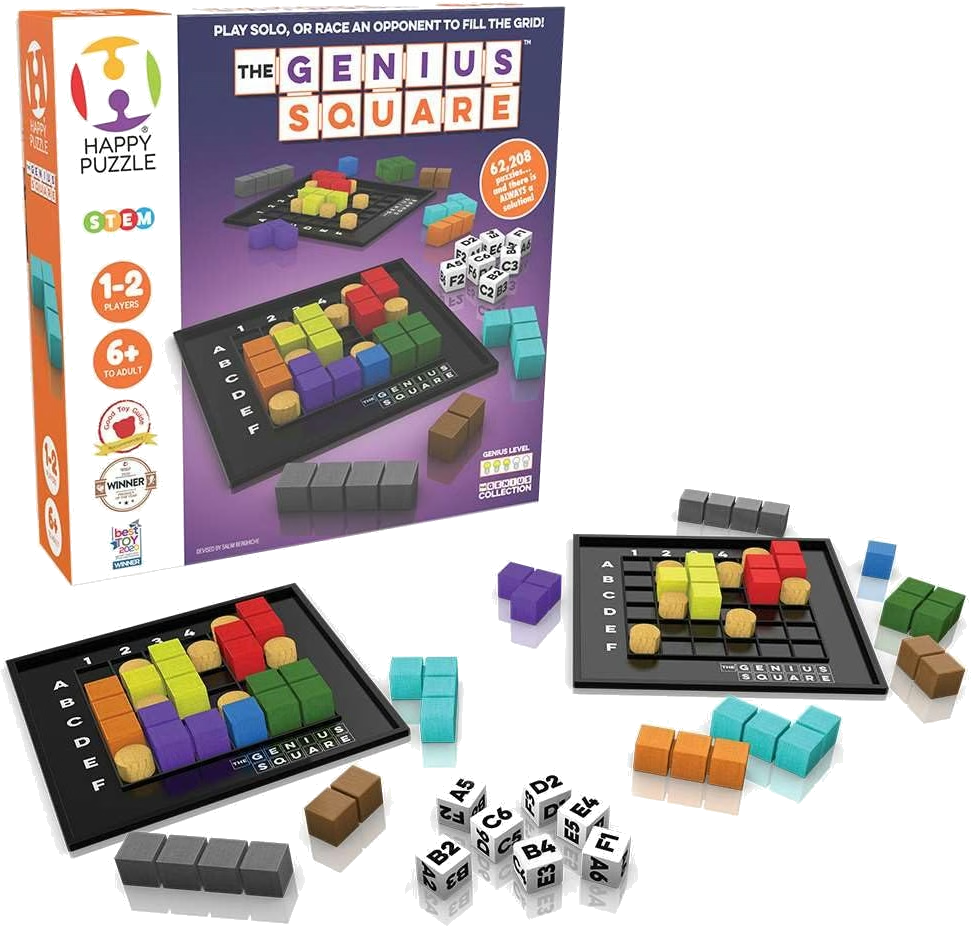
The Genius Square
The Genius Square gives two players the same seven blockers and nine wooden shapes each. Compare completed boards to spot different solutions.
Fit & limits
Play solo or race one opponent. Copy every blocker onto the same square before starting a fair race.
Add a harder bonus condition
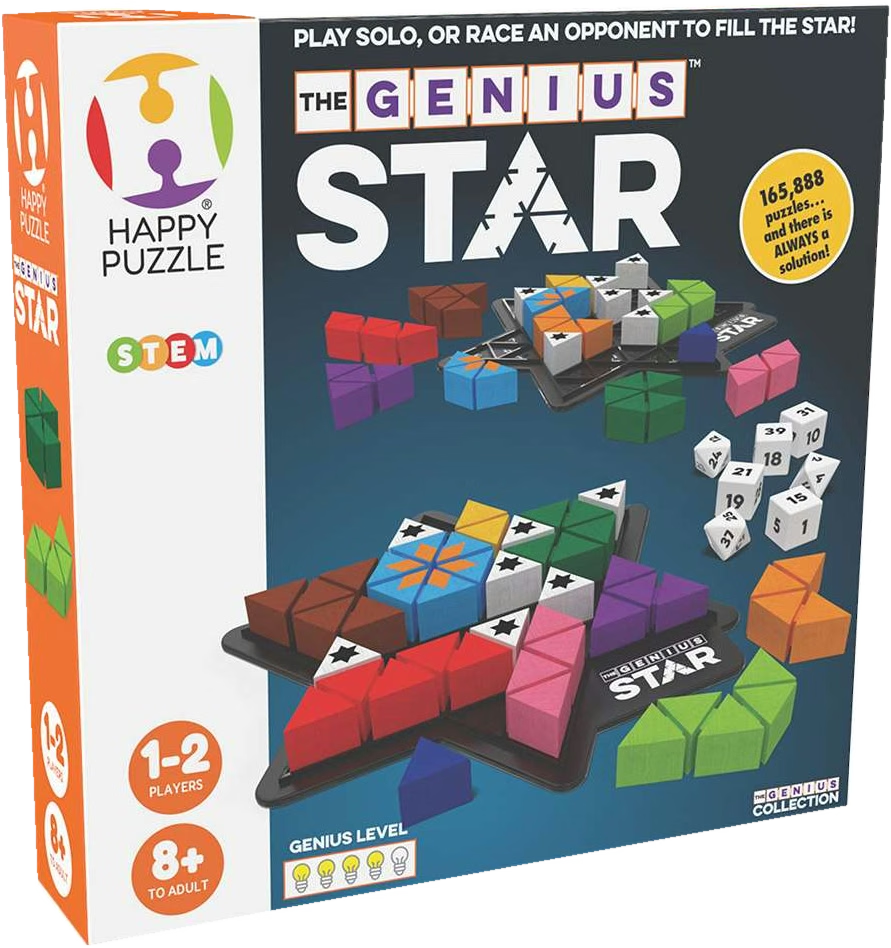
The Genius Star
The Genius Star replaces squares with triangular spaces. Two light-blue pieces can join to complete the gold motif on a suitable roll.
Fit & limits
An ordinary solution exists on every roll. Only some layouts allow the extra Golden Star finish.
Build a square-base pyramid
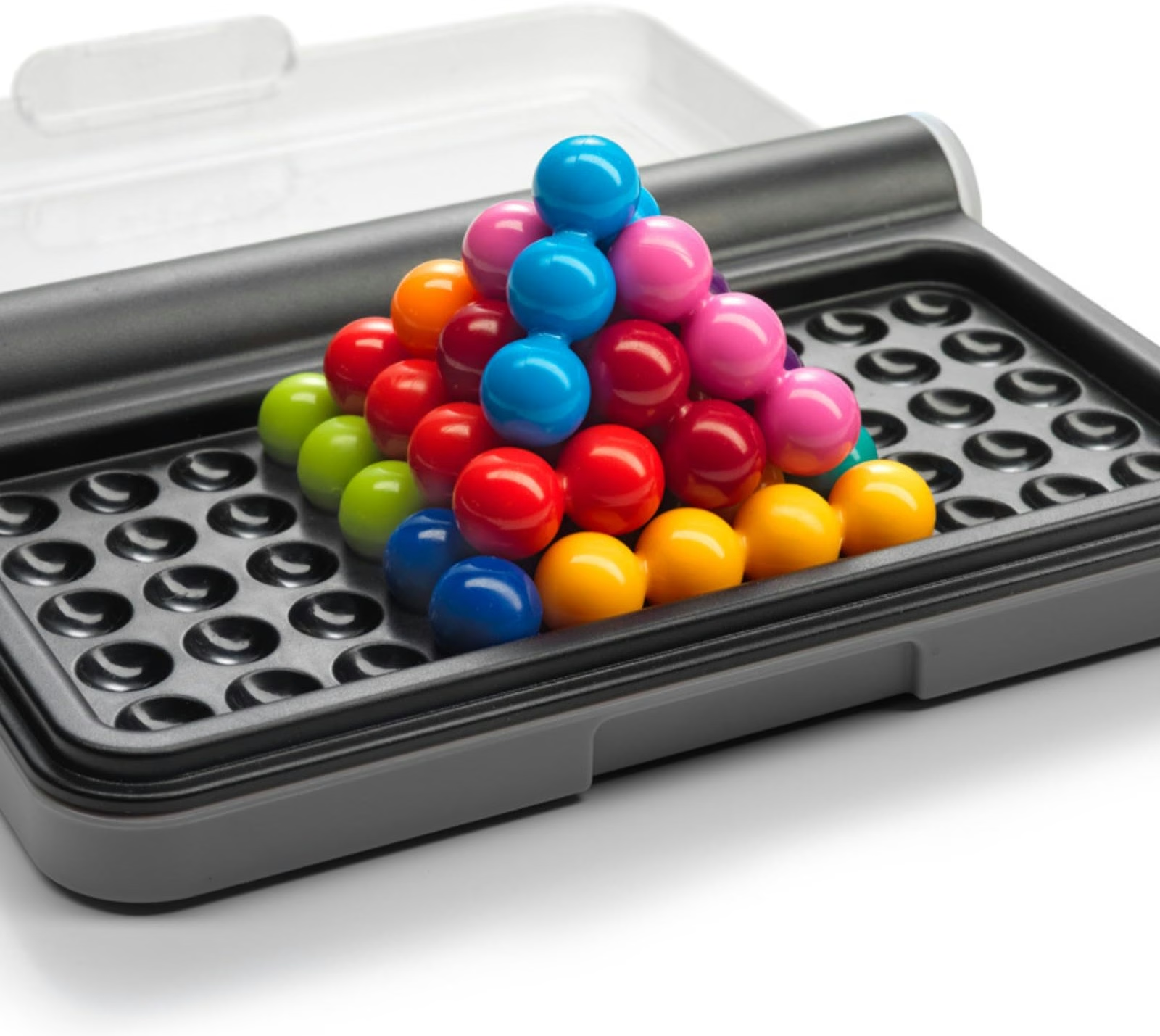
SmartGames IQ Puzzler Pro
IQ Puzzler Pro packs the same 55 beads into a rectangle, a diagonal board or five square layers. Try following a tilted piece between levels.
Fit & limits
One case and one solver. The small pieces travel well, but the layer diagrams can take practice to read.
Build a triangular-base pyramid
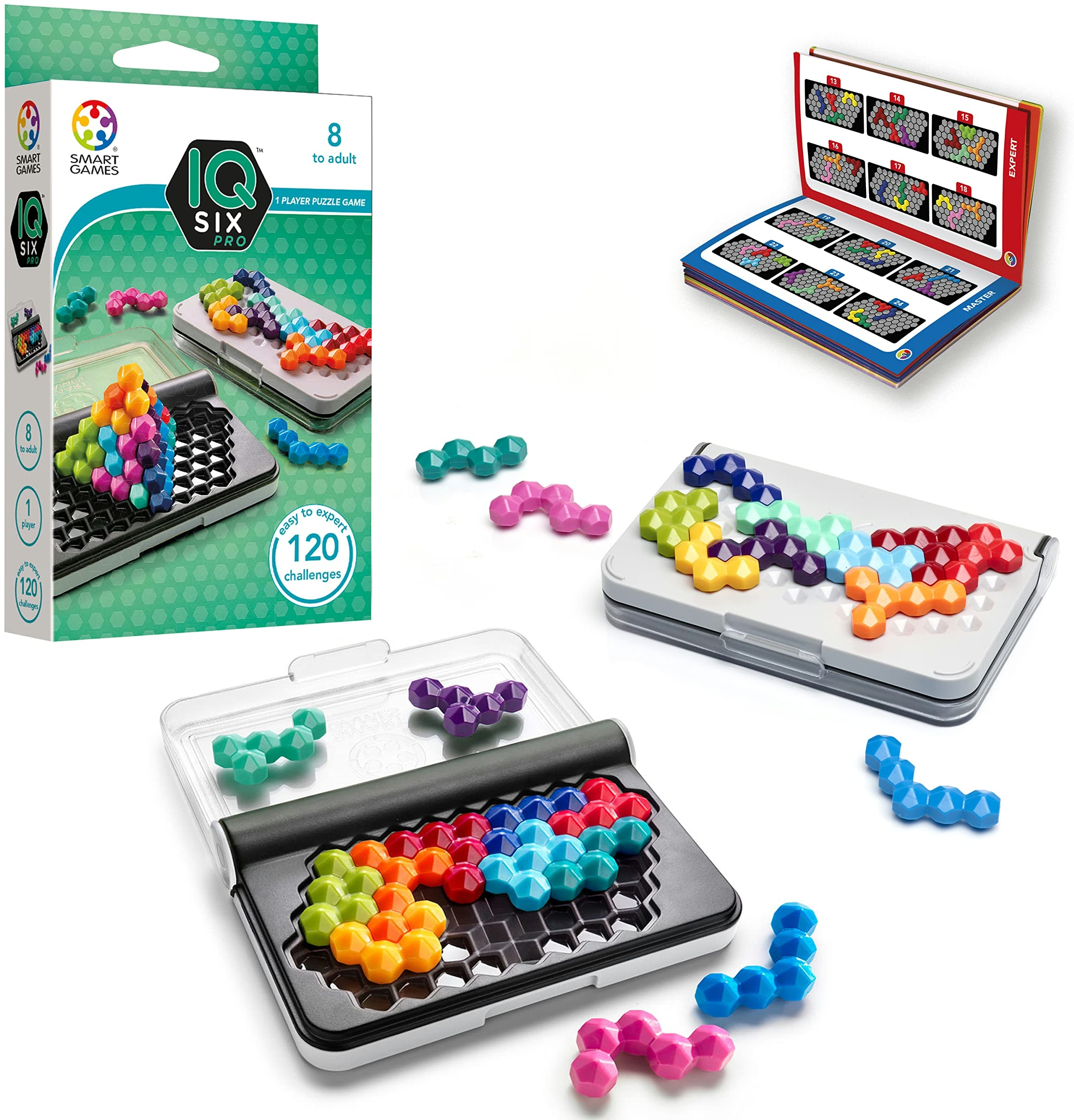
SmartGames IQ Six Pro
IQ Six Pro adds a butterfly board and a six-layer pyramid. In the worked example, one five-unit piece reaches from the third layer to the tip.
Fit & limits
A good change for an experienced IQ Puzzler Pro player. One buyer working by touch found the recessed board and smooth pieces hard to handle.
Change the size of the board
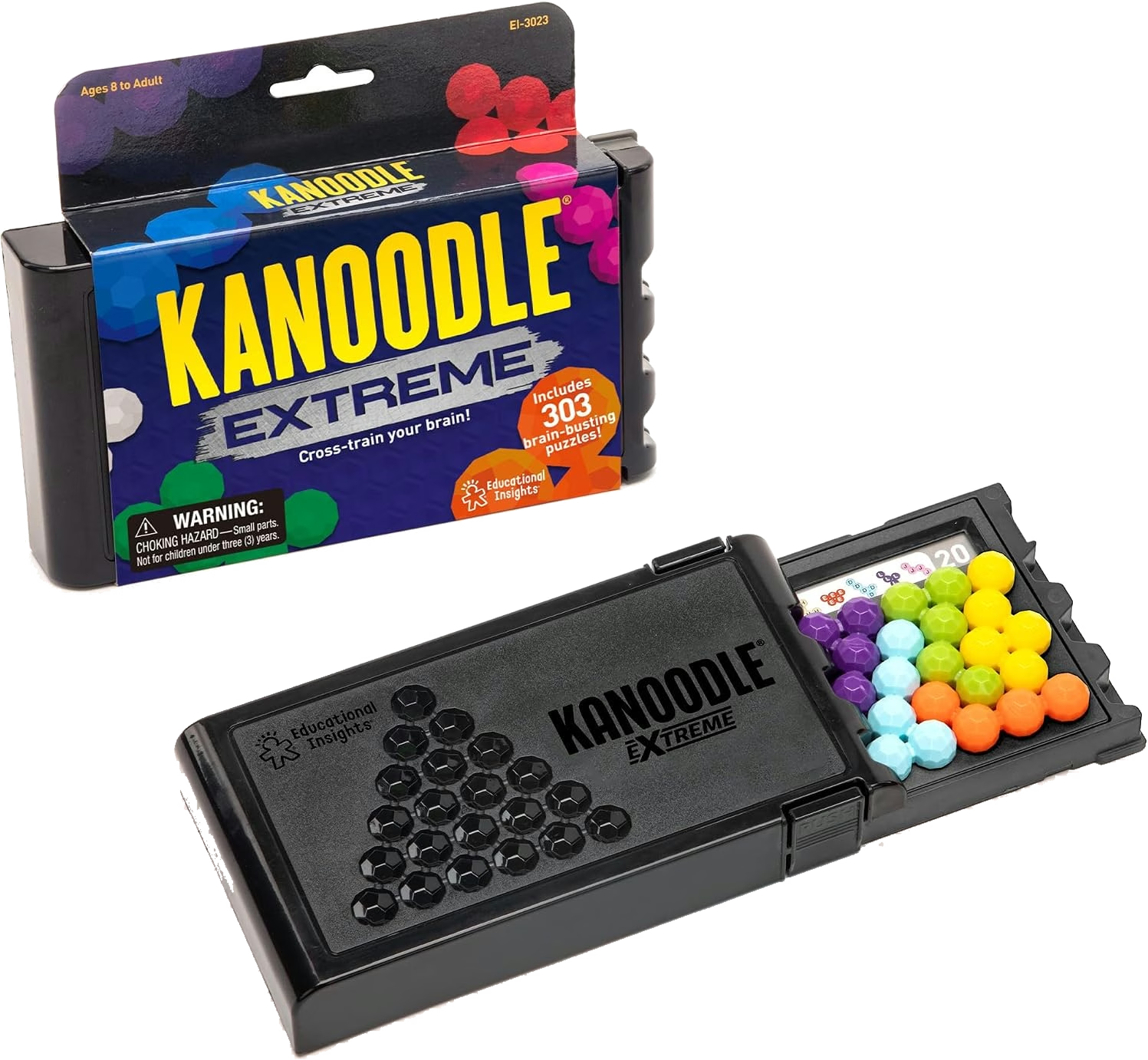
Educational Insights Kanoodle Extreme
Kanoodle Extreme gives a solo player 303 flat, sliding and pyramid puzzles. On sliding starts, each notch opens more of the board.
Fit & limits
The loose pieces are small. For a trip, a rimmed surface helps keep them beside the case while the lid is in use.
- Find the exit
- Trace the blockers backward
- Predict the first slide
06 / Routes & mazes
What has to move first?
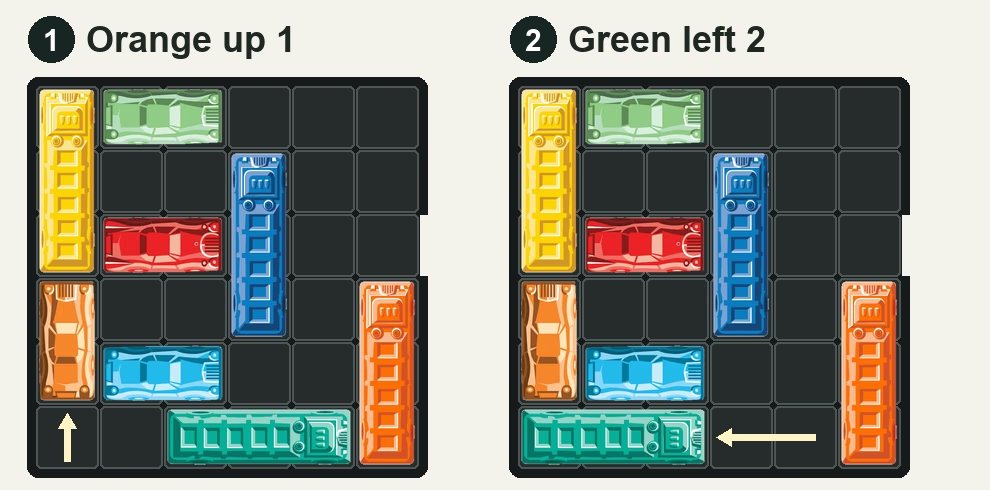
Work backward from the red car’s exit. A blue truck blocks the lane. The green truck needs to move to clear the blue one, and the orange car is in its way. The first useful slide is several vehicles away from the gate.
Rush Hour works without batteries. Gravity Maze tests a route with a marble, Laser Maze with light and Circuit Maze with a real electric circuit.
Setup notes & sources
The two panels show the first half of the box’s four-move solution. Once the orange car moves up one and the green truck moves left two, the blue truck can move down two. The red car can then exit in one uninterrupted slide.
Before you test a maze, predict where the path changes direction or splits. A light turning on can confirm part of your prediction. Check whether the challenge also requires particular pieces along the way.
Sources: ThinkFun Rush Hour original set · ThinkFun Laser Maze instructions
Work backward from an exit
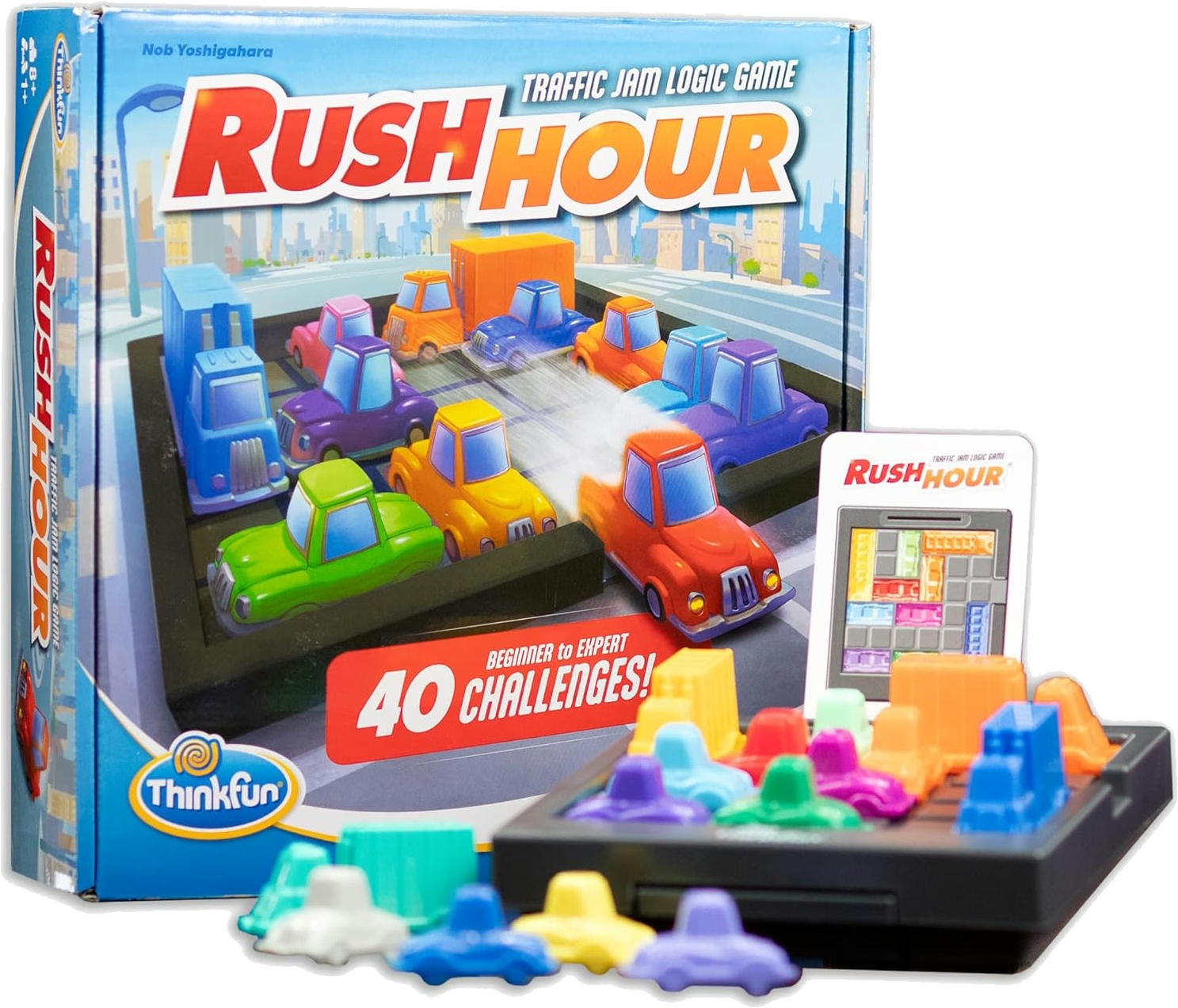
ThinkFun Rush Hour
Rush Hour vehicles slide only along their lanes. Trace the chain of blockers and look for the first vehicle that can get out of the way.
Fit & limits
This Original edition includes 40 challenges. Junior and Deluxe have different selections.
Follow a marble down through towers
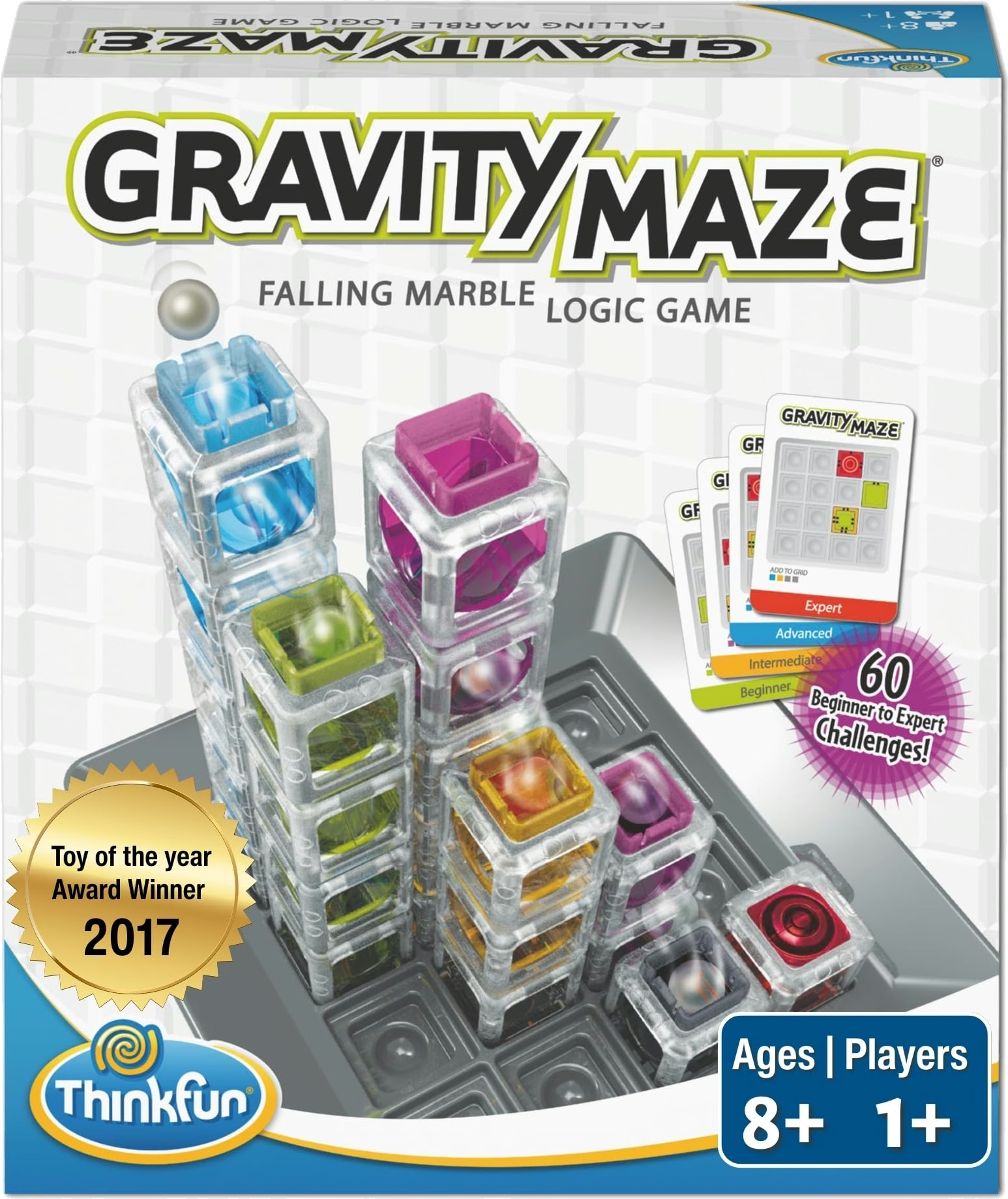
ThinkFun Gravity Maze
In Gravity Maze a marble can leave a tower and return to it at a lower level. Turn the model to see which opening it can reach.
Fit & limits
One player builds from a top view. The small orientation dots matter, so give a new solver time to check the towers before the drop.
Predict a reflected beam
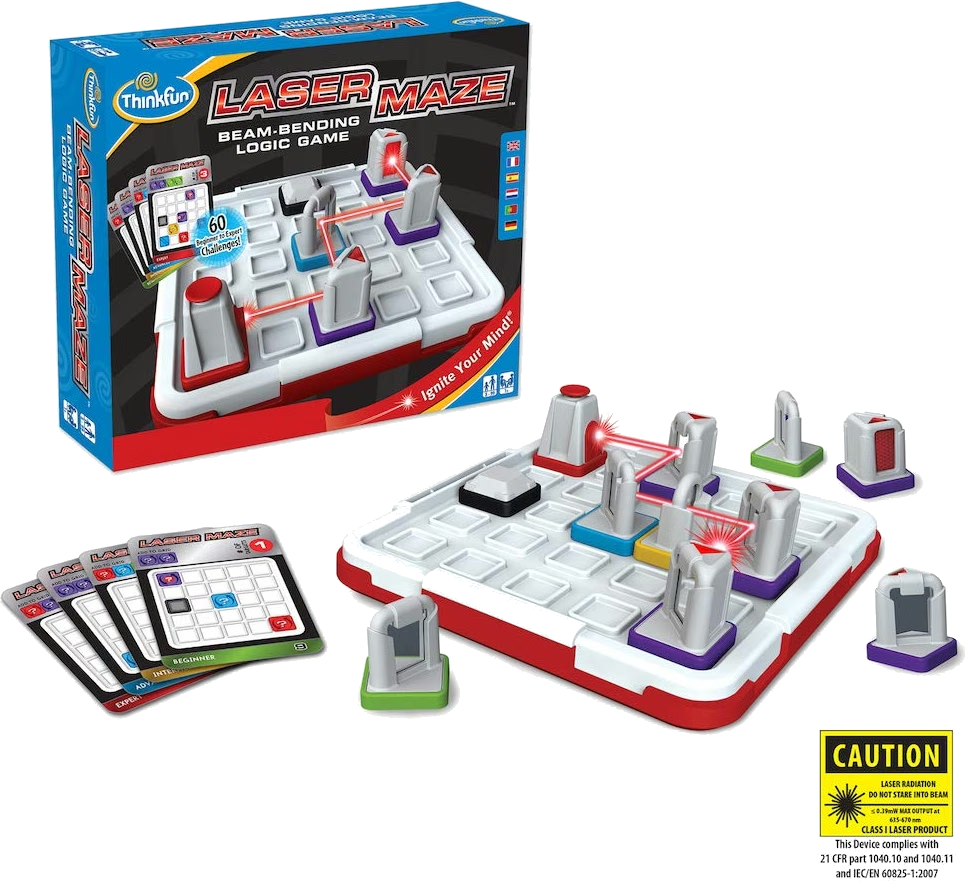
ThinkFun Laser Maze
Laser Maze asks the solver to turn mirrors and light the marked targets. A shortcut can hit a target while leaving a required token unused.
Fit & limits
The light shows at the target. Read the board diagram to trace the route between mirrors.
Test a branched circuit
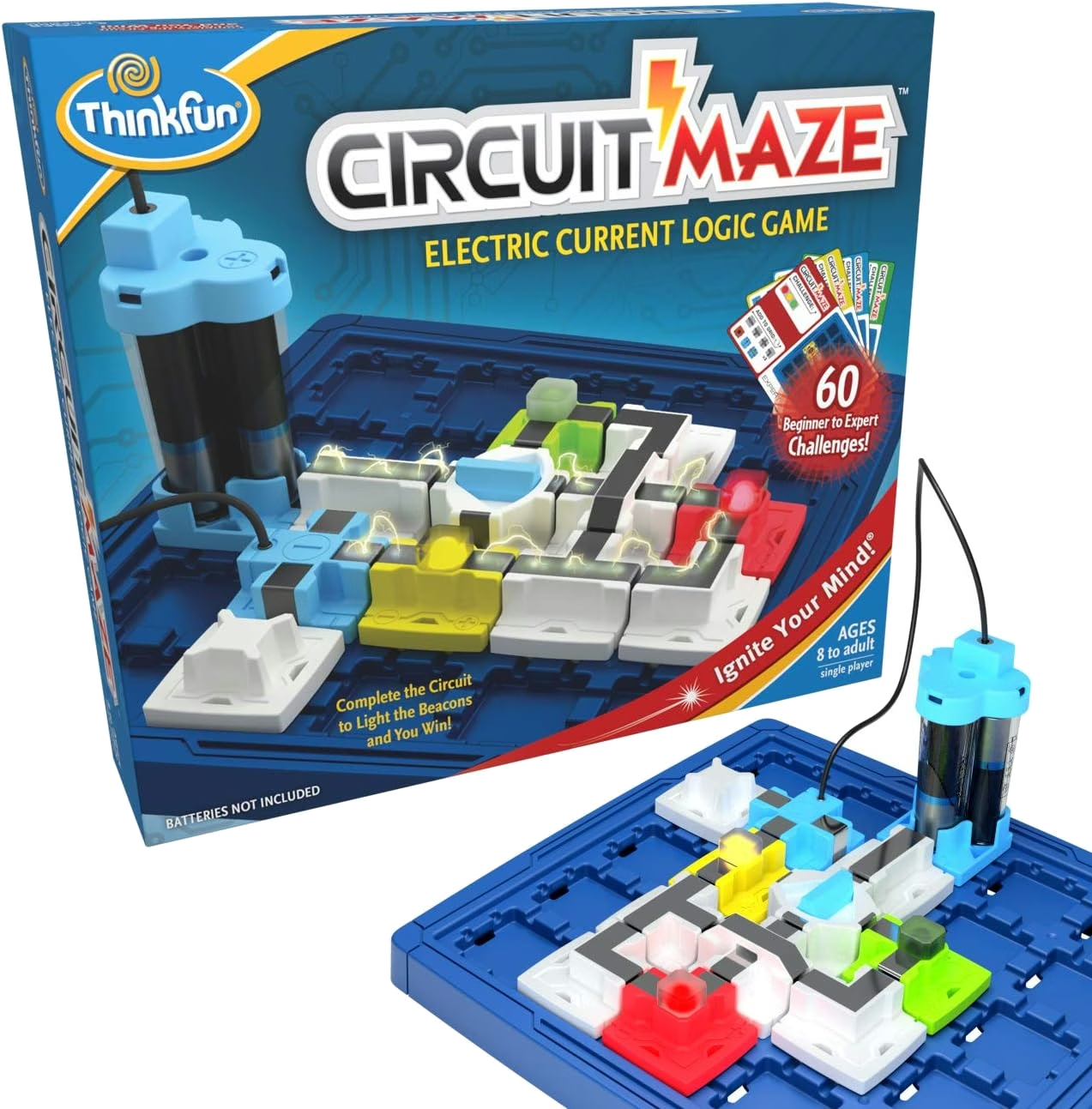
ThinkFun Circuit Maze
Trace two branches through red and green before they rejoin and pass through yellow. Reversing one beacon can change which lights work.
Fit & limits
The original requires three AAA batteries, sold separately. A loose contact can also keep a correctly planned circuit dark.
- Look for the seams
- Turn the object in your hand
- Save the solution for later
07 / Handheld puzzles
What changes when you turn it over?
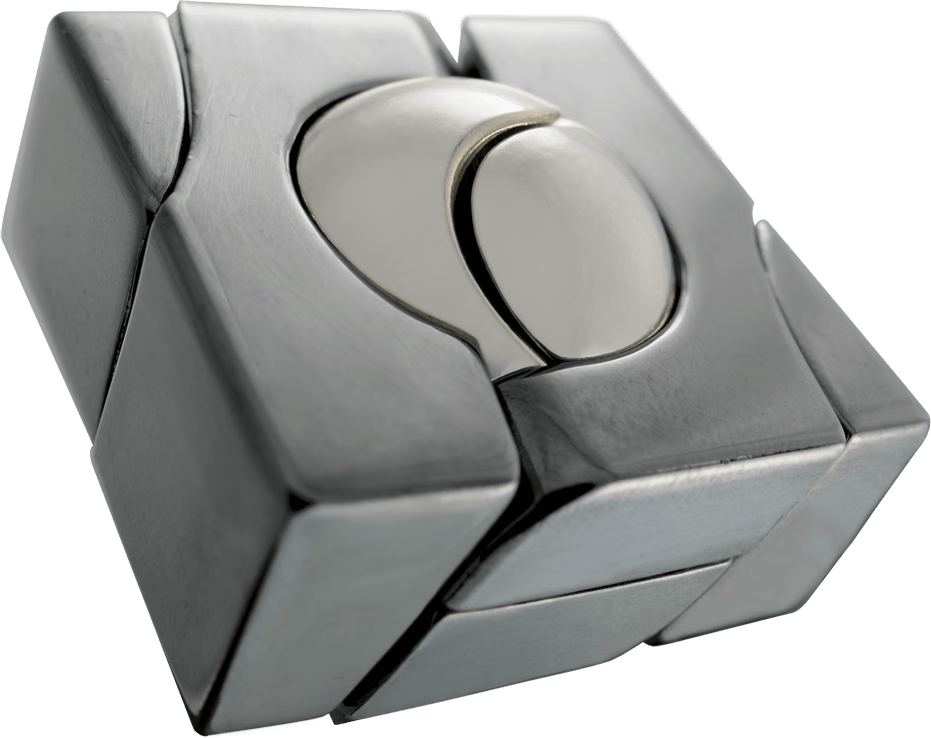
The bright center of Cast Marble looks like one ball. Look along the curved seam and compare it with the join in the outer frame. For a first attempt, turn the intact puzzle in your hand and predict which parts can move.
Pick Rubik’s for a sequence someone can learn and repeat, Perplexus for practicing a physical course, or a Hanayama puzzle for one mechanism to discover and put back together.
Setup notes & sources
A useful opening challenge on the 3×3 cube is to make the white cross and check the four side centers. A cross can look complete from below while its side colors are still in the wrong places.
Marble and Infinity reward different observations. Marble hides a joint in a rounded surface. Infinity has two disks at different depths in one frame. The exact reviews offer a first hint before the full solutions, so the player can choose how much to reveal.
Sources: University Games Cast Marble · Rubik’s beginner solve guide
Learn a repeatable turn sequence
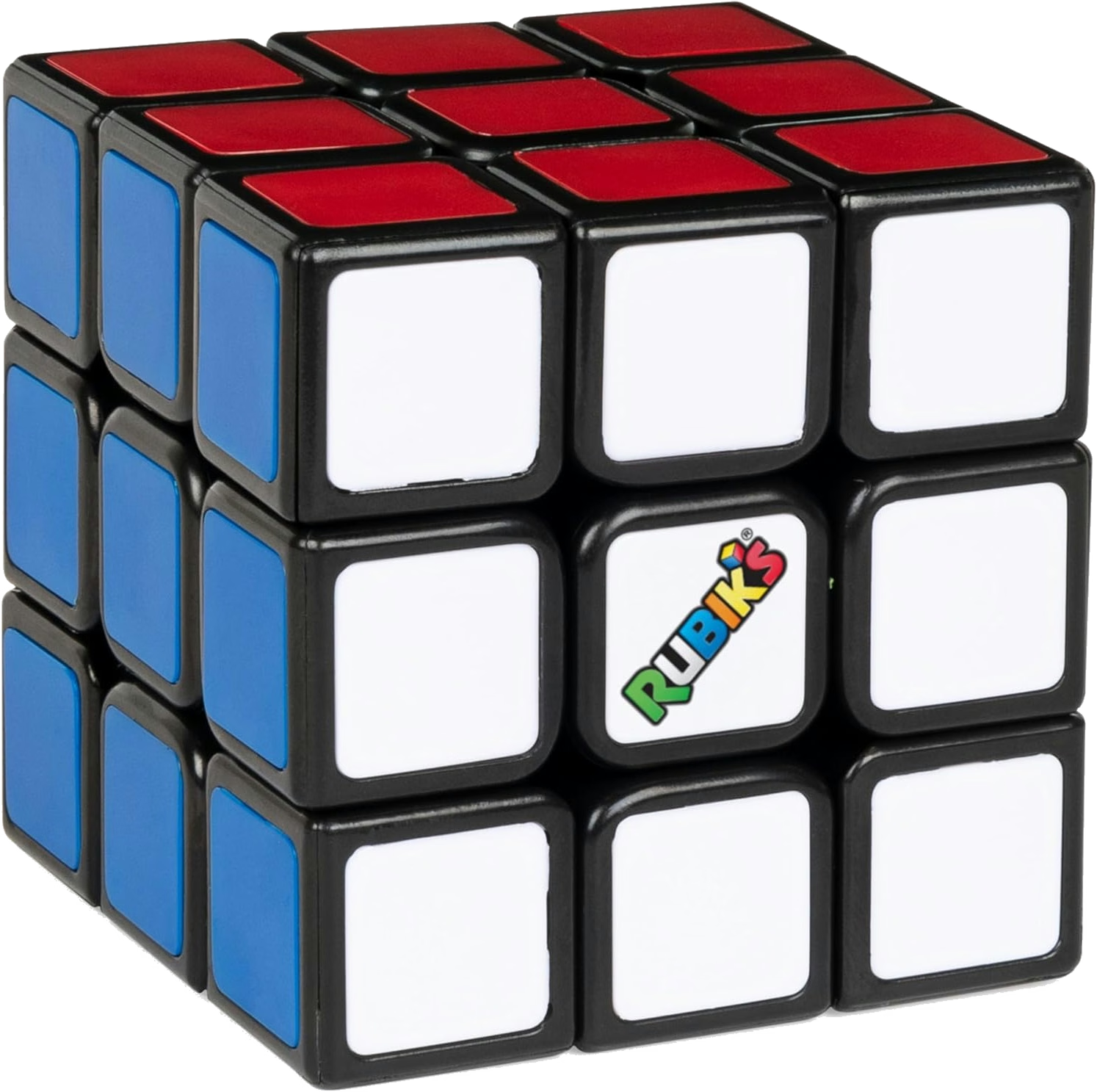
Rubik’s Original 3×3 Cube
Rubik’s Original 3×3 lets a solver follow one two-color edge through a half-turn and rebuild the white cross with its side colors aligned.
Fit & limits
Choose the Original to learn the method. The official Magnetic Speed Cube is a separate model for players who want faster turns.
Follow a track with a steady hand
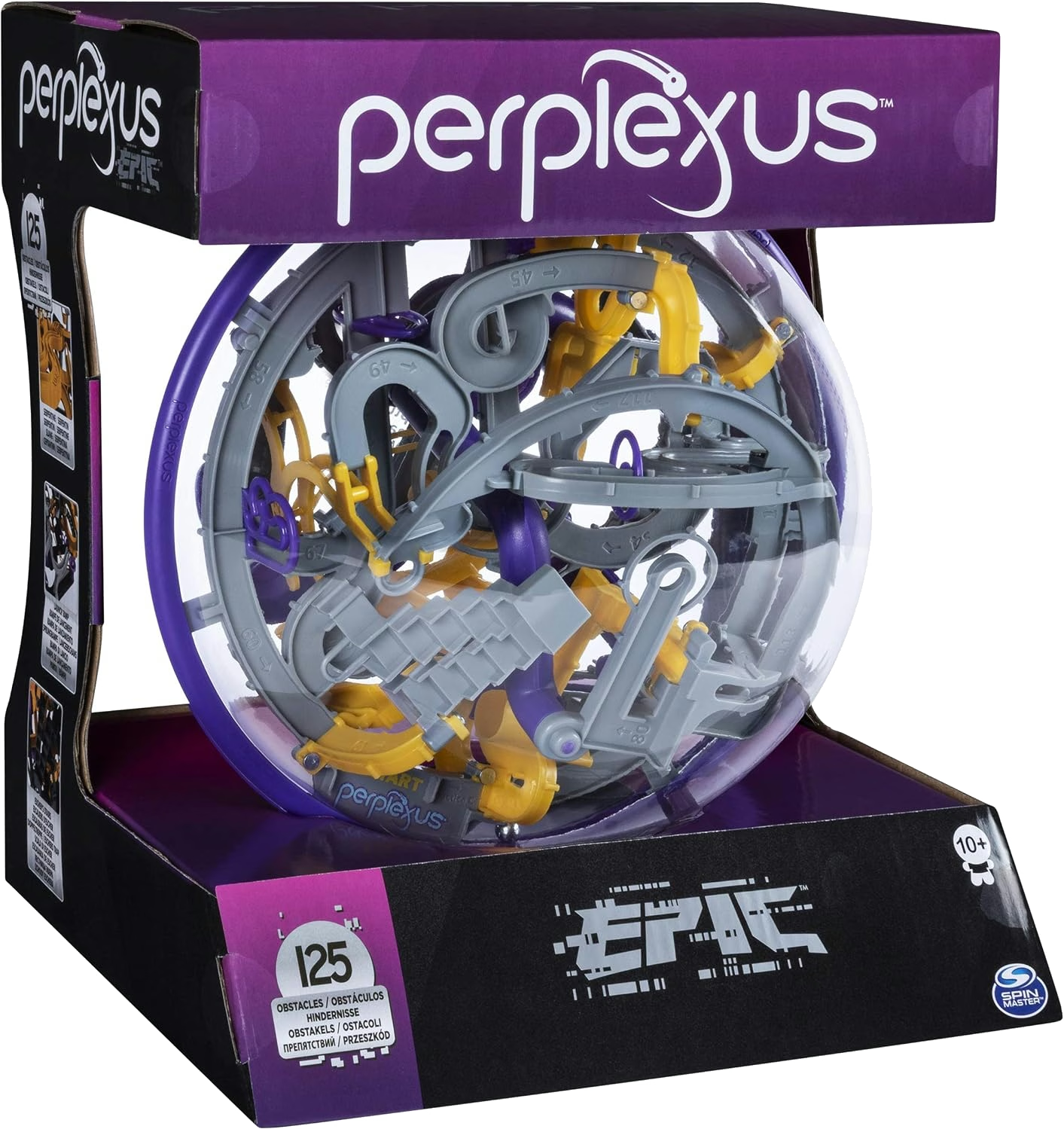
Tilt Perplexus Epic to carry one steel ball around 125 obstacles. Changing your viewing angle can reveal which tracks actually meet.
Fit & limits
A fall interrupts the run. The shorter Go! Spiral is an easier commitment for someone who wants a first maze.
Discover a four-part mechanism
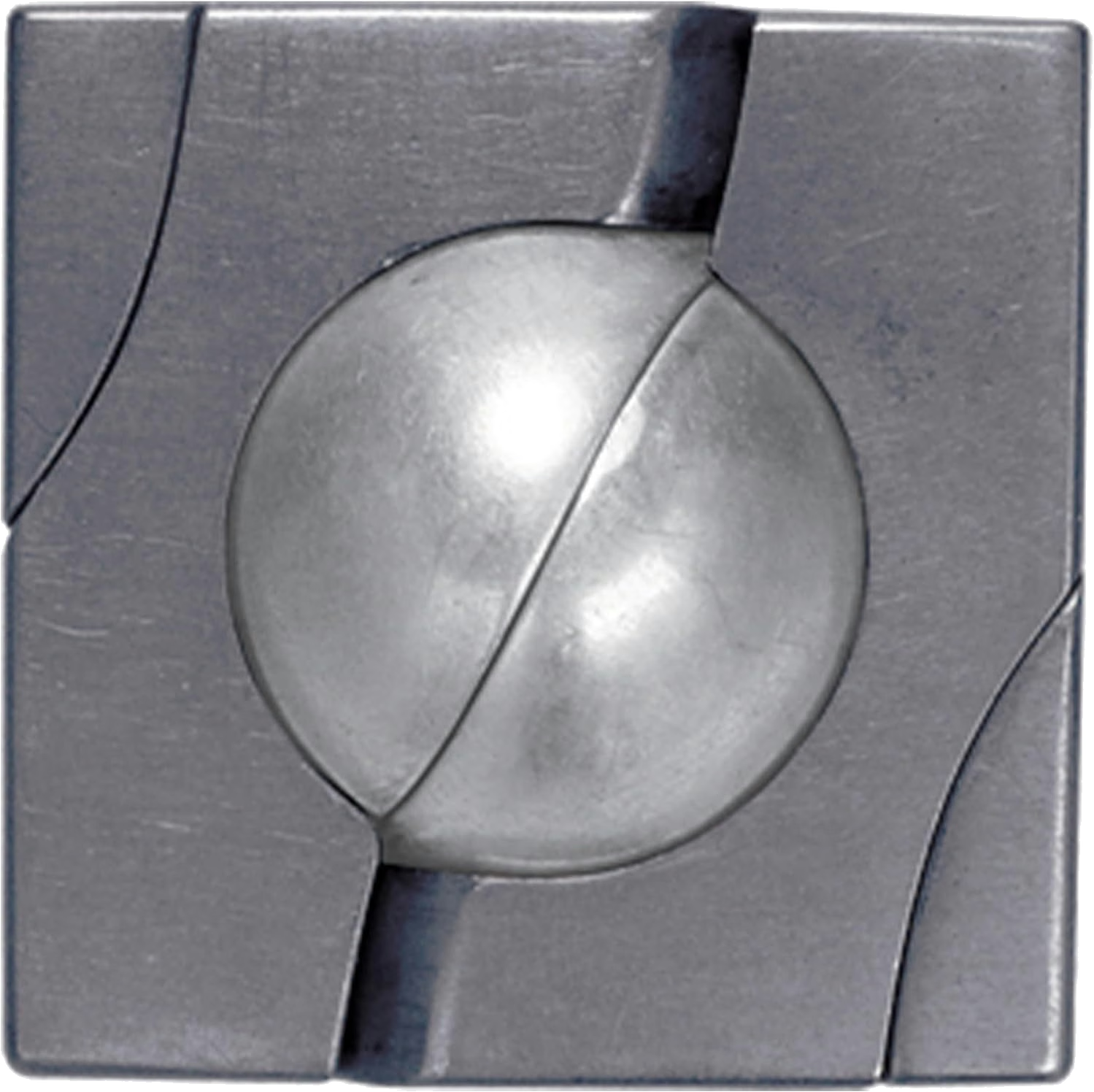
BePuzzled Hanayama Cast Marble
In Cast Marble, two frame halves surround two ball halves. Reassembly gives the next player a different problem to work on.
Fit & limits
The US BePuzzled package rates it four out of six. Start with the assembled photo if a move-by-move solution would spoil the fun.
Trace two rings through a frame
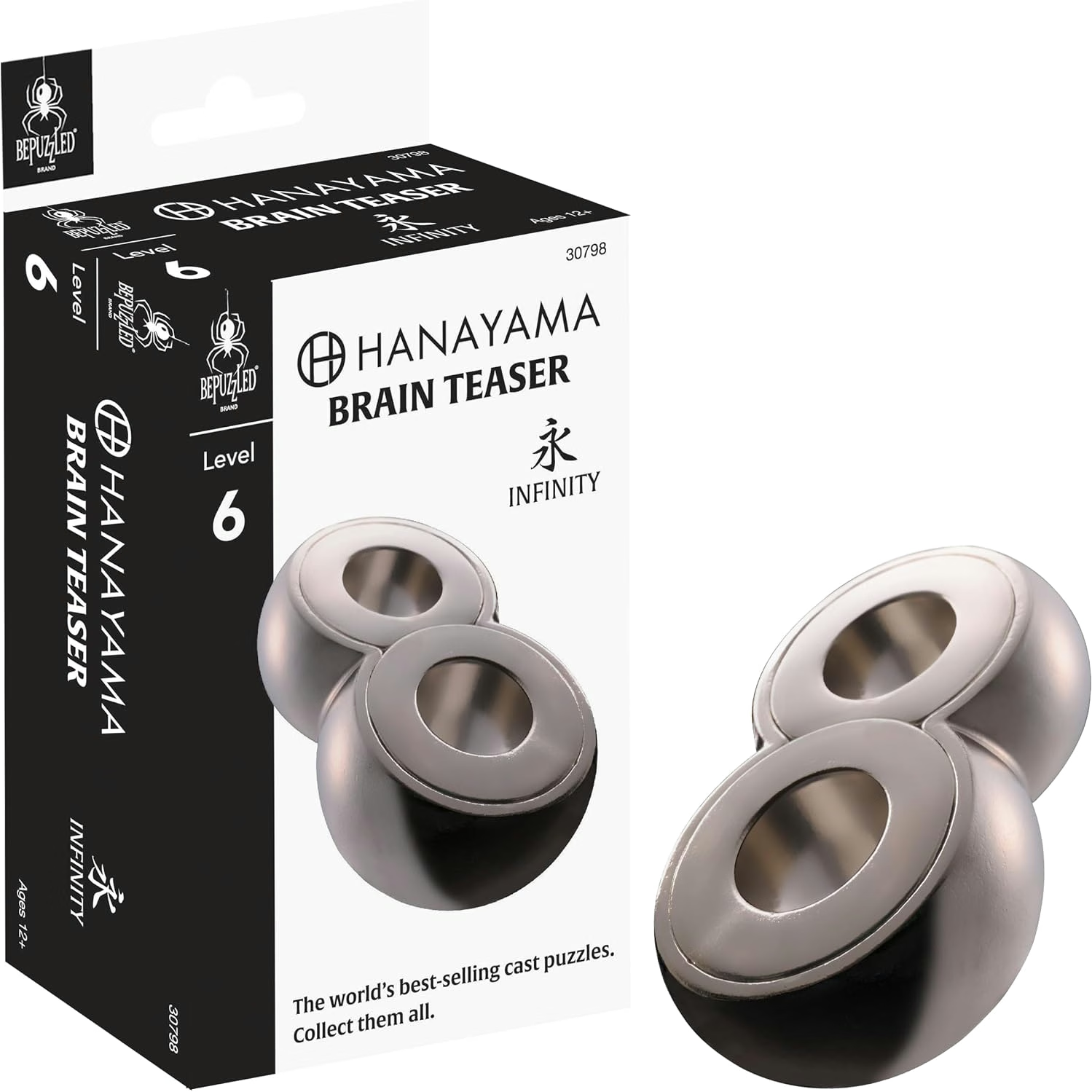
BePuzzled Hanayama Cast Infinity
In Cast Infinity, moving a disk to a different depth changes which turns are possible. The two rings and frame separate into three pieces.
Fit & limits
US level six of six. It suits someone who likes revisiting one mechanism over several sittings.
YOUR STARTING CHECKLIST
Which game belongs on your table?
Match the players
- Count the seats
Beat the Heat lets up to ten choose at once. Onitama gives two players a direct duel. One Rush Hour set works for a solo player or a pair discussing the same move.
- Decide who controls the pace
Choose SET for a race to spot a pattern, Qwirkle for turns with time to think, or an IQ game for a challenge that can wait until tomorrow.
Choose the challenge
- Try one move aloud
Ask what happens to the extra yellow tile in Azul, or which truck is blocking the exit in Rush Hour. The answer tells you which kind of reasoning the player enjoys.
- Check what raises the difficulty
For experienced solvers, try a Proof! equality with expressions on both sides, a six-layer IQ pyramid or the bonus motif in The Genius Star.
Sources & further reading
The rulebooks and worked examples below support the table setups and moves in this guide. Each game links to its own review with the specific edition, buyer experiences and purchase details. The opening scene brings three games together on one table. The seven worked examples use photographs and diagrams from the reviewed editions. Product prices retain the observation dates shown beside them.
- Math for Love’s Prime Climb puzzles ↗
Photographed Prime Climb turns and prompts for comparing the outcomes of a roll.
Source checked - Evermade’s Proof! instructions ↗
Legal equalities, how to claim cards and how to play solitaire.
Source checked - PlayMonster SET rules ↗
How to check all four attributes of a three-card SET.
Source checked - Goliath Mastermind scoring examples ↗
Publisher diagrams for duplicate colors and red and white feedback.
Source checked - Next Move Azul rules ↗
Factory drafting, pattern lines and overflow to the floor.
Source checked - Mattel Blokus Classic rules ↗
The corner-touching requirement for pieces of the same color.
Source checked - Gen42 Hive Pocket rules ↗
Worked diagrams of moves that would break the One Hive rule.
Source checked - Gigamic Quoridor rules ↗
The choice between a pawn move and a fence, and the requirement to leave a route open.
Source checked - Thames & Kosmos Ubongo rules ↗
The two difficulty sides, die selection and simultaneous timed play.
Source checked - SmartGames IQ Six Pro booklet ↗
Starting positions and solutions for the inside board, butterfly board and six-layer pyramids.
Source checked - ThinkFun Rush Hour original set ↗
The current forty-challenge set and the illustrated traffic puzzle on its packaging.
Source checked - ThinkFun Laser Maze instructions ↗
A lit target and the requirement to use the indicated tokens.
Source checked - University Games Cast Marble ↗
The US BePuzzled edition and its four-out-of-six difficulty.
Source checked - Rubik’s beginner solve guide ↗
The face-turn sequence for making a white cross with matched side colors.
Source checked